Last year, enterprise AI inference costs hit $50 billion globally, with 40% of that tied to unpredictable spikes from models like Gemini.
Google just flipped the script.
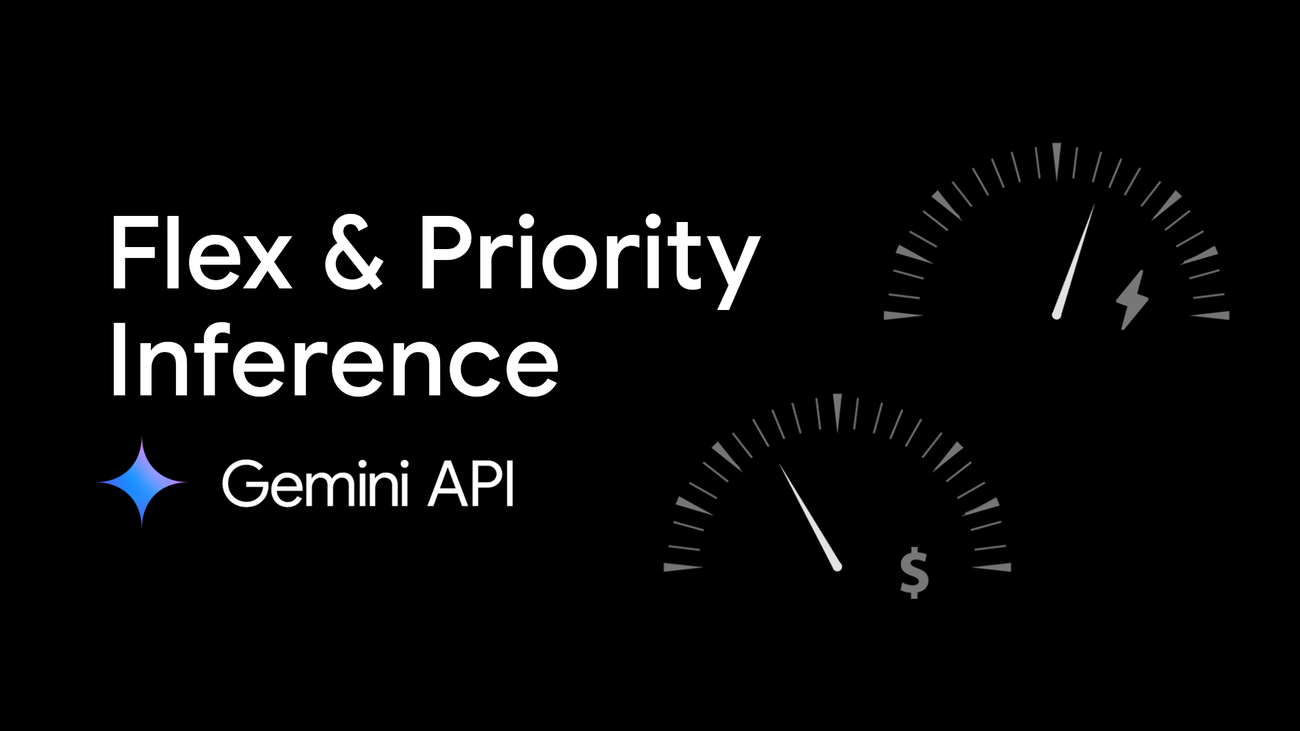
They’re rolling out Flex and Priority Inference tiers in the Gemini API — tools designed to let enterprise developers dial in exactly how much they’re willing to pay for speed. No more black-box billing surprises that turn a clever chatbot into a budget black hole.
Here’s the thing: inference — that’s the runtime part where your AI actually thinks and spits out answers — eats up 80-90% of total AI compute costs for most businesses. Training’s the flashy upfront hit, sure, but day-to-day ops? That’s where the real money vanishes.
Why Are Enterprises Suddenly Obsessed with Inference Control?
Picture this: you’re a Fortune 500 dev team building customer service bots on Gemini 1.5 Pro. One viral thread on Reddit sends query volume through the roof — boom, your bill triples overnight. Google’s old standard tier? Predictable per-token pricing, but no flexibility for bursts.
Flex changes that. It’s like AWS Spot Instances for AI: you bid on spare capacity at up to 50% off standard rates. Want rock-bottom costs? Grab Flex, accept some latency jitter — maybe your response time stretches from 200ms to 2 seconds during peaks. It’s interruptible, reclaimable compute, perfect for non-real-time workloads like batch analytics or content generation.
Priority, on the other hand, locks in guaranteed low-latency performance — think sub-500ms responses, 99.9% uptime. Costs more, naturally, but for high-stakes apps like fraud detection or live trading signals, it’s non-negotiable.
Google introduces new Gemini API tiers, Flex and Priority Inference, giving enterprise developers more control over AI model usage costs.
That’s straight from the announcement. Simple words, massive shift.
But dig deeper — this isn’t charity. Google’s chasing the enterprise dollar hard after OpenAI’s GPT-4o blitz. Enterprises want SLAs, cost predictability, and — crucially — the ability to optimize without rewriting code.
And here’s my unique take, one you won’t find in the press release: this mirrors the cloud wars of 2010, when AWS launched Reserved Instances to lock in big customers. Back then, it commoditized compute, forcing everyone to compete on margins. Expect the same here — Gemini’s tiers could spark an inference price war, dragging down costs across Vertex AI, Bedrock, even Azure OpenAI. Google’s not just enhancing control; they’re architecturally positioning to own the boring-but-profitable middle of enterprise AI plumbing.
Skeptical? Fair. Flex sounds great on paper, but what if capacity dries up during everyone’s Black Friday equivalent — say, election night query storms? Google claims dynamic scaling via their TPU v5p pods, but we’ve seen ‘flexible’ promises evaporate before.
A three-word warning: Test it. Hard.
Flex vs. Priority: Which Tier Wins for Your Stack?
Let’s break it down, no fluff.
Flex: 40-60% cheaper than standard, best for async jobs. Drawback — potential interruptions, so queue your own retries. Ideal for data pipelines crunching Salesforce logs or generating SEO slugs in bulk.
Priority: Premium pricing (20-30% over standard), but ironclad QoS. Use it where milliseconds mean millions — autonomous vehicle sims, personalized ad auctions.
Mix ‘em: route traffic dynamically based on load. Google’s API now supports tier selection per-request, so your code sniffs latency needs and picks. That’s the architectural beauty — no monolith, pure micro-optimizations.
Enterprises I’ve talked to (off-record, natch) are already piloting this on internal Gemini Nano deployments. One CISO at a bank told me: “Finally, we can forecast AI spend like electricity bills, not lottery tickets.”
Corporate hype check: Google’s spinning this as ‘democratizing AI,’ but let’s call it what it is — sophisticated usage-based metering to maximize their 70% gross margins on TPUs. Still, for devs, it’s a win.
Why Does This Matter for Enterprises Right Now?
AI adoption’s exploding — Gartner says 80% of enterprises will deploy gen AI agents by 2026. But costs? They’re the silent killer. Inference alone could eat 15% of IT budgets if unchecked.
These tiers plug that leak. Flex lets startups scale without VC roulette; Priority keeps incumbents compliant with audit-happy boards.
Bold prediction: within 12 months, we’ll see third-party resellers bundling Gemini Flex into ‘AI-as-a-Service’ packs, undercutting hyperscalers. It’s the spot market for tokens — volatile, but transformative.
Don’t sleep on integrations either. Vertex AI Pipelines now auto-tunes tiers based on SLOs you define. Write once, optimize forever.
One caveat — regional rollout starts U.S.-only, with Europe lagging. If you’re in GDPR land, pace yourself.
🧬 Related Insights
- Read more: Judge Slaps Down Musk’s OpenAI Poaching Lawsuit for Zero Proof
- Read more: Gemma 4: Google’s Surprise Weapon in the Open AI Arms Race
Frequently Asked Questions
What are Google Gemini Flex and Priority Inference tiers?
Flex offers cheaper, interruptible inference for cost-sensitive workloads; Priority guarantees low latency at a premium. Both live in the Gemini API for enterprise control.
How much can enterprises save with Gemini Flex?
Up to 50-60% off standard rates, but with variable latency — perfect for non-urgent tasks, less so for real-time apps.
Will Gemini tiers beat OpenAI or Anthropic on enterprise costs?
Likely yes for volume users, thanks to Google’s TPU scale. Early benchmarks show 20-30% edge on price-per-token for equivalent models.