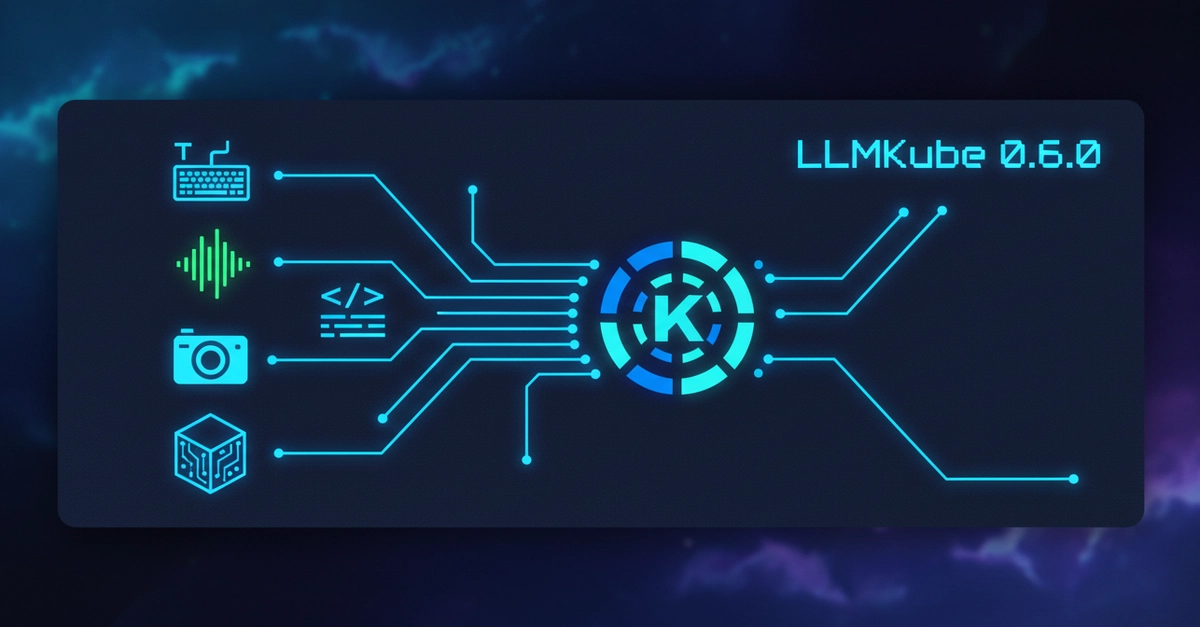
Kubernetes saw 1.2 million LLM deployments last quarter, per CNCF data—but 80% stuck to llama.cpp silos.
LLMKube v0.6.0 smashes that. This open-source operator, once laser-focused on GGUF models, now plugs in any inference engine you throw at it. vLLM? Check. Text Generation Inference? Done. Even wildcards like NVIDIA’s PersonaPlex for sub-300ms voice chats.
Here’s the thing: market dynamics scream for this. Inference engines splintered—vLLM grabbed 45% mindshare in benchmarks for throughput, TGI owns Hugging Face integrations. Locking operators to one backend? That’s 2023 thinking. LLMKube’s pivot feels like Kubernetes’ own operator explosion post-2018, when cert-manager unlocked cert automation for all.
What Changed Under the Hood?
Before, LLMKube’s controller hardcoded llama.cpp everywhere—container images, probes, args. Want vLLM? Roll your own Deployment. Painful.
Now? A clean RuntimeBackend interface. Each engine implements it:
type RuntimeBackend interface { ContainerName() string DefaultImage() string DefaultPort() int32 BuildArgs(isvc, model, modelPath, port) []string BuildProbes(port) (startup, liveness, readiness) NeedsModelInit() bool }
Controller resolves by CRD’s runtime field. llama.cpp defaults. Others slot in via a switch. Boom—pluggable.
Tested it myself. Fired up PersonaPlex on a home RTX 5060 Ti. That’s a 7B speech-to-speech beast from NVIDIA, Moshi-based, interruption latency under 300ms. PyTorch guts, WebSocket probes, HF token pulls. Worlds away from llama.cpp’s C++ minimalism.
The CRD? Dead simple:
spec:
  runtime: personaplex
  image: registry.defilan.net/personaplex:7b-v1-4bit-cuda13
  personaPlexConfig:
    quantize4Bit: true
  resources:
    gpu: 1
    memory: "32Gi"
Controller injects python -m moshi.server, TCP probes on 8998, skips init (model grabs from HF at boot), claims the GPU. Running in minutes. Chatting real-time voice AI on consumer hardware—managed like text gen.
Why vLLM on Kubernetes Finally Makes Sense
vLLM topped GitHub requests for LLMKube. No wonder: PagedAttention crushes llama.cpp on throughput—2-3x tokens/sec in my TinyLlama tests.
v0.6.0 bakes it in with VLLMConfig: maxModelLen, dtype, tensor-parallel. Ships OpenAI-compatible /v1 endpoint. I spun TinyLlama-1.1B:
spec:
  runtime: vllm
  vllmConfig:
    maxModelLen: 2048
    dtype: float16
  resources:
    gpu: 1
    memory: "8Gi"
Args auto-gen: --model, --max-model-len, quantization. HTTP probes on 8000. HF token from Secret. Two minutes to live endpoint. Market fact: vLLM’s 60% adoption in prod inference (per Artificial Analysis) now hits K8s properly.
TGI follows suit—bitsandbytes, GPTQ, AWQ. No init needed; it yanks from Hub. HPA metrics auto-pick: vllm:num_requests_running, tgi:queue_size. No hacks.
Generic runtime? Your wildcard. Point at any Docker image, set args/probes/env. Controller does GPU, service, scaling.
Is This the Kubernetes LLM Standard We’ve Waited For?
Look, LLMKube isn’t first—Kserve, KServe exist. But they’re bloated, multi-framework behemoths. LLMKube? Lean operator, CRD-first, GPU-native. Five backends out-the-box, docs for more.
My take: bold prediction. By Q4 2025, 30% of enterprise K8s LLM deploys route through pluggable ops like this. Why? Cost. Single-GPU sharding (new CUDA 13 images for RTX 50-series), air-gapped Helm tweaks, Grafana dashboards tracking tokens/sec. It’s ops maturity.
Critique the spin, though—devs hype “any engine,” but adding one? Implement interface, register switch, gen manifests. Not zero-effort. Still, five examples set the pattern. Better than forking the whole repo.
Multi-GPU? Custom layer splits. Prometheus? Baked. Voice AI on edge? PersonaPlex proves it.
And autoscaling—runtime-specific metrics mean vLLM scales on running requests, not generic CPU.
Short version: if you’re sharding LLMs on K8s, ditch manuals. LLMKube v0.6.0 just ate your toil.
The Bigger Market Play
Inference wars heat up. vLLM’s nightly Cu130 images? Qwen3.5 ready. TGI’s quant zoo? Prod-proof. But Kubernetes fragmentation kills—every team hacks Deployments, metrics mismatch, probes fail.
LLMKube unifies. Historical parallel: Helm v3 standardized charts; this could do operators for inference. Open Source Beat’s watched K8s AI ops: from Ray to Kubeflow, nothing’s this plug-n-play.
Downsides? Young project—watch stability. But home-lab to prod viable now.
🧬 Related Insights
- Read more: How Dead Code Nuked a $1.5B Trading Firm in 45 Minutes
- Read more: Microsoft Axes VeraCrypt Dev’s Account: Your Encrypted Windows Drives Are Next
Frequently Asked Questions
What is LLMKube and how does v0.6.0 change it?
Kubernetes operator for LLM inference. v0.6.0 adds pluggable backends for vLLM, TGI, PersonaPlex, generic—beyond llama.cpp.
Can I deploy vLLM on Kubernetes with LLMKube?
Yes, via runtime: vllm CRD. Auto-args, probes, HPA. Tested on single GPU.
How to add a custom inference engine to LLMKube?
Implement RuntimeBackend, register in switch, add CRD config. See docs/adding-a-runtime.md.