A developer stares at the bill from last month’s Gemini API runs, jaw dropping at the inference costs piling up from those sneaky background agent tasks.
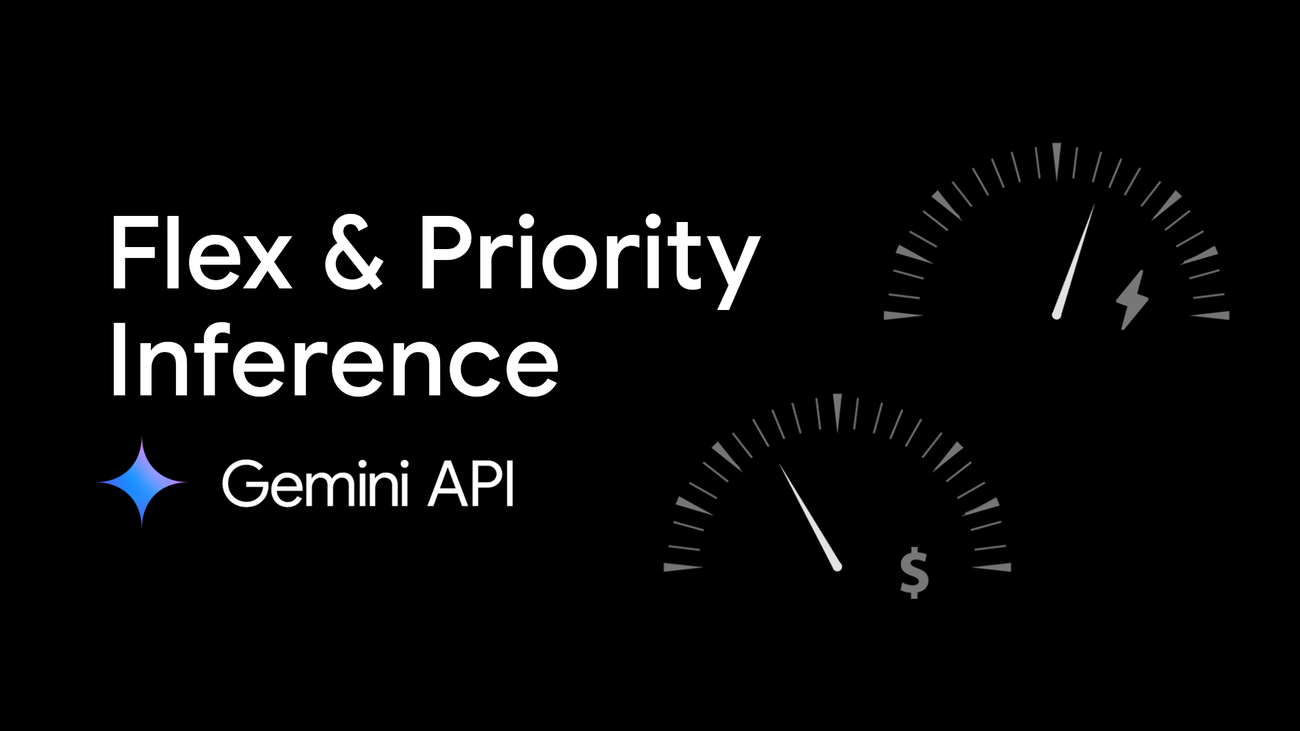
Google’s Gemini API now offers Flex and Priority Inference tiers, letting enterprise devs dial in exactly how much they’re willing to pay for AI reliability. It’s a direct stab at the inference expense explosion—think multi-step agents browsing the web or enriching datasets overnight, no longer bleeding cash at full speed.
Here’s the split. Flex Inference? Half the standard rate. Perfect for non-urgent stuff: CRM updates, massive simulations, or your AI pondering in the background. Latency spikes, sure, but who cares if it’s not user-facing? Priority Inference flips it—top-shelf queue position, even at peak times, for those chatty, real-time interactions your customers demand.
Both run through the same synchronous endpoint. Just tweak a service_tier parameter. No more juggling batch APIs or polling for results. Google calls it a bridge for agentic workflows.
“Flex and Priority help to bridge this gap,” the post said. “You can now route background jobs to Flex and interactive jobs to Priority, both using standard synchronous endpoints.”
Smart architecture move. Enterprises ditch dual setups—one for sync real-time, one async for bulk. Single pipe, tiered priority. But.
Why Does Overflow to Standard Tier Spell Trouble?
Priority sounds bulletproof—highest infra priority, business continuity assured. Exceed your allocation? Requests slide to Standard tier. Not rejected. Just… slower.
Google spins it positive: app stays online, responses flag the tier used for billing transparency. Fine for casual apps. Disastrous for others.
Greyhound Research’s Sanchit Vir Gogia nails the rub. Two identical requests, different conditions—bam, varying latency, outcomes. In banking? Insurance? Healthcare? That’s not a glitch; it’s an audit nightmare.
“Graceful degradation, without full transparency and governance, is not resilience,” Gogia said. “It is ambiguity introduced into the system at scale.”
Fairness shattered. Explainability? Gone. Regulators circling like sharks. My take: this echoes early cloud bursting pains—remember AWS spot instances? Enterprises got cheap compute until evicted mid-job. Google learned; now they’re peddling the same variability as a feature. Bold prediction—this forces a hybrid rush, Gemma 4 running on-prem for mission-critical, Flex for the rest.
Flex shines for scale. Data enrichment at 50% off—no file I/O hassles, no async polling. Agent ‘thinking’ steps? Toss ‘em there. Priority guards the front door.
But that overflow? It’s the crack. High-volume spikes—Black Friday for your fintech app—and suddenly outcomes diverge. Gogia warns of outcome integrity issues. Spot on. It’s not just perf; it’s trust.
How Do These Tiers Reshape Agentic AI Architectures?
Agentic workflows exploded. Not chatbots anymore—multi-step chains: browse, reason, act. Background legs kill with standard pricing. Flex absorbs that hit.
Single API endpoint simplifies. Devs route smartly: user ping to Priority, backend churn to Flex. Visibility via response metadata. Billing per tier. Clean.
Yet architecture shifts lurk. Enterprises rethink queues. Need Priority quotas? Tier 2/3 paid projects only. Flex? All paid users. Scale matters.
Google dropped Gemma 4 same day—open model family for local runs. Most capable yet. Subtle nudge: don’t like cloud inference roulette? Host it yourself.
Here’s my unique angle, straight from the trenches—this tiering mimics telecom QoS, but AI’s non-deterministic. Packets drop; models hallucinate. Historical parallel: 90s mainframe job queues, where priority bought survival. Google revives that for AI, predicting a split market—cloud for cheap bulk, edge for reliable gold.
Critique the spin: Google’s blog gushes efficiency. Ignores the regulated world’s paranoia. Hype meets reality.
Is Google’s Downgrade Mechanism Safe for Regulated Industries?
Short answer: no. Gogia’s right—variability undermines everything. Identical inputs, divergent paths. Audit trails? Murky. Fairness algorithms? Compromised.
Banks can’t risk loan approvals flipping on tier luck. Healthcare diagnostics? Same. Google claims transparency via response flags. Not enough. Full governance needed—tier prediction APIs, maybe?
Enterprises adapt. Hybrid stacks rise: Priority for frontends, Flex + Gemma local for backends. Cost control without chaos.
Why now? Inference costs eclipse training. Nvidia eyes it as battleground. Google counters with tiers. Smart, but skeptical eye required.
Developers win short-term. Unified endpoints cut complexity. Background jobs cheaper. Real-time strong.
Long-term? Pushback from compliance teams. Prediction: by Q2 2025, tiered inference lawsuits if unaddressed. Or Google adds ‘Guaranteed’ tier at premium.
Gemma 4 tempts escape. Run open models locally—zero inference bills, full control. Google’s dual play: hook ‘em on API, offer outs.
Bursting at seams. Enterprises scale agentics without bankruptcy. But reliability roulette? That’s the tax.
Why Developers Can’t Ignore Gemma 4 in This Mix
Tiers solve cloud pains. Gemma 4 dodges them. Latest open family—fine-tuned for local inference. No quotas, no tiers, your hardware, your rules.
Pair it: Flex for dev sandboxes, Gemma for prod criticals. Architecture evolution—cloud burst to on-prem backbone.
Google’s masterstroke? Democratize access, then monetize scale. Skeptical? Watch adoption.
🧬 Related Insights
- Read more: I Built a PII Detection API Without Touching AI—And It’s Faster Than Every Enterprise Tool
- Read more: Anthropic Yanks OpenClaw from Claude Subs, Sticking Devs with Surprise Bills
Frequently Asked Questions
What are Google Flex and Priority Inference?
Flex cuts Gemini API costs by 50% for background tasks with higher latency; Priority ensures top reliability for real-time needs, with overflow to standard.
How does Flex Inference affect AI agent workflows?
It slashes prices for non-urgent steps like data processing or ‘thinking’ phases, using the same sync endpoint—no more batch API juggling.
Is Priority Inference reliable for enterprise apps?
It prioritizes during peaks but downgrades to standard on quota exceed, raising variability concerns for regulated sectors like finance.