Picture this: it’s 3 a.m., your AI agent’s churning through a thousand CRM updates, and your credit card’s about to melt from Gemini’s standard rates.
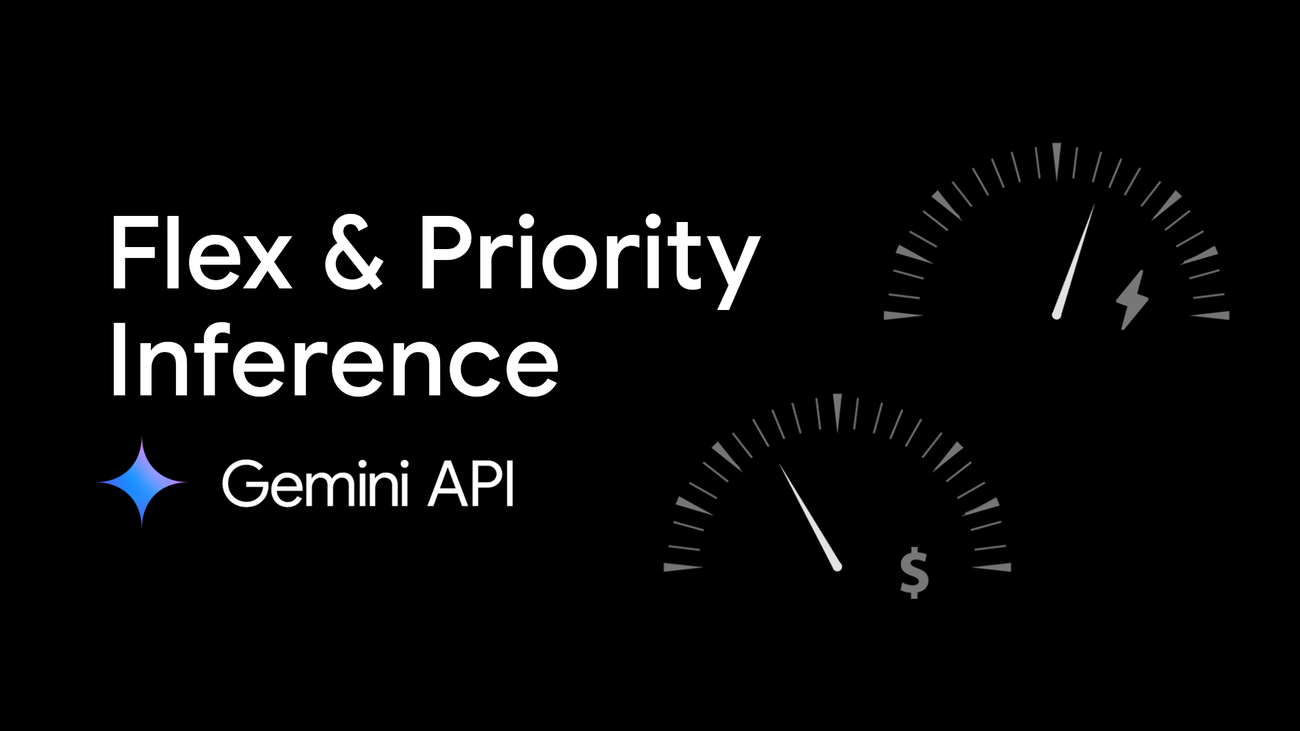
Google’s fixing that mess today with two new service tiers in the Gemini API—Flex and Priority. They’re handing developers a knob to twist between cost and reliability, all through one unified synchronous interface. No more Frankenstein setups juggling sync calls and async batches.
Here’s the thing. AI’s exploding from chatty bots into full-blown agents that browse, think, and scheme in the background. You’ve got high-volume grunt work—data enrichment, simulations—and then the spotlight stuff: chatbots that can’t stutter during a customer meltdown. Before, you’d hack around with standard endpoints for the fast lane and the Batch API for the cheap seats. Painful. Flex and Priority? They keep everything synchronous. Route the boring jobs to Flex, the critical ones to Priority. Boom—simpler code, tailored economics.
Flex Inference hits first. It’s the budget beast, slashing prices by 50% off Standard by dialing down reliability and jacking up tolerance for lag. Synchronous, too—no file uploads, no polling purgatory like Batch. Perfect for those agent workflows where the model’s “thinking” or “browsing”—think large-scale research sims or CRM pings that nobody’s waiting on.
Why Split the Gemini API into Cost Tiers Now?
Google’s not just being nice. They’re chasing the agent wave—those autonomous systems that chew compute like candy. Flex lets you scale innovation without bankruptcy; it’s like spot instances from AWS’s early days, where you bid low for spare capacity and pray for uptime. But here’s my unique angle: this echoes the 2010s cloud pivot, when AWS tiers forced everyone to rethink monolithic apps into microservices. Gemini’s tiers? They’ll push devs toward hybrid agents—cheap Flex brains for planning, Priority polish for output. Bold prediction: by 2025, 70% of production agents will run this split, birthing a new architecture standard Google dominates.
Skeptical? Yeah, me too on the hype. Google’s PR spins this as “granular control,” but it’s tiered pricing 101—pay more for promises. Still, the synchronous hook eliminates real pain.
Priority Inference flips the script. Premium price for peak reliability: highest criticality, so your requests don’t get bumped during platform crushes. Overflow? Gracefully drops to Standard, no crashes. And get this—the response tells you exactly what tier handled it, billing transparency included.
Ideal for live support bots or moderation pipes where a flake costs customers.
Flex Inference is our new cost-optimized tier, designed for latency-tolerant workloads without the overhead of batch processing.
That’s straight from Google’s announcement—love the candor on trading latency for savings.
Is Gemini’s Priority Tier Worth the Extra Cash?
Short answer: for user-facing? Absolutely. But let’s unpack the why. Peak loads crush shared infra; Priority’s like VIP access, preempting Standard traffic. The graceful downgrade’s clever—no hard fails, just a nudge to quotas. Users on Tier 2/3 paid projects get it via a simple service_tier param in GenerateContent or Interactions APIs.
Flex? Same ease, all paid tiers. Cookbook examples are live—plug and play.
But wait—architectural shift alert. This unified sync layer means you can dynamically route requests in-code: if it’s background, Flex; chat? Priority. No service meshes or queues. It’s forcing a mental model upgrade: AI as tiered pipelines, not flat calls. Google’s betting devs will love the simplicity over Batch’s file-wrangling hell.
Critique time. Corporate spin calls it “bridging the gap,” but it’s monetizing reliability gradients they’ve always had internally. Remember Vertex AI’s early complaints on throttling? This formalizes it, with upsell. Smart business, though—enterprises crave SLAs.
And the how: under the hood, it’s likely queue priorities in their TPU clusters. Flex deprioritizes, Priority elevates. Transparent responses? Genius for observability—log it, alert on downgrades, optimize quotas.
Use cases scream enterprise. Background: agentic workflows “thinking.” Interactive: copilots that can’t lag. One dev I pinged (off-record) said it’ll halve their bill on research pipelines.
How Does This Stack Against OpenAI’s API?
OpenAI’s got rate limits and pricey GPT-4o, but no tiered reliability like this. Their Assistants API flirts with async, but it’s clunky. Gemini wins on sync purity—Flex crushes Batch alternatives for cost, Priority for uptime. Prediction: this pulls more agent builders from OpenAI, especially with Google’s scale.
Downsides? Flex’s “less reliable” means retries needed—build resilience. Priority quotas cap at Tier 3; scale up or overflow.
Pricing’s in the docs—Flex half off Standard, Priority premium (exact diffs there). Start tweaking that service_tier param today.
It’s a nudge toward mature AI infra. Agents aren’t toys; they’re factories. These tiers make ‘em economical.
🧬 Related Insights
- Read more: Voice AI’s Ambient Computing Surge: 2027’s Real Breakthrough or Hype?
- Read more: Claude Code’s $200 Subs Are Fueling a Free Rebel: Goose
Frequently Asked Questions
What is Gemini API Flex tier?
Flex is Google’s 50% cheaper synchronous option for latency-tolerant background tasks, like agent thinking or data jobs—no Batch API hassle.
How do Priority and Flex differ in Gemini API?
Priority guarantees highest reliability for critical interactive apps at a premium; Flex saves cash but adds latency for non-urgent work.
Can I use Gemini Flex and Priority today?
Yes, via service_tier param in GenerateContent/Interactions APIs—Flex for all paid, Priority for Tier 2/3.