A judge pauses mid-sentence in a stuffy courtroom, eyes flicking to the clerk who’s just burst through the doors, arms loaded with dusty tomes of precedent.
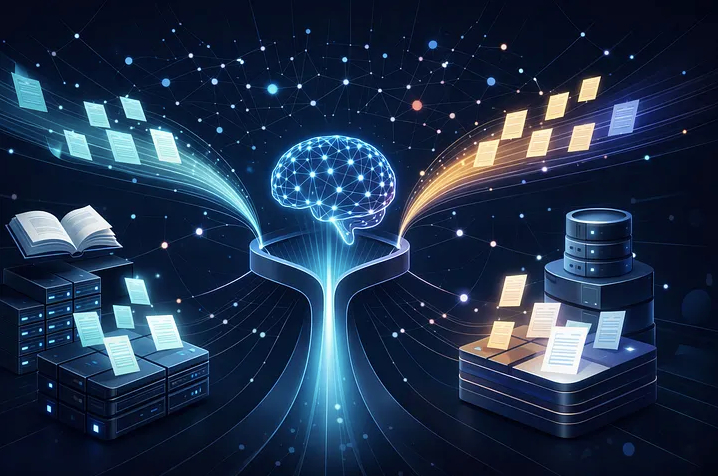
Retrieval-Augmented Generation—RAG for short—kicks in right there, bridging the gap between an AI’s baked-in smarts and the fresh, specific data it desperately needs.
It’s not some flashy new model. No, RAG’s a sly architectural tweak, born in a 2020 paper that swapped vague neural hunches for pinpoint retrieval from external sources. Patrick Lewis, the lead author now steering Cohere’s RAG efforts, regrets the acronym most days.
“We definitely would have put more thought into the name had we known our work would become so widespread,” Lewis said in an interview from Singapore.
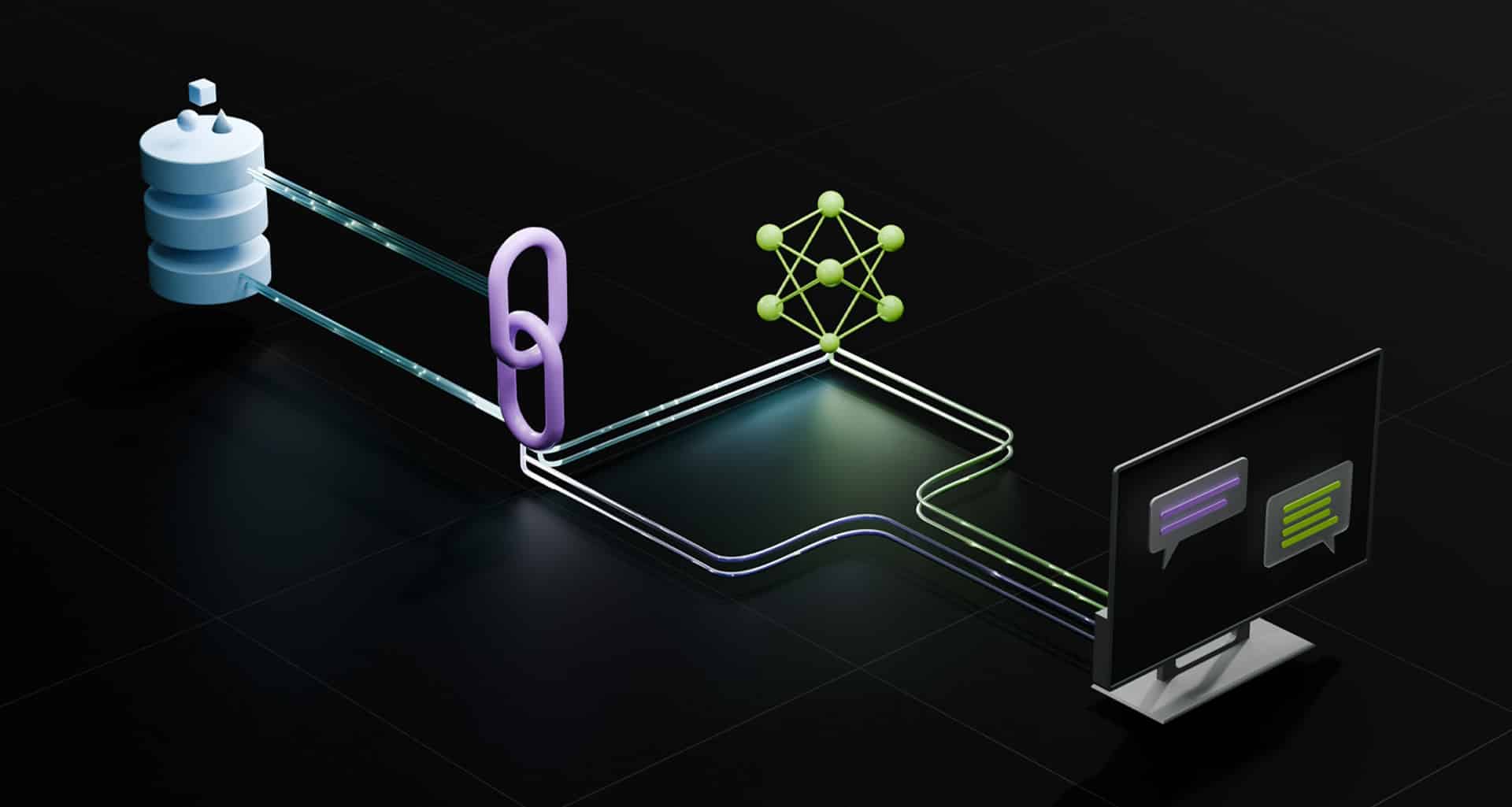
But here’s the thing—RAG stuck because it works. Brutally simple: query hits, retriever pulls relevant docs from a knowledge base, generator weaves them into a response. No full retrain. Five lines of code, they claim. And suddenly your LLM cites sources like a grad student on deadline.
Why RAG Feels Like the 90s Database Revolution
Think back to the early web. Apps choked on static files until relational databases flipped the script—dynamic pulls from vast stores, on demand. RAG does that for LLMs. Where pure generation relies on parameterized knowledge (fancy for ‘patterns from training data’), RAG injects external truth serum.
LLMs hallucinate because they’re probabilistic parrots—spinning plausible prose from statistical ghosts. RAG yanks the chain. Embeddings turn docs into vectors; a query vector hunts nearest neighbors in that space. Boom—context injected, output grounded.
But don’t buy the hype wholesale. Companies like NVIDIA push blueprints (NeMo Retriever, anyone?) as if it’s plug-and-play magic. Truth? Vector stores like Pinecone or FAISS demand tuning—chunking strategies, hybrid search, reranking. Get it wrong, and you’re feeding garbage in, hallucinating out.
My unique take: RAG isn’t a patch; it’s the precursor to AI’s episodic memory. Like human brains offloading to notebooks, LLMs will evolve hybrid architectures where retrieval loops become recursive, self-improving. Predict this: by 2026, 80% of enterprise AI skips pure fine-tuning for RAG variants.
Short para for punch: Trust skyrockets.
Users verify claims via citations. Ambiguous queries? Resolved by top-k retrievals. Cost? Pennies compared to retraining behemoths.
How Does RAG Actually Stop AI from Lying?
Hallucinations thrive in the void—LLMs fill gaps with fiction. RAG force-feeds facts.
Step one: Build a knowledge base. PDFs, logs, APIs—whatever. Chunk ‘em (overlap matters—too big, loses focus; too small, noisy). Embed with something like Sentence Transformers.
Query drops. Embed it. Cosine similarity (or fancier like ColBERT) grabs top matches. Stuff into prompt: “Based on these docs: [chunks], answer…”
Generator—say, Llama or GPT—now dances with anchors. Reduces BS by 50-70% in benchmarks, per Lewis’s crew.
Yet skeptics poke: What if sources suck? RAG amplifies biases or staleness. Solution? Multi-hop retrieval, agentic loops (fetch, reason, fetch again). That’s the shift—from static to dynamic augmentation.
And the why: LLMs scale walls of parameters, but knowledge explodes exponentially. Can’t train on everything. RAG scales infinitely, cheaply.
Here’s a wander: Remember Google’s early days? PageRank retrieved; no generation. Now flip it—generation pulls retrieval. Full circle, smarter.
Who’s Betting Big on RAG—and Why Should You Care?
AWS, Google, Microsoft—they’re all in, bundling RAG into platforms. Glean for enterprise search; Pinecone for vectors. NVIDIA’s blueprint? Solid starter, but it’s salesy—ties you to their stack.
Real wins: Doctors quizzing med indices. Analysts parsing live markets. Your company’s Slack logs become instant support bots.
Developers love it. Hot-swap sources—no downtime. Fork a repo, spin LangChain or LlamaIndex, done.
But call out the spin: Lewis calls it a ‘general-purpose fine-tuning recipe.’ Cute, but it’s not fine-tuning—it’s augmentation. PR glosses that.
Why developers? Portability. Swap LLMs without rebuilding. Open-source explosion: Haystack, RAGatouille. Experiment tonight.
Prediction holds: This births AI agents that reason over tools, retrieval as first-class citizen.
One sentence breather. Scalable truth.
Getting RAG Right: Pitfalls and Pro Tips
Chunking’s art—semantic splits beat fixed-size. Use rerankers (cross-encoders) post-retrieval. Evaluate with RAGAS or TruLens—metrics like faithfulness, answer relevance.
NVIDIA’s AI-Q blueprint? Pairs nicely for agents, distilling enterprise data. But test throughput—GPUs mandatory for prod scale.
Critique: Too many tout ‘easy’ without mentioning eval loops. Garbage retrieval = garbage out.
🧬 Related Insights
- Read more: Tech’s AI Gold Rush: Jobs Axed, Payoff Elusive
- Read more: Microsoft’s FarmVibes: Open-Sourcing AI to Harvest Data from Dirt
Frequently Asked Questions
What is Retrieval-Augmented Generation (RAG) used for?
RAG pulls external data into LLMs for accurate, cited responses—perfect for chatbots, search, analysis.
Does RAG eliminate AI hallucinations completely?
No, but it slashes them by grounding outputs in real sources; tune retrieval to minimize leftovers.
How do I implement RAG in my app?
Grab LangChain, a vector DB like Pinecone, embedder, and LLM—prototype in under an hour.