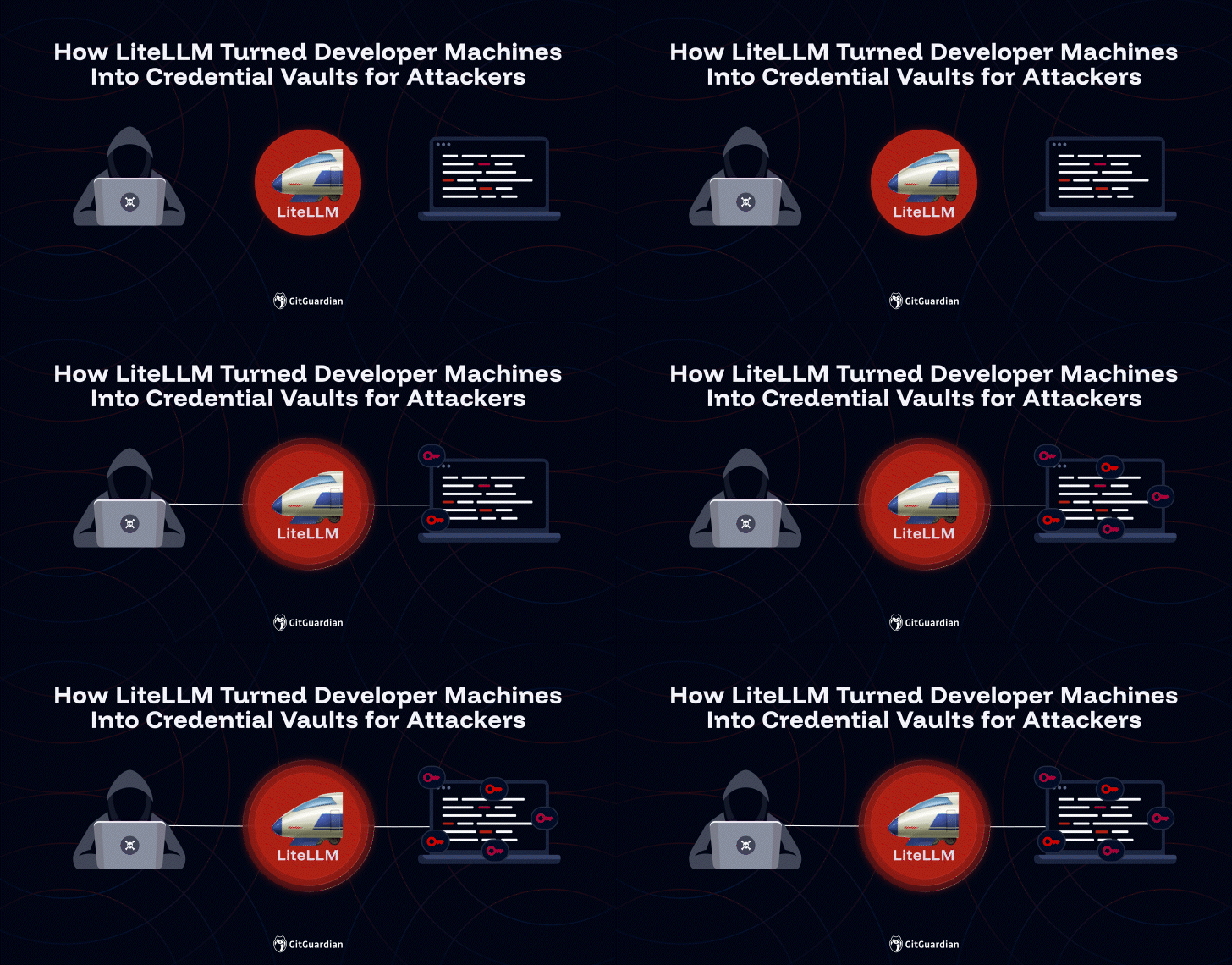
Mercor’s security team stared at logs last week, realizing their LiteLLM patch came too late—credentials swiped, source code gone.
The LiteLLM supply chain attack hit fast on April 2, 2026. This open-source model gateway—routing calls to over 100 LLM providers—gets millions of daily downloads. In hours, tainted versions snagged tens of thousands before devs yanked them. Reassuring? Security certs in place, quick fix. Hardly.
It exposed AI’s underbelly. Not some isolated npm slip-up. LiteLLM isn’t passive code; it’s the pipe between your app and models, touching APIs, agents, data flows. Steal its creds at runtime? You’re wide open.
Mercor spilled first. “One of thousands” downstream victims, they said. Malware grabbed keys, breached internals, vacuumed code. That’s the blast radius—far beyond the package.
AI recruiting startup Mercor confirmed it was “one of thousands” of downstream victims impacted by the LiteLLM supply chain attack. In their case, the compromise didn’t stop at a vulnerable package; it reportedly led to large-scale data exfiltration, including source code.
Basic malware. Noisy, crashed rigs, easy catch. Imagine stealthier: silent credential sips from OpenAI, Anthropic, your custom agents. Weeks undetected. Most wouldn’t clock the models routed, providers hit, tools exposed.
Teams patched. Good start. Pinned versions, scanned deps. Textbook app sec. But here’s the thing—did you map what LiteLLM touched?
Does Patching LiteLLM Actually Secure Your Stack?
No. Not even close.
LiteLLM proxies everything. Your one-liner completion(model='gpt-4o') hides provider swaps, API keys, agent chains calling databases or third-party tools. Dependency graphs miss this runtime dance.
Scale it: repos sprawl, teams iterate models weekly, agents evolve. Visibility? Zero. A breach ripples unseen.
My take: this echoes SolarWinds 2020. Nation-states hid in updates, hit 18k orgs. AI’s version? Faster cycles, more providers, agentic wild west. Without runtime maps, you’re flying blind. Bold call—expect 10x such incidents by 2028 unless visibility tools go mainstream.
Traditional sec fails here. SBOMs list packages, not behaviors. LiteLLM’s role? Invisible till breach.
Why Did Mercor Get Hammered—And Will You?
Connection. LiteLLM had keys to their kingdom.
It routes, authenticates, logs calls. Compromised? Exfil city. Mercor didn’t just “use” it; it gated their AI recruiting pipe—resumes, candidate data, internal APIs.
Market dynamic: AI gateways boom. Berri.ai, LiteLLM, OpenRouter—millions of pulls. Trust chains lengthen. One weak link? Cascade.
Data point: PyPI stats show LiteLLM at 5M+ weekly. Post-breach, downloads dipped 20%, per Sonatype. Recovery? Users pinned, but blast radius lingers.
Critique the spin. LiteLLM’s maintainers tout “quick remediation.” Sure. But no post-mortem on exposed scopes. Corporate quiet—classic.
The Real Fix: AI System Maps
Forget deps. Need AI-BOMs—living blueprints of models, providers, tools, workflows.
Tools like Evo AI-SPM scan usage: spot LiteLLM, trace routes (say, 60% to GPT, 30% Claude), flag unapproved providers, link to agents hitting CRMs.
Suddenly, incidents get smart. Divert traffic? Quarantine agents? Policy-check first?
But adoption lags. Gartner pegs AI sec spend at $2B this year, mostly firewalls. Visibility? Crickets.
Look, AI’s not software 1.0. Dynamic, opaque. LiteLLM proves it. Patch culture won’t cut it.
Teams must ask: What’s my gateway touching? Which keys? Agent sprawl risks?
Prediction: Regulators circle. EU AI Act mandates high-risk visibility by ‘27. US? SEC probes post-Mercor.
What Happens Next?
Short term: LiteLLM forks rise, trust erodes. Long term: baked-in visibility wins. Vendors like Evo close the gap—map runtime, not just code.
Don’t sleep. Your next “patch” might mask a Mercor-scale leak.
Frequently Asked Questions
What caused the LiteLLM supply chain attack?
Malware in brief tainted PyPI releases stole runtime credentials from the model gateway.
How did the LiteLLM hack impact Mercor?
Stolen creds led to source code exfiltration and internal system access.
What’s an AI-BOM and do I need one?
A dynamic map of your AI usage—models, providers, tools—not just deps. Essential for blast radius control.