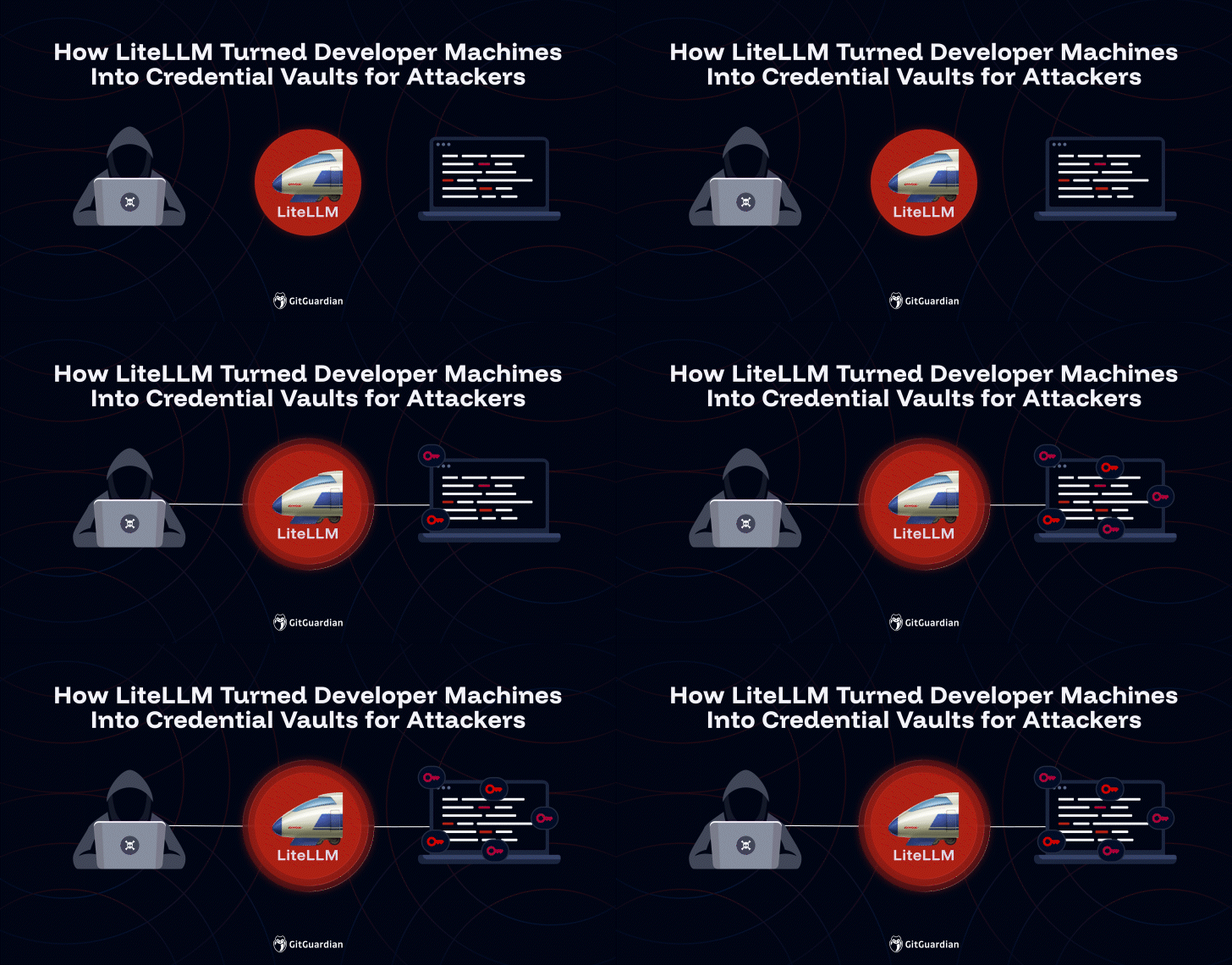
March 24, 2026. Two versions of LiteLLM – that’s litellm==1.82.7 and litellm==1.82.8 – land on PyPI, the Python package index every dev trusts. Inside? Malware that scans your server like a desperate burglar, grabbing AWS keys, database passwords, Kubernetes configs, and crypto wallet details.
Supply chain attacks aren’t new. They’ve been climbing – a ‘significant proportion’ of cyber incidents now, per the experts. But this one hits where it hurts: AI tools. LiteLLM’s a multifunctional gateway for AI agents, proxying calls to a zoo of models. Devs love it. Install once, route everywhere. Perfect camouflage for thieves.
How Did They Sneak This Malware In?
Account takeover, probably. Attackers compromised the LiteLLM maintainer’s PyPI creds – simplest trick in the book. No fancy zero-days needed. Just phish or brute-force, upload tainted packages. Version 1.82.7 hid evil in proxy_server.py; 1.82.8 added a sneaky litellm_init.pth file that fires on Python startup.
Both dropped Base64-encoded payloads. Decode, save as p.py, run it. Boom – main script launches in memory, no disk traces. It scans dirs like /root, /app, /var/www. Dumps file contents to stdout, grabs system info, hunts secrets.
The malicious code in the proxy_server.py and litellm_init.pth files contained Python code encoded in Base64. After execution, the infected script saved this code alongside itself as a p.py file and immediately executed it.
That’s from the technical teardown. Clean, right? Encrypts output with AES-256-CBC (random key, RSA-wrapped), bundles into tpcp.tar.gz, phones home to C2 server. Neat package for your plunder.
But here’s the cynical bit. Who’s footing the bill for all this sophistication? Not some script kiddie – this screams organized crew, maybe state-sponsored, eyeing cloud empires. Devs pinballing between OpenAI, Anthropic, and Claude? Your proxy just became their export lane.
Why Target LiteLLM? Follow the AI Gold Rush Money
LiteLLM isn’t obscure. It’s the Swiss Army knife for AI integrations – one library, dozens of providers. Rush to build agents? Grab it. And in 2026, AI’s everywhere: startups, enterprises, your weekend project. Supply chain’s ripe because no one’s vetting deps like they should.
Malware didn’t stop at files. It hit runtime secrets. Pings 169.254.169.254 – AWS IMDS for IAM creds. 169.254.170.2 for ECS tasks. Live theft from the cloud. SSH keys, .env files, Helm charts, Terraform state, TLS certs, WireGuard VPNs, Slack webhooks, GIT creds. Even crypto wallets. (Because why not diversify the heist?)
Look, I’ve covered Valley hype cycles for 20 years. Remember SolarWinds 2020? Nation-states rode legit updates to spy on Fortune 500. This? Same playbook, AI edition. But my unique bet: AI libs like LiteLLM are the new SolarWinds because everyone’s sprinting to ‘agentic’ workflows without pausing for sboms or reproducible builds. Prediction – by 2027, we’ll see mandatory PyPI signing, but only after a Fortune 100 breach lights the fire. Who’s making money? Attackers cashing creds on dark markets; VCs funding ‘secure AI gateways’ startups tomorrow.
Short para for punch: Devs, audit your lockfiles now.
Is Your Server Next in the LiteLLM Lineup?
Check pip list. Running 1.82.7 or 1.82.8? Nuke it. But ripple effects? If downstream deps pulled it, your container, your Lambda, your Kubernetes pod – all vectors. Consequences range from malware drop on dev laptops to full infra pwnage.
Targets screamed cloud-native: MySQL, Postgres, Mongo configs. NPM, AWS, K8s. Why? Those yield persistent access. Steal DB creds, you’re in forever. IMDS grab? Pivot to S3 buckets, RDS, the works.
Cynical aside — PyPI’s a wild west. No 2FA mandates till recently, account compromises routine. Open-source maintainers? Often solo heroes underpaid, overtrusted. LiteLLM’s creator probably woke to chaos, like XZ Utils guy last year. (That near-rootkit was wild.)
Medium para: Mitigation’s basic but ignored. Use virtualenvs, pin versions, scan with tools like pip-audit or Safety. But hey, deadlines loom – security’s that afterthought tab.
And sprawler: So you’re a dev team shipping AI features; you’ve got LiteLLM proxying traffic, maybe even in prod; attackers activate, it quietly exfils your prod AWS roles – next thing, someone’s draining your billing or exfiling customer data – all because you pip install litellm without a care, trusting the ecosystem that’s been a sitting duck for years, propped up by VC-fueled rush and zero liability for package hosts.
The Bigger Supply Chain Rot – And Who Pays?
This ain’t isolated. Past year: malicious OSS libs, delayed backdoors, maintainer hacks. PyPI, NPM – candy stores for crooks. AI boom amplifies: more deps, less scrutiny.
Unique spin: Valley’s ‘move fast’ mantra birthed this. Buzzword ‘gateways’ like LiteLLM? PR gold, but brittle. Real money? In breaches – insurers hike premiums, consultancies boom. Attackers? Millions in stolen infra.
FAQ time? Devs Google this stuff.
🧬 Related Insights
- Read more: LatAm’s Hidden Cyber Wizards: Self-Taught Talent Ready to Crush the Attack Wave
- Read more: Brain Hack Taxonomy: Five Layers Where Reality Crumbles
Frequently Asked Questions
What happened in the LiteLLM PyPI attack?
Hackers uploaded malicious versions 1.82.7 and 1.82.8 on March 24, 2026, embedding Base64 malware that steals cloud creds, DB configs, SSH keys, and more, exfiling encrypted to a C2 server.
How to check if LiteLLM malware hit my project?
Run pip list | grep litellm for vulnerable versions. Use pip-audit or check deps recursively. Rebuild from clean lockfiles.
What secrets did LiteLLM hackers target?
AWS IAM/ECS creds, K8s configs, DB setups (MySQL/Postgres/Mongo), SSH/GIT keys, .env files, crypto wallets, TLS certs, Slack webhooks.
Wake up, folks. AI’s fun till it’s your keys.