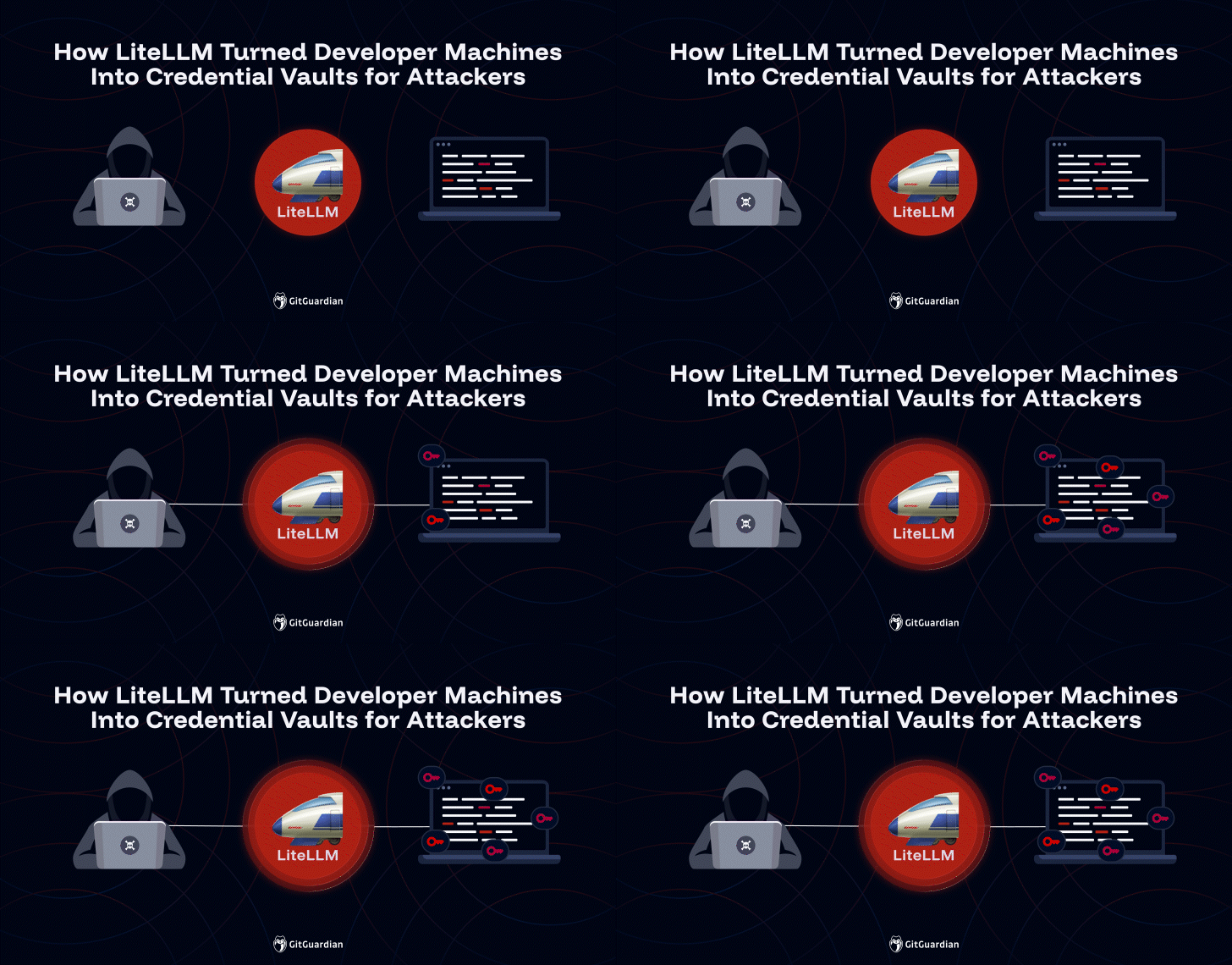
Picture this: it’s a Tuesday afternoon, coffee gone cold, and you pip install LiteLLM to spin up a quick local AI agent. Seconds later, malware’s rifling through your ~/.aws/credentials.
That’s not sci-fi. That’s March 2026, courtesy of TeamPCP’s supply chain hit on LiteLLM—a library millions grab daily for proxying LLM calls.
The LiteLLM attack didn’t invent new tricks. It just exploited the oldest one: devs hoard secrets on their machines like squirrels with nuts. Versions 1.82.7 and 1.82.8 on PyPI? Laced with infostealer that scooped SSH keys, AWS/Azure/GCP creds, Docker configs. PyPI yanked ‘em fast, but not before 1,705 packages pulled them as deps—think dspy (5M downloads/month), opik, crawl4ai.
Organizations nowhere near LiteLLM? Still owned through transitive hell.
What Made LiteLLM the Perfect PyPI Poison?
TeamPCP didn’t brute-force. They compromised the build pipeline, injected malware that lit up on install or update. Straightforward. Devastating.
The malware only needed access to the plaintext secrets already sitting on disk.
GitGuardian’s postmortem nailed it: no exploits needed beyond what’s already there. And here’s my angle—the original reports gloss over the architecture shift. Local AI agents aren’t toys; they’re mini-servers slurping creds for APIs, vector stores, fine-tuning runs. Every IDE extension, CLI tool, bot? Another vault door left ajar.
But. Predict this: as agentic AI floods dev workflows (hello, Devin, Cursor), these attacks spike 10x by 2027. Laptops morph into distributed datacenters, each a credential piñata.
Short para. Devs won’t notice.
Why? Burst of activity—install, test, forget. Malware runs silent, exfils to C2. Done.
Transitive deps amplified it. One popular lib pulls LiteLLM? Cascade. dspy alone could’ve lit up thousands.
Why Do Developer Machines Scream ‘Hack Me’?
Look, we’ve seen this movie. Shai-Hulud campaigns harvested 33k secrets from 7k machines—3.7k still live. Each secret duplicated eight ways: .env, shell history, IDE caches, build artifacts.
59%? CI/CD runners, not laptops. But the real prize is your MacBook.
It’s the nexus. Credentials spawn there—generated in consoles, pasted into terminals, cached by tools, scattered in dotfiles. ~/.docker/config.json? Check. gh auth status? Pulled. Even AI agent ‘memory’ dirs from local LLMs.
Adversaries mirror your sec tools. They scan predictable paths: project .env (gitignored? Ha), ~/.config/gcloud, zsh_history with that one-time AWS token you copy-pasted.
Convenience kills. .env for local-only? Stays forever. Debug prints? Console logs to file. Boom—residue.
And the hypocrisy. Companies preach vaults like Vault or SSM, but devs sidestep for speed. (Corporate PR spin: “Just use our tool!” Yeah, until the transitive dep owns you.)
How Deep Does the Secrets Mess Go?
Drill down. Malware didn’t guess; it knew.
Paths hardcoded: AWS creds (~/.aws), Azure (~/.azure), GCP (~/.config/gcloud), SSH (~/.ssh), GitHub CLI, Docker, even Kubernetes kubeconfig.
Why so easy? Devs run everything local now—agents, RAG pipelines, MCP servers. Each needs keys. They leak.
Historical parallel I haven’t seen elsewhere: this echoes the Morris Worm (1988). It hopped Unix nets via trust gaps, like sendmail debug. Today? Trust in deps, local plaintext. Same architecture flaw, AI scale.
Critique time. GitGuardian pushes ggshield for endpoints—fair, it scans repos, filesystems, even shell profiles. Pre-commit hooks block commits. Solid.
But detection’s table stakes. Remediation? Hell. Leak found, rotate across infra, hunt propagation. Dev gone? Good luck.
Unique fix: Mandate endpoint secrets vaults. Not just code repos. Tools like 1Password CLI or Doppler, enforced via MDM. Scan on boot, airgap sensitives. AI agents? Ephemeral creds only, via workload identity.
Can You Actually Secure Dev Endpoints?
Yes. But it hurts.
Step one: Visibility. ggshield your workspace—git history, dotfiles, agent caches. Don’t skip env vars; they dump to disk.
| Imagine ggshield flagging that AWS key in ~/.zsh_history. |
Hooks everywhere: pre-commit, IDE plugins. Train devs—secrets die on commit.
Vaults next. Shift to vaults. AWS Secrets Manager for local pulls? Messy. Better: cross-platform like Infisical or GitGuardian’s own, scanning endpoints at scale.
Policy hack: Block pip installs outside proxies. Mirror PyPI internally, sig-check deps. (Bonus: catches SolarWinds 2.0.)
Long-term? Agentic shift. Local LLMs with no net? Or zero-trust creds via SPIFFE. Painful migration, but LiteLLM proves procrastination costs.
Skeptical? Vendors hawk endpoint DLP now—post-LiteLLM cash grab. Test ‘em; most miss shell history.
🧬 Related Insights
- Read more: Windows 11 Admin Protection Bypassed—Nine Times Over
- Read more: Boggy Serpens’ Four-Wave Siege on Middle East Energy
Frequently Asked Questions
What was the LiteLLM PyPI attack?
TeamPCP compromised LiteLLM v1.82.7/1.82.8, injecting malware that stole creds from dev machines on install. Hit via direct or transitive deps.
How do I protect my developer laptop from these attacks?
Scan with ggshield (files, history, caches), use pre-commit hooks, vault all secrets, proxy PyPI installs.
Will AI libraries keep getting hacked like LiteLLM?
Likely—exploding local AI use means more deps, more vectors. Expect endpoint scanning to be table stakes by 2027.
