AVs just leaped forward.
NVIDIA’s Cosmos Predict-2 isn’t some incremental tweak; it’s a beast of a foundation model that predicts future worlds from sensor chaos, spitting out synthetic data so crisp it rivals reality. Picture this: you’re training an self-driving truck to handle fog-shrouded highways, but real data’s scarce and pricey. Boom — Cosmos Predict-2 generates endless variations, no humans needed. And it’s all baked into their Cosmos platform, where giants like Oxa, Plus, and Uber are already scaling up.
This shift? Massive. AV stacks used to cobble together specialized models — one for lanes, another for pedestrians. Now, end-to-end giants devour raw sensor feeds and output steering commands. But they guzzle data. Enter NVIDIA’s arsenal: Cosmos Predict-2, new NIM microservices, and tools that turn dashcams into multi-view feasts.
Here’s the thing.
Cosmos Predict-2 builds on its predecessor by grokking context deeper — text prompts, images, videos — slashing those pesky hallucinations that plague video gen. Fewer blurry ghosts, richer details. And on GB200 NVL72 racks? It flies, churning data at warp speed via fresh optimizations.
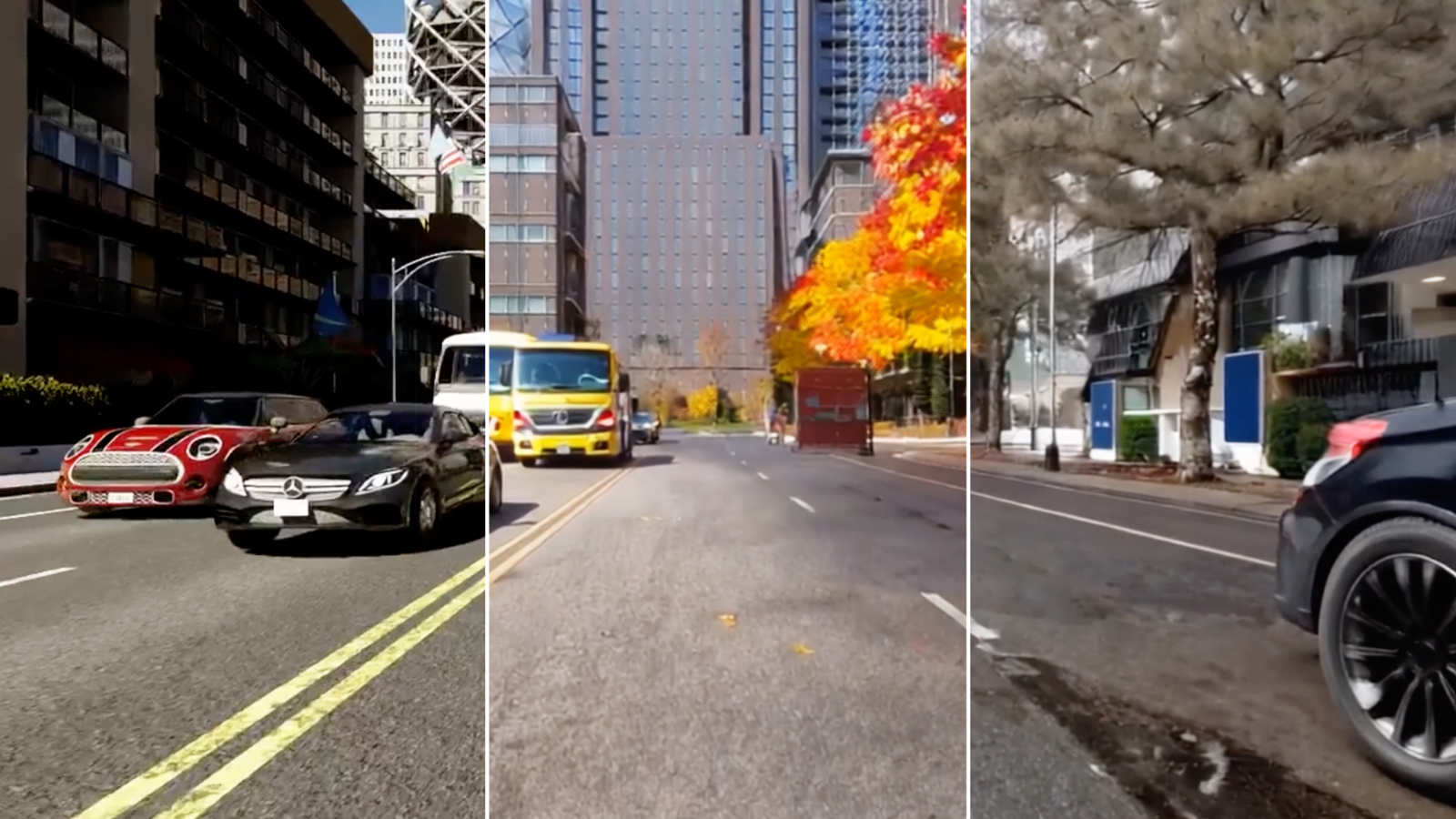
“By post-training Cosmos models on AV data, developers can generate videos that accurately match existing physical environments and vehicle trajectories, as well as generate multi-view videos from a single-view video, such as dashcam footage.”
That quote from NVIDIA nails it. Dashcams — everywhere, cheap — suddenly become treasure troves. Feed in one angle, get 360-degree views. Broken sensor? Inpaint it. Foggy rain? Simulate perfection. Their research team post-trained on 20,000 hours of real drives, boosting performance in nasty weather.
How Does Cosmos Predict-2 Crush AV Training Bottlenecks?
Think of it like this: real-world data collection is a slog — trucks crawling miles, cameras failing, ethics boards hovering. Synthetic data? Infinite, controllable, safe. Cosmos Predict-2 accelerates that loop. Plus is post-training it on trucking logs for hyper-real scenarios; Oxa crafts consistent multi-cams. It’s not hype; it’s deployment-ready.
But wait — my hot take. This echoes the GPU boom in gaming: NVIDIA’s chips turned pixel-pushers into AI powerhouses. Cosmos Predict-2? It’s the GPU for AV data engines. Bold prediction: within two years, we’ll see AV fleets balloon like EVs did post-Tesla, because data scarcity vanishes. No more excuses for Waymo or Cruise.
Post-training unlocks wild sources. Single dashcam to full surround? Check. Match exact trajectories? Yup. And it’s not solo — Cosmos Transfer NIM microservice deploys easy on GPUs, augmenting Omniverse sims into photoreal vids. NuRec Fixer patches reconstruction gaps, like digital duct tape for neural renders.
CARLA users — 150,000 strong — get this in their next drop. Author trajectories, tweak sensors, summon storms with prompts. NVIDIA’s Physical AI Dataset drops 40,000 Cosmos clips plus scenes. Their Research team’s CVPR win? Proof end-to-end AVs thrive on this pipeline.
Will NVIDIA Halos Finally Lock Down AV Safety?
Safety’s the elephant. Halos weaves hardware, software, and AI into a fortress — Bosch, Easyrain, Nuro onboard. But here’s the skepticism: NVIDIA’s PR spins Halos as comprehensive, yet real streets demand more than sims. Still, paired with Cosmos, it’s potent.
Energy here is electric. AVs aren’t sci-fi anymore; they’re data-hungry machines NVIDIA’s feeding. Imagine trucks hauling without pilots, robots navigating monsoons — all from predicted worlds. Developers, grab these tools; the race accelerates.
And the ecosystem? Thrumming. Uber scales with Cosmos; Plus commercializes trucks. It’s a platform shift — AI as the canvas for physical intelligence.
One glitch, though.
Hallucinations linger in fringes, and post-training needs your data. But gains? Astronomical.
Why Are AV Devs Rushing to NVIDIA’s Playground?
NIM microservices mean plug-and-play. No PhD required. Cosmos Transfer from Omniverse sims? Endless weather tweaks. NuRec APIs render fideliously. CARLA integration democratizes it — open-source magic meets enterprise muscle.
NVIDIA Research’s Grand Challenge double-win screams validation. Unexpected scenarios? Handled.
This isn’t just tools; it’s the flywheel. More data, better models, safer AVs, faster rollout. We’re witnessing autonomy’s ignition.
🧬 Related Insights
- Read more: Mistral’s Voxtral TTS Drops Open Weights That Mock ElevenLabs’ Pricing
- Read more: DeepSeek V4 Unleashed: China’s Sparse Attention Revolution Hits Now
Frequently Asked Questions
What is NVIDIA Cosmos Predict-2?
It’s a foundation model predicting future driving states from sensors, generating hallucination-free synthetic videos for AV training — way faster on NVIDIA hardware.
How does Cosmos Predict-2 help autonomous vehicles?
By turning dashcam clips into multi-view data and simulating rare events like fog, it explodes training datasets, cutting costs and boosting performance in tough conditions.
When will Cosmos Predict-2 be available for developers?
Already out via Cosmos platform; NIM previews deploying now, with CARLA integration incoming for 150k+ users.