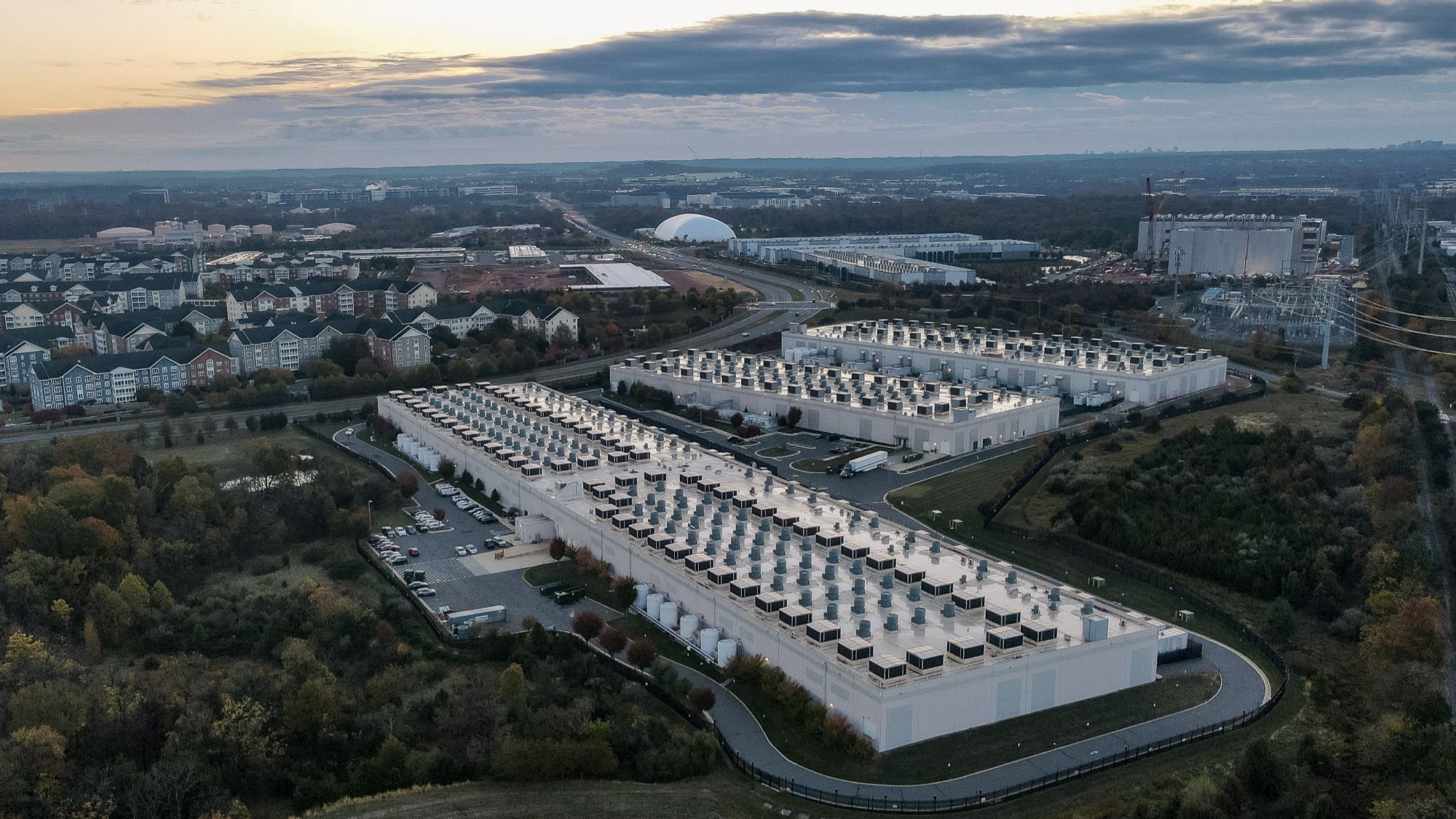
This isn’t about whether Kevin O’Leary’s Stratos project in Utah got approved; it’s about what that approval means for the average Utahn. Imagine your electricity bill. Now imagine that bill multiplied by more than twice the total power the entire state currently uses, all for a single, albeit enormous, data center campus. That’s the scale of what’s just been greenlit in Box Elder County.
Stratos, backed by O’Leary Digital, plans to occupy a jaw-dropping 40,000 acres. The ambition? A colossal 9 gigawatts (GW) of power capacity at full build-out, with Phase 1 alone targeting 3 GW. To put that in perspective, Utah’s grid currently hums along at around 4 GW on average. This facility isn’t just plugging into the existing system; it’s essentially building its own power plant, tapping directly into the Ruby Pipeline’s natural gas. O’Leary’s team insists it “will not take one electron” from the existing grid and could even feed surplus power back – a bold claim that, if realized, would be a significant feat.
AI’s insatiable appetite for electricity is the driving force behind this, and Stratos is far from an anomaly. We’re seeing an arms race in data center infrastructure. SoftBank’s planned Ohio campus aims for 10 GW, and Meta’s Louisiana facility will be fueled by seven new natural gas plants. O’Leary is framing this as a race against China’s AI investments, arguing that the US needs to build its infrastructure to keep pace.
But is this race worth the environmental and economic cost? The Utah Military Installation Development Authority (MIDA) certainly seems to think so. To woo O’Leary Digital, they slashed the energy use tax from 6% to a mere 0.5% and are rebating 80% of property tax revenue. The projected $30 million annually for Box Elder County during Phase 1, and over $100 million at full capacity, along with $250 million in state sales tax receipts and 2,000 permanent jobs, paint a rosy picture for local coffers and employment. It’s a sweet deal, sweetened significantly by tax breaks that would make even the most seasoned venture capitalist blush.
The Price of Progress: Energy Scarcity and the Grid
Here’s the thing: building your own power source is one thing. Doing it on this scale, and with this much reliance on fossil fuels, is another. While the promise of an off-grid, self-sustaining data center sounds impressive, the sheer volume of energy required is staggering. The Ruby Pipeline connection implies significant natural gas consumption. And what happens if the pipeline is disrupted? Or if the on-site generation, despite its massive scale, falls short during peak demand? The MIDA’s assertion that no power will be drawn from the existing grid is a crucial point, but it doesn’t erase the fact that this project is contributing to the overall demand for energy generation, likely from sources that will impact emissions.
This isn’t just a Utah story; it’s a microcosm of a larger societal challenge. We’re building the future of artificial intelligence on a foundation of immense power consumption. While the economic benefits are tangible – jobs, tax revenue, attracting tech investment – the environmental trade-offs are equally real. Are we prepared for a future where colossal data centers are a dominant feature of the energy landscape, potentially straining resources and increasing our reliance on carbon-intensive power sources?
My unique insight here? This isn’t just about AI’s power needs; it’s a throwback to the boom-and-bust energy projects of previous industrial eras. Think of the sprawling fossil fuel infrastructure built in the 20th century. We’re seeing a similar, albeit digital, gold rush mentality, where the immediate economic rewards of infrastructure development are prioritized, sometimes with less consideration for long-term sustainability than we’d hope in this, the supposed Information Age. The irony isn’t lost on me – we’re building the next technological frontier on a model that echoes the past.
And let’s not forget the unknowns. As of this writing, no hyperscaler tenants have been publicly named for Stratos. This leaves a gaping hole in understanding precisely who will be operating these behemoths and what specific AI workloads they’ll be running. This isn’t just minor detail; it has implications for the types of power demands and potential energy security vulnerabilities.
Ultimately, the approval of Stratos is a high-stakes bet. It’s a bet on continued AI growth, on O’Leary’s infrastructure ambitions, and on Utah’s willingness to accommodate massive energy projects. The promise of economic prosperity is alluring, but the shadow of unprecedented energy consumption looms large. The real test will be whether this colossal undertaking can truly deliver on its promises without leaving the state – and the planet – in a deeper energy deficit.
Is This the Future of AI Infrastructure?
The sheer scale of Stratos, and similar projects emerging globally, suggests that hyperscale data centers are going to increasingly operate with their own dedicated, often proprietary, power generation. This trend is a direct response to the years-long waiting lists and grid upgrade costs associated with connecting massive facilities to existing utility infrastructure. Companies are opting for speed and control, even if it means higher upfront investment in power generation assets. This moves us away from a centralized grid model for these types of operations and towards a more distributed, self-sufficient, but potentially more carbon-intensive, energy ecosystem for AI.
Why Does This Matter for Real People?
Beyond the immediate job creation and tax revenue, projects like Stratos have ripple effects. For individuals, it could mean increased competition for energy resources, potentially impacting electricity prices or the availability of renewable energy projects in the long run. It also highlights the disconnect between the rapid, seemingly boundless growth of AI and the finite nature of our planet’s resources. This isn’t abstract; it’s about ensuring a sustainable energy future that powers not just AI, but also homes, schools, and hospitals.
**
🧬 Related Insights
- Read more: AI Datacenter Energy: UK Gov’s Numbers Don’t Add Up
- Read more: Astropad Workbench Turns Your iPhone into an AI Agent Control Tower
Frequently Asked Questions**
-
What does Kevin O’Leary’s 9 GW data center in Utah do? It’s a massive facility designed to house and power AI computing operations, drawing energy from its own natural gas-powered generators rather than the public grid.
-
Will this data center use more power than my home? Yes, by an astronomical margin. It’s designed to consume more than twice the amount of power the entire state of Utah currently uses on average.
-
Is this bad for the environment? The project relies on natural gas for power generation, which contributes to greenhouse gas emissions. While it aims to be off-grid, the overall increase in energy consumption and reliance on fossil fuels raises environmental concerns.