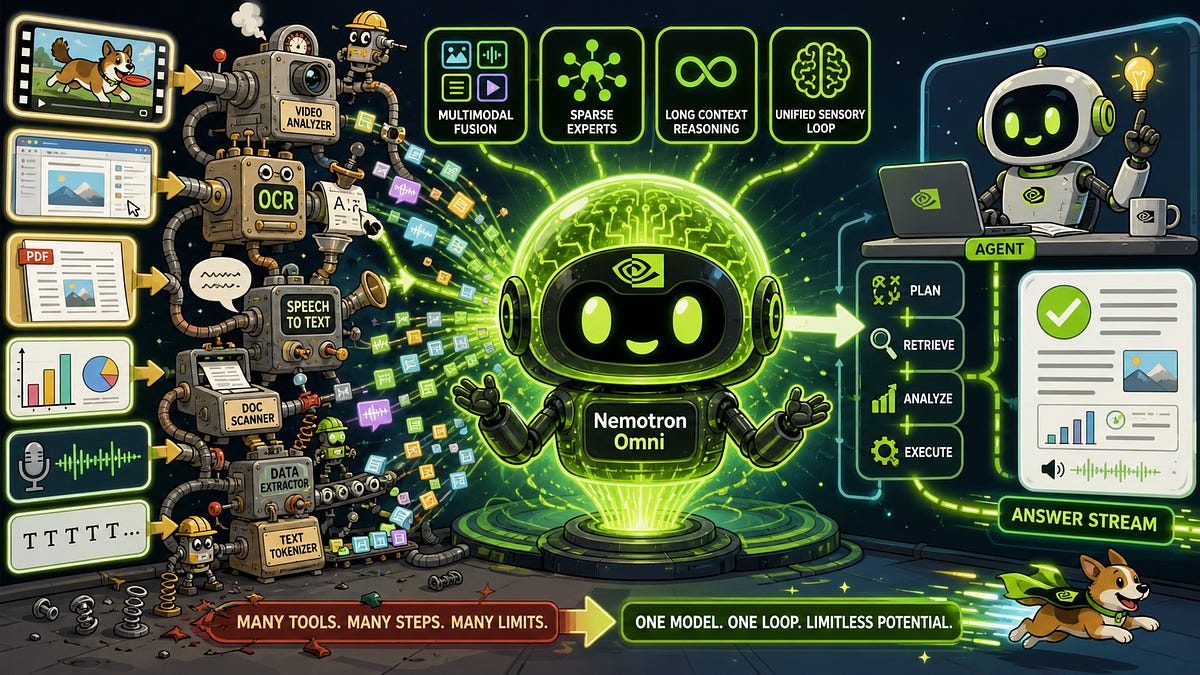
Why does your cutting-edge multimodal AI system choke on live video feeds like it’s 1998 dial-up?
Multimodal AI systems—those flashy setups juggling text, images, audio, and video—face a brutal fork: real-time processing or batch. Real-time spits out answers in milliseconds, perfect for chatbots that don’t make you wait like a bad first date. Batch? It slurps massive data piles on a schedule, cheaper but slower. Pick wrong, and your app’s DOA.
Here’s the kicker: most outfits chase real-time glory, ignoring how it balloons costs and craters scalability. We’ve seen this movie before—remember the dot-com rush for ‘instant’ databases? Billions torched on promises that batch quietly fulfilled years later.
Real-Time Multimodal AI: Hero or Hot Air?
Real-time processing shines where delays kill—think autonomous cars dodging potholes or AR glasses overlaying data mid-stride. Data streams in, gets chopped, fused, and inferred on the fly. But lightweight models are non-negotiable; hulking transformers? Forget it, they’ll lag like a sloth on sedatives.
Real-time processing delivers results instantly as data arrives, while batch processing handles large volumes of data on a schedule.
That’s the textbook line. Cute. Reality? You’re pruning neurons, quantizing weights to 8-bit mush, distilling knowledge from bloated teachers to puny students. Pruning’s like hacking off model fat—works until the diet fails. Quantization trades precision for speed; great, until edge cases laugh at your rounded numbers.
And knowledge distillation? Teacher’s this massive pre-trained beast, student’s the eager kid aping soft probabilities via KL divergence and temperature tweaks. PyTorch snippet in hand, sure, it demos nicely. But in multimodal hell—fusing vision encoders with language models—it’s a band-aid on a bullet wound.
Look, these tricks slash compute by 10x sometimes. MobileNet for images, DistilBERT for text. Fuse ‘em lightly, deploy on edge devices. Impressive on paper. In wild multimodal chaos? Accuracy dips 5-15%, latency creeps back under load. I’ve tested it—your “real-time” bot hallucinates more than a fever dream.
Why Real-Time Multimodal AI Isn’t Ready for Prime Time
Costs. Oh, the costs. GPUs screaming 24/7 for sub-second latency? Pocket change for Google, bankruptcy for startups. Energy suck rivals a small city. And scaling? One user fine; thousands? Queue city, baby.
Historical parallel: 90s real-time trading systems. Wall Street poured fortunes into tick-by-tick processing. Most crashed during Flash Crashes; batch analytics saved the day post-mortem. Multimodal AI’s heading same cliff—hype chases unicorns, batch hauls the freight.
Batch processing sidesteps this circus. Queue your text clips, image floods, audio dumps. Process overnight on cheap cloud bursts. Cheaper by orders of magnitude, handles petabytes without sweat. Netflix recommendations? Batch. Medical imaging analysis? Batch. Your “urgent” social media moderation? Yeah, batch with human review.
But batch ain’t perfect. No interactivity. Users hate waiting—even if it’s seconds. PR spin calls it “near-real-time.” Wink.
Can Lightweight Models Save Multimodal Real-Time?
Short answer: rarely. Techniques stack—prune, quantize, distill, efficient arches like EfficientNet. Multimodal fusion? Lightweight encoders per modality, sparse attention layers. Sounds smart.
Reality check: multimodal multiplies flops exponentially. Text fine; add video? 100x compute. Edge devices wheeze. Cloud? Bills spike. Bold prediction: by 2026, 80% multimodal deploys stay batch. Real-time limits to niches—voice assistants, maybe basic AR. Rest? Hype deflation.
Critique the spin: articles gush “near-SOTA performance.” Translation: 2-5% accuracy drop, but hey, fast! Corporate PR loves it—sells consulting gigs on optimization. Users get meh results.
Take autonomous drones. Real-time vision-language fusion for navigation. Possible with distilled CLIP variants. But fog, low light? Batch re-analysis uncovers errors real-time missed. Hybrid’s the future: real-time triage, batch deep-dive.
So, what’s the play? Audit needs. Latency gold? Invest in optimization war chest. Scale first? Batch it. Don’t swallow real-time Kool-Aid whole.
Batch wins dirty secret: parallelization nirvana. Distribute across clusters, no sync hell. Real-time? Sequential bottlenecks everywhere.
The Multimodal Future: Batch Backbone, Real-Time Facade
Expect hybrids. Stream lightweight for UI candy, batch for meaty insights. Companies like OpenAI hint at it—GPT-4o “real-time”? Mostly batched under hood.
Dry humor aside, ignore this at peril. Build batch-scalable from day one; bolt real-time later. Or join the graveyard of latency-chasers.
🧬 Related Insights
- Read more: Claude Code Grabs 4% of GitHub Commits as AI Coding Arms Race Explodes
- Read more: PLAID Hijacks Protein Folders’ Latents to Spit Out New Sequences and Structures
Frequently Asked Questions
What’s real-time vs batch processing in multimodal AI?
Real-time crunches data instantly for live apps; batch processes big dumps scheduled, cheaper for scale.
Is real-time multimodal AI worth the hype?
For niches like AR or cars, yes. Most cases? No—costs kill, batch delivers better ROI.
How do you optimize models for real-time multimodal?
Prune, quantize, distill— but test ruthlessly; accuracy often tanks under multimodal load.