Everyone was expecting AI to be this giant, nebulous cloud entity, a force that would either bestow god-like powers upon us or usher in our inevitable robot overlords. We imagined vast server farms humming with intelligence, processing our queries from afar. And for a long time, that was the narrative. AI meant APIs, cloud credits, and praying the server didn’t go down during a critical moment. But here’s the thing: what if the future of AI isn’t some distant, ethereal force, but something you can, quite literally, hold in your hands? What if it’s humming away on your desk, a silent, tireless partner in the messy, glorious business of building software?
This is precisely the seismic shift we’re witnessing with Greg Kroah-Hartman, the Linux kernel’s rockstar maintainer—basically, Linus Torvalds’ right-hand person. He’s gone and built a local AI bug-hunting machine, a sort of digital Sherlock Holmes for the kernel’s labyrinthine code. He’s dubbed it the “clanker.” And it’s not just a pet project; it’s already nudged close to two dozen patches into the mainline Linux kernel since April 7th. That’s not insignificant. That’s real, tangible progress, addressing bugs in everything from sound drivers to graphics stacks.
Imagine a master detective, not just reading reports, but actively sniffing out clues, probing dark corners, and presenting you with suspicious patterns. That’s essentially what Kroah-Hartman’s ‘Clanker T1000’ is doing for the Linux kernel. It’s not writing code wholesale—let’s be clear on that. Instead, it acts like a hyperactive, incredibly persistent fuzzer. It throws an absolute barrage of unexpected inputs at the code, like a toddler with a box of crayons attacking a pristine whiteboard, searching for the inevitable crashes, memory leaks, and other hidden nasties that developers normally spend weeks, or even months, trying to uncover.
The ‘Clanker’ Unpacked: More Than Just a Fancy Fuzzer
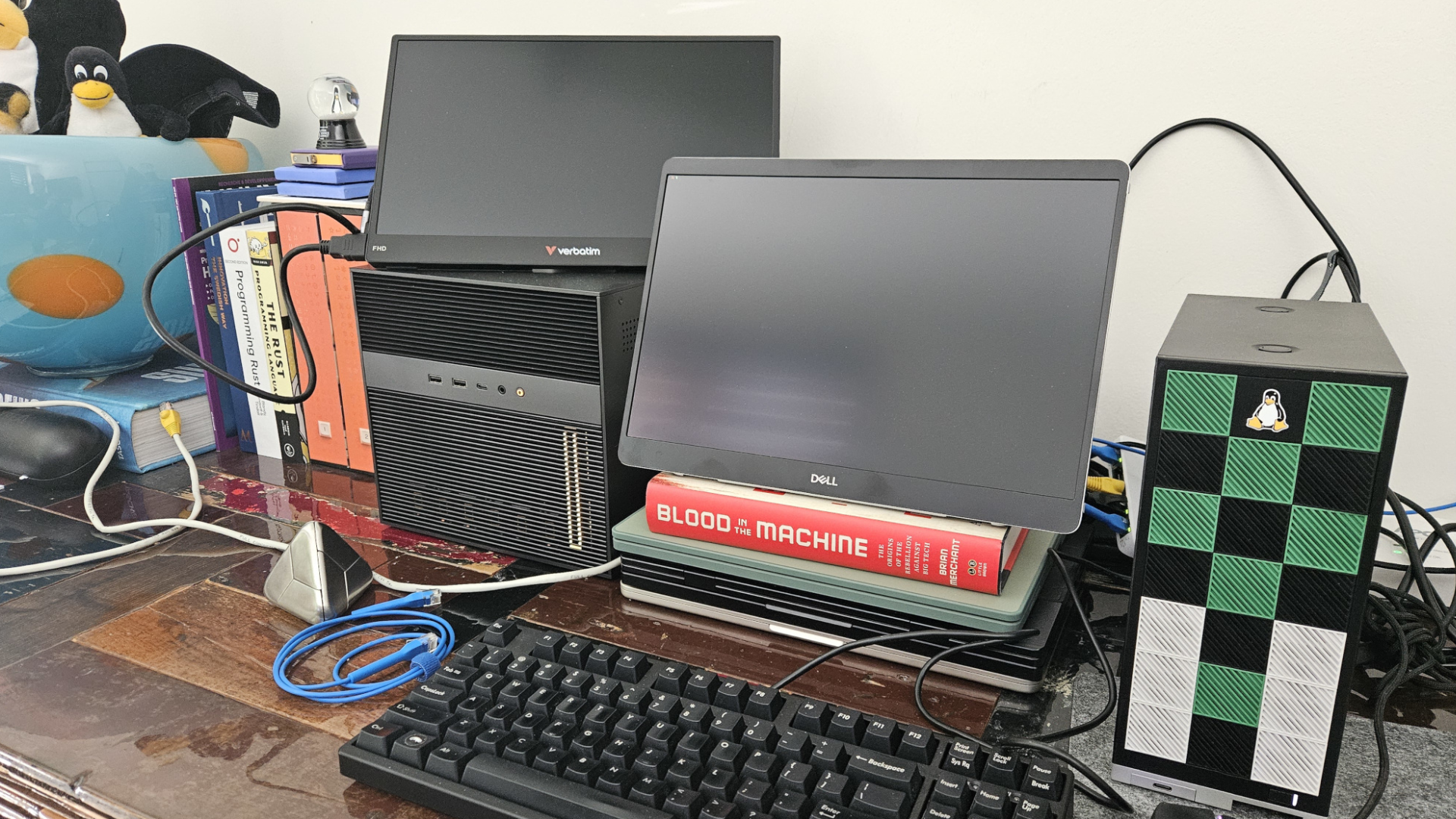
So, what’s powering this nascent bug-whisperer? It’s a beast of a machine, a Framework Desktop, sporting AMD’s Ryzen AI Max+ “Strix Halo” processor. This isn’t your average office PC. We’re talking 16 Zen 5 CPU cores, a whopping 40 RDNA 3.5 compute units, and up to a staggering 128 GB of unified LPDDR5x memory. This unified memory pool is the real secret sauce here. It allows both the CPU and the integrated GPU to access a massive chunk of data, which is absolutely critical for running large language models locally. Think of it like a chef having an enormous, perfectly organized pantry right next to their cooking station, rather than having to run out to the grocery store every time they need an ingredient. This is how you run hefty AI models without needing a data center or an exorbitant cloud bill.
Kroah-Hartman is, quite rightly, candid about the need for human oversight. He’s tagged the patches with “Assisted-by: gregkh_clanker_t1000,” and his submission notes are a masterclass in responsible AI integration: “please don’t trust them at all and verify that I’m not just making this all up before accepting them.” This level of transparency is precisely what the Linux project outlined in its new AI code policy: disclosures and, crucially, full personal liability for submitted code. Kroah-Hartman was already ahead of the curve, but it’s fantastic to see this level of thoughtful integration.
Why Does This Local AI Shift Matter So Much?
This isn’t just about faster bug fixes in Linux. This is a harbinger of a new platform shift. For years, we’ve been tethered to the cloud for advanced AI capabilities. Need to generate code, analyze complex data, or even just summarize a document? Off it goes, into the digital ether. But the limitations are becoming clearer: latency, privacy concerns, and the ever-present cost. Kroah-Hartman’s approach is like discovering that the printing press could be miniaturized and put into every home, democratizing knowledge. Suddenly, powerful AI tools aren’t confined to giant corporations; they can live on our personal machines, working for us directly, on our terms.
This local AI paradigm means developers can iterate faster, experiment more freely, and build tools that are deeply integrated with their local workflows. It’s a move from AI as a service to AI as a personal co-pilot. For those of us who live and breathe technology, it’s an electrifying prospect. It means the intelligence we’ve dreamed of is becoming more accessible, more personal, and frankly, more human-scale.
Of course, there are always those who will frame this as a “game-changer.” But honestly, let’s cut through the hype. This is less about a single “game-changing” moment and more about a fundamental evolution. It’s akin to when personal computers moved from hobbyist kits to mainstream desktops. The technology was always there, but the accessibility and the compelling use cases finally clicked. Kroah-Hartman’s setup is doing precisely that for local AI development—making it practical, powerful, and undeniably cool.
And this leads to a truly fascinating thought: what if the ultimate AI assistant isn’t a disembodied voice in the cloud, but a dedicated piece of silicon and software on your own rig, learning your habits, understanding your projects, and tirelessly working to make your life, and your code, better? The Framework Desktop with its Ryzen AI Max+ is proving it’s not just a possibility; it’s happening now.
What does this ‘clanker’ system do?
The ‘clanker’ system, officially dubbed ‘gkh_clanker_t1000’, is a dedicated AI bot running on a Framework Desktop with an AMD Ryzen AI Max+ processor. It acts as an advanced fuzzer, bombarding software code with a wide variety of unexpected inputs to identify potential bugs, crashes, and memory errors without relying on cloud infrastructure.
Is this local AI setup secure?
Running AI models locally generally enhances security and privacy compared to cloud-based solutions, as data doesn’t need to be transmitted to external servers. However, the overall security depends on the specific software stack and the user’s system security practices. Greg Kroah-Hartman’s approach adheres to the Linux kernel’s AI policy, requiring human verification and personal liability for any code submitted, which is a crucial step in maintaining integrity.
Will this replace human developers for finding bugs?
No, this AI bot is designed to assist human developers, not replace them. It acts as a powerful tool for automating the tedious and time-consuming process of fuzzing and initial bug detection. Human developers are still essential for reviewing the AI’s findings, understanding the context of the bugs, writing the actual fixes, and ensuring the overall quality and stability of the software. It’s about augmenting human capabilities, not supplanting them.