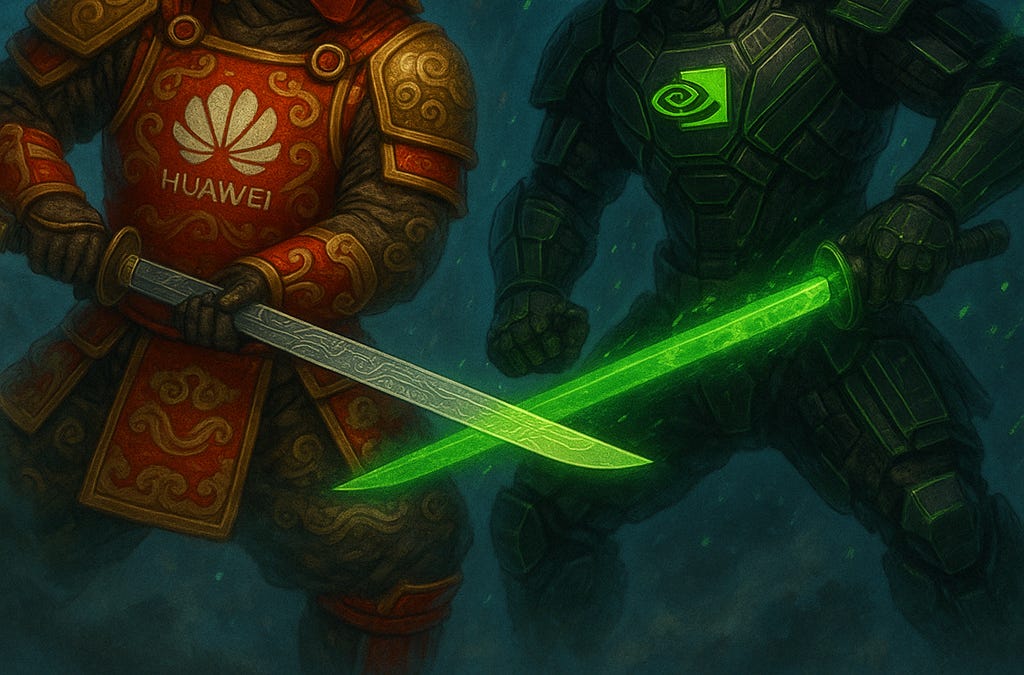
SMIC’s lines churning. Huawei Ascend chips emerging from the haze of 7nm yields. But don’t pop the champagne—high-bandwidth memory’s playing hard to get.
That’s the Huawei Ascend production ramp in a nutshell. Die banks stockpiled, TSMC whispers lingering (though officially kaput), and HBM? The eternal bottleneck. China’s national champion bets big on self-reliance, dodging Uncle Sam’s export chokehold. Impressive grit. Or fool’s errand?
Huawei’s Desperate Chip Dash
Look, compute rules AI. “He who controls the spice controls the universe the compute will control the production of tokens,” as the original dispatch nails it. US holds 70% of global FLOPs. Export controls? A masterstroke to hobble Beijing. But Huawei—ah, Huawei—rises like a phoenix on steroids.
They’re all-in. Vertically integrated fever dream: design, fabs, even tools via SiCarrier. That outfit just scarfed $2.8B to build Huawei-staffed plants. Reverse-engineering foreign gear? Check. $9B tool binge? Double check. SMIC outsources the grunt work now—Ascend accelerators, Kirin phones—but yields suck at 7nm. Big dies, export-blocked gear, rookie nodes. Pathetic percentages good enough to ship, barely.
Currently, all high volume chip production is outsourced to SMIC, the leading Chinese pure-play foundry. This includes the Ascend series of accelerator chips along with the Kirin mobile processors. Yields are poor for SMIC’s 7 nm-class processes due to a combination of immaturity, export controls, and the inherent difficulty in yielding large die such as the Ascend.
Spot on. Huawei’s fabs-in-waiting could eclipse SMIC by next year. Free up capacity for Cambricon darlings like ByteDance’s faves. Iterate faster, tweak yields, chase nodes. Sounds peachy. Except—reality bites.
Is HBM Huawei’s Nightmare Fuel?
HBM. High-bandwidth memory. AI’s rocket fuel. Nvidia’s Blackwell B30A guzzles it; Huawei’s H20 ships what it can. But China’s starved. No CoWoS from TSMC anymore—US nixed that. Domestic alternatives? Laughable. CXMT memory chips lag generations behind Samsung, SK Hynix.
Here’s my hot take, absent from the source: this mirrors the Soviet Union’s 1970s semiconductor push. Brezhnev’s crew funneled billions into knockoff Intel chips, built fabs galore. Result? Yields in the toilet, tech gap widened. Huawei’s SiCarrier? Same vibe—state capitalism on steroids, ignoring market signals. Bold prediction: by 2026, Huawei hits millions of Ascend units this year, sure. But HBM caps them at toy-scale clusters. No exaFLOP dreams.
Short-term win: die banks let them assemble what memory exists. TSMC’s ghost production? Rumors swirl, but Lutnick’s Nvidia thaw hints at supply chain armistice. Rare earths flow again. Still, DeepSeek’s training lagged on Huawei gear—western iron saved their bacon for inference. Pathetic.
And the irony? US walled off Google in the 2010s; now we’re the Great Firewall for chips. Beijing’s long game: own silicon to tokens. Sovereignty or bust.
Why Export Controls Are a Double-Edged Sword
Backlash brews. China hoards rare earths, magnets—US EVs weep. Howard Lutnick gripes Nvidia sales restart was the price. Fair trade? Compute for magnets. But adaptation accelerates. High batch sizes, disaggregated serving. Huawei’s ecosystem impresses—less efficient, sure, but ships.
Corporate hype alert: Huawei as “China’s achievement.” Please. National champ funneling? Classic Beijing. Resources to few winners, rest starve. SMIC-Huawei tag team boosts capacity, sure. But bottlenecks persist—HBM, EUV tools (smuggled?), talent poached from Taiwan.
Zoom out. US adds compute like fiends—Nvidia, AMD, hyperscalers. China scrambles. Equilibrium? Nah. Huawei ramps, but efficiency gap yawns. Tokens per FLOP? Western hardware laps ‘em. DeepSeek’s delay? Canary in the coal mine.
Skeptical me says: enjoy the hype. Huawei’s vertical dream crashes on physics—HBM physics. Without memory bandwidth, Ascends gather dust. US policy works—slows the dragon, buys time. But forever war? Exhausting.
One fab hums louder tomorrow. Yields tick up 2%. Progress. Yet HBM stacks? Elusive as a honest politician.
The Bigger Stink: Sovereignty or Stagnation?
China’s stack grab—silicon to models—noble, paranoid. Post-2010s firewall, they own Baidu, not Google. Now hardware. But self-reliance? Costs a fortune. SMIC’s N2? Years off. Huawei fabs exceed SMIC? If yields hold.
Dry humor break: Imagine Huawei execs, staring at empty HBM shelves. “Comrades, more reverse-engineering!” Meanwhile, Nvidia laughs to the bank.
Unique angle: This ain’t 1980s Japan. No mercantilist miracle. Export controls evolved—dynamic, targeting HBM, CoWoS. China adapts, but marginally. Prediction: Huawei hits 5 million chips ‘25, bottlenecked hard. Clusters? Mid-tier at best. No GPT-5 rival.
US lead solidifies. But rare earth knife to the throat? Tricky.
🧬 Related Insights
- Read more: Why Agentic AI Forgets Everything — And the 7 Steps to Fix It
- Read more: Google’s Gemini invades Workspace: AI drafts your docs, but at what cost?
Frequently Asked Questions
What’s bottlenecking Huawei’s Ascend production?
HBM memory. No high-bandwidth stacks means no big AI clusters, despite die banks and SMIC output.
Will Huawei fabs beat SMIC soon?
Possibly next year—$2.8B-fueled SiCarrier plants could outproduce, freeing SMIC for others like Cambricon.
Are US export controls working against China AI?
Yes, slowing Huawei ramps and forcing inefficient workarounds, though adaptation creeps on.