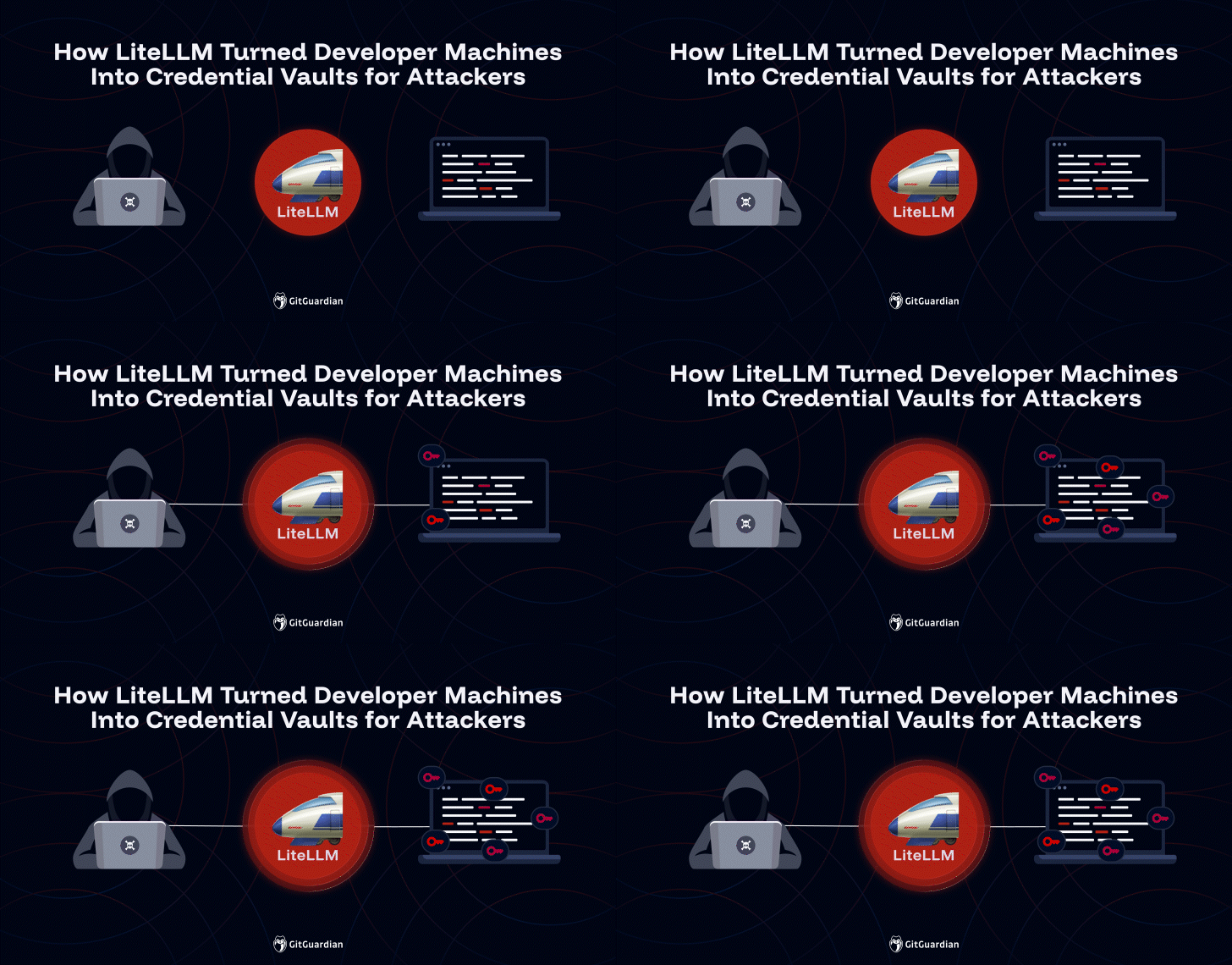
2.3 billion.
That’s the tally of credentials hoovered up by infostealers last year, per Shadowserver’s grim ledger — and your breach monitoring dashboard stayed eerily quiet on most of it.
Look, we’ve all leaned on those alerts like a trusty sidekick. Password popped up in Have I Been Pwned? Ding. Time to rotate. But here’s the gut punch: infostealers aren’t just cracking vaults anymore. They’re live-snatching session cookies mid-session, turning your logged-in browser into their personal ATM — all without tripping a single traditional wire.
Lunar’s deep dive nails it. These critters — RedLine, Vidar, Raccoon — burrow into browsers, keyloggers, clipboards, you name it. Scale? Massive. They’re not boutique hackers; think industrial harvesters, dumping payloads on Genesis Market before breakfast.
Infostealers are harvesting credentials and session cookies at scale, bypassing traditional defenses.
That’s Lunar straight-up, and they’re not wrong. Breach monitoring chases tombstones — leaked lists from yesteryear’s breaches. But live theft? Fresh cookies good for hours, days even? Poof. Invisible.
Why Do Infostealers Laugh at Breach Alerts?
Picture this: you’re sipping coffee, authenticated to your email via SSO. Infostealer hits your endpoint — maybe via a phishing payload or drive-by download. It doesn’t phish your password; it yoinks the active session token. Boom. Attacker replays it elsewhere, no password reset needed.
Traditional monitoring scans dark web dumps, paste sites, forums. Reactive. Yesterday’s news. But session cookies? They’re ephemeral gold — valid until expiry or logout. By the time a breach alert pings (if ever), the damage is done. Impersonation, lateral movement, the works.
And scale amplifies it. Infostealers automate everything. One compromised rig feeds thousands of creds daily. Underground markets list ‘em fresh: $0.50 per premium combo (email + pass + 2FA token). Breach tools? Still waiting for bulk dumps.
It’s like fighting a forest fire with a garden hose — while the arsonists use drones to spark new blazes.
How Did We Get Here So Fast?
Blame the browser wars, sorta. Chrome, Edge — they’re credential vaults now. Auto-fill, password managers baked in, but also ripe for scraping. Add cloud SSO explosion (Okta, Entra ID), where one token unlocks the kingdom.
Shift happened quietly. Remember 2018’s Magecart skims? Card data snatched from checkout pages. Same playbook, evolved. Infostealers scaled it to creds. Why? ROI. A single stealer botnet nets millions monthly — per Chainalysis whispers.
But here’s my angle, the one Lunar glosses: this echoes the antivirus collapse of the early 2000s. Back then, sig-based AV missed polymorphic malware. We pivoted to heuristics, behavior. Credential attacks demand the same architectural U-turn — from static breach hunts to real-time behavioral guards.
Corporate PR spins it as ‘evolving threats,’ but c’mon. It’s their tools lagging, not just bad guys innovating. Vendors peddle breach monitoring like it’s 2015. Wake up.
Is Reactive Monitoring Dead?
Not dead. Useless alone.
Lunar pushes continuous monitoring — but digs deeper. Endpoint detection for stealer signatures? Meh, they mutate. Browser telemetry? Better, flags anomalous extensions. But the real shift: entity behavior analytics.
Track the anomaly: sudden cookie exports from a clean endpoint. Or creds flowing to odd geos. Integrate with IAM: auto-revoke on suspicion. Tools like SpyCloud, Hudson Rock layer this atop breaches — predictive, not postmortem.
Prediction time — my bold one: by 2026, 70% of enterprises ditch solo breach feeds for ‘credential fabric’ meshes. Think zero-trust for logins: continuous validation, ephemeral creds only. Infostealers starve.
Implementation? Painful. But doable. Start with EDR hardened against stealers (CrowdStrike’s got modules). Layer browser policies — no unknown extensions. And MFA? Push beyond SMS; hardware keys or passkeys where possible.
The Underground Economy Fueling This Madness
Genesis Market’s takedown in May was a blip. Clones popped overnight — Russian markets, Telegram bots. Why? Demand. Ransomware gangs buy infostealer dumps first — initial access brokers love ‘em.
One stat chills: 40% of breaches now start with stolen creds, per Verizon DBIR. Not exploits. Not phishing anew. Just replayed sessions.
Defenses stack like this: monitor endpoints for stealer I/O (registry hives, %AppData%). Hunt browser SQLite dumps. But why stop? Feed it all into a SIEM with ML baselines — your user’s cookie never leaves the Americas? Alert.
Skeptical take: vendors hype ‘AI-powered monitoring,’ but it’s often regex on steroids. Demand proof — efficacy reports, not brochures.
Building the New Stack
Rip out the old. Here’s a blueprint.
First, instrument browsers. Extensions like uBlock? Good start. Enterprise? Policies via GPO: disable dev tools, flag NPAPI.
Second, SSO hardening. Shorten session TTLs — 15 minutes idle? Reauth. Risk-based: high-priv apps demand step-up.
Third, the big one: passwordless everywhere feasible. FIDO2. Your breach monitor collects dust on legacy junk.
Lunar’s right — simple ain’t enough. But they’re selling their stack, too. Vet it.
And that 2000s parallel? AV didn’t die; it transformed. Same here. Credential security’s next zero-trust frontier.
🧬 Related Insights
- Read more: WhisperPair Exposes Google Fast Pair Headphones to Eavesdroppers Everywhere
- Read more: Project Zero’s Blog Glow-Up: Old Exploits Still Fresh as Yesterday’s Zero-Day
Frequently Asked Questions
What are infostealers exactly?
Malware that targets browsers and apps to steal logins, cookies, autofill — sold fresh on cybercrime shops.
Why isn’t breach monitoring enough anymore?
It only catches leaked lists after the fact; ignores live session theft that’s instant and invisible.
How do I protect my company from infostealers?
Harden endpoints, monitor behavior, shorten sessions, go passwordless — layer it all.
800 words of wake-up call. Act.