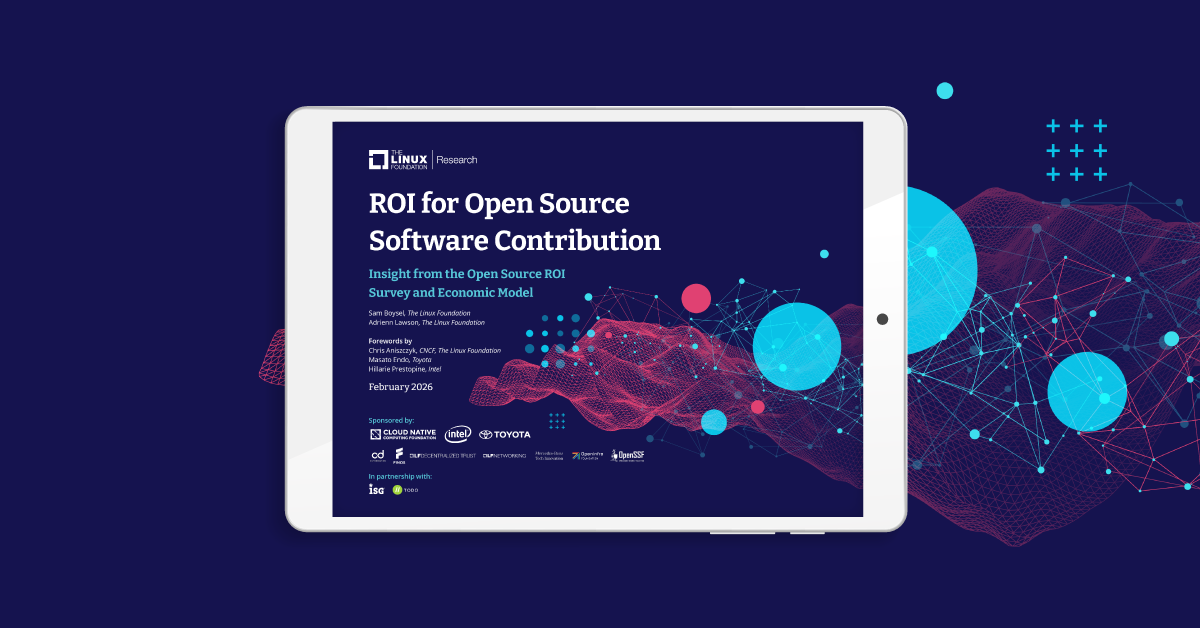
Sixty percent of organizations say contributing to open source software pays for itself. That’s not a fundraising pitch. That’s what a fresh Linux Foundation survey found in November 2025, and it should make every tech executive stop pretending their open source strategy is just about being nice.
Here’s what we’re dealing with: a $4.2 billion replacement cost for widely used open source projects. But the actual value to companies? Somewhere between $2.6 trillion and $13.2 trillion, depending on who’s counting. So organizations have figured out that contributing upstream isn’t charity work—it’s just good business with a conscience.
The Old Narrative Was Wrong
For years, the conversation around open source contributions sounded like a TED Talk about volunteerism. “Why should we give away our engineers’ time?” companies would ask. “Because it’s the right thing to do,” the open source community would respond. Both sides were partly right. Both sides were mostly missing the point.
The Linux Foundation Research team, working with UC Berkeley professor Henry Chesbrough, decided to actually measure whether contributing to open source moved the needle on a company’s bottom line. They surveyed 567 organizations across industries, sizes, and geographies. And you know what? The data didn’t lie.
“The perceived benefits clearly exceed the perceived costs for a strong majority of respondents — 60% to 75%, depending on the specific question,” Chesbrough noted in his analysis.
That’s not ambiguous. That’s not “interesting to study further.” That’s a majority reporting tangible wins.
So What Are Companies Actually Getting?
The report breaks open source contributions into three buckets: code (the obvious one), community work (documentation, support, advocacy—the stuff people pretend doesn’t matter until it saves them millions), and financial contributions (money, memberships, sponsorships).
Code contributions? That’s where the engineering teams go full-time. Bug fixes, new features, infrastructure—the kind of work that would cost a fortune if you built it in-house. Community contributions are trickier to measure but far more valuable. Who writes the docs that help other developers use your software? Who answers support questions at 2 a.m.? Who makes sure the license doesn’t explode into legal chaos? That’s community work. And it’s free for everyone else once it exists.
Financial contributions are the easiest to track and the most misunderstood. A company doesn’t just throw money at the Linux Foundation out of generosity (okay, sometimes they do). They’re buying influence, securing the infrastructure their entire business depends on, and building reputational capital.
Why This Matters More Than You Think
For two decades, open source succeeded because idealists built free software. Linux, Apache, MySQL, PostgreSQL—communities of passionate people who believed software should be open.
But ideology alone doesn’t scale to $13 trillion in value. What scales is when CFOs realize that contributing upstream saves maintenance costs, reduces R&D overhead, attracts top talent (developers want to work on projects they’ve already contributed to), and accelerates product development. Those aren’t nice side effects. They’re the whole ballgame.
The old guard used to see contribution as sacrifice. The new data suggests it’s investment. And that changes everything about how organizations approach open source strategy.
Is Contributing to Open Source Actually Cost-Effective?
According to the Linux Foundation study, for the majority of respondents—we’re talking nearly three-quarters—the answer is yes. But here’s the catch: the benefits aren’t immediate, and they’re not always obvious.
Lower maintenance costs materialize over years, not quarters. Talent attraction plays out across hiring cycles. Faster product development compounds over product releases. This is why 16% of organizations still report declining ROI ratios. They’re either contributing the wrong way, measuring the wrong things, or just unlucky.
But that’s actually encouraging. It means ROI isn’t random. It’s a function of strategy. Organizations that contribute strategically—code that solves their specific problems, community engagement that builds ecosystem trust, financial support that aligns with their roadmap—see measurable returns.
Organizations that just throw money at foundations hoping for good karma? Yeah, those are still making a charitable donation. It just happens to have business benefits.
The Linux Foundation Effect
The Linux Foundation’s growth from a startup in the early 2000s to an organization supporting 1,500+ member companies isn’t an accident. It’s proof of concept. Companies wouldn’t keep paying membership dues if open source contribution didn’t deliver.
Think about it: Intel, Toyota, and the Cloud Native Computing Foundation co-sponsored this study because they have skin in the game. They’re not interested in vague feel-good metrics. They want to know if their contribution strategy is working.
And based on the data they commissioned? It is.
What Happens Next
The implication here is awkward for traditional software vendors. If organizations can quantify the ROI of open source contribution, they can also quantify why proprietary alternatives are starting to look expensive.
Why pay for a closed-source database when you can contribute to PostgreSQL and own the whole thing? Why license a monitoring tool when you can invest in Prometheus? The economics are shifting. And once CFOs see the spreadsheets, there’s no going back.
The real test will be whether organizations start treating open source contribution as a line item on the budget rather than a nice-to-have. The Linux Foundation study suggests they’re already heading that direction.
One last thought: open source won because it was better technology. But it’ll survive because it’s better business.
🧬 Related Insights
- Read more: Running LLMs on Kubernetes? Your Infrastructure Doesn’t Protect You From Prompt Injection
- Read more: Nine Vulnerabilities Expose IP KVMs as the Skeleton Key to Your Entire Network
Frequently Asked Questions
Is contributing to open source worth the cost? According to the Linux Foundation’s 2025 survey, 60-75% of organizations report that benefits exceed costs. ROI depends on strategic alignment—contributing code that solves your actual problems yields measurable returns in maintenance costs, talent attraction, and R&D efficiency.
What types of open source contributions generate the most ROI? Code contributions directly reduce development costs. Community contributions (documentation, support) build ecosystem trust and reduce support burden. Financial contributions secure infrastructure and gain influence. The highest ROI comes from a mix, tailored to your organization’s strategic needs.
How much money should we budget for open source contributions? There’s no universal answer, but the survey data suggests the ratio of benefits to costs is rising for nearly half of respondents. Start with a percentage of your R&D budget aligned to projects you depend on, measure the outcomes (cost savings, hiring velocity, time-to-market), and adjust based on results.