Robotics just vacuumed up $40.7 billion in 2025 funding — that’s 74% more than last year, folks. Physical AI models? They’re the secret sauce.
Everyone expected the AI party to stay in software town, churning out smarter chatbots and code monkeys. But here’s the twist: robots are crashing it hard, learning from real-world data instead of dusty scripts. This physical AI models market map lays bare an arms race nastier than anything since the browser wars.
Nvidia snaps up Gretel for $320 million. Meta drops $14.8 billion on Scale. OpenAI eyes Medal’s data hoard. It’s not cute. It’s data feudalism.
Why Physical AI Models Are the New Oil
Data’s king. Robots don’t learn from Reddit threads — they need gritty, real-world teleop footage, sensor spam, 3D chaos. Synthetic stuff helps, but it’s like fake snow in hell: melts under pressure.
Scale’s the beast here, raking $16.4B with a Mosaic score in the top 1%. They mix human joystick jockeys with sims. But proprietary piles? That’s the moat. Lose it, and you’re licensing from the winners — at gunpoint prices.
“Proprietary training data is a critical competitive advantage for physical AI, with tech leaders racing to secure access through acquisitions.”
Spot on. Yet here’s my hot take: this mirrors the oil barons of 1900s Detroit. Ford didn’t just build cars; he locked down crude to starve rivals. Physical AI’s data lords will do the same, turning robot smarts into a cartel.
Short para. Boom.
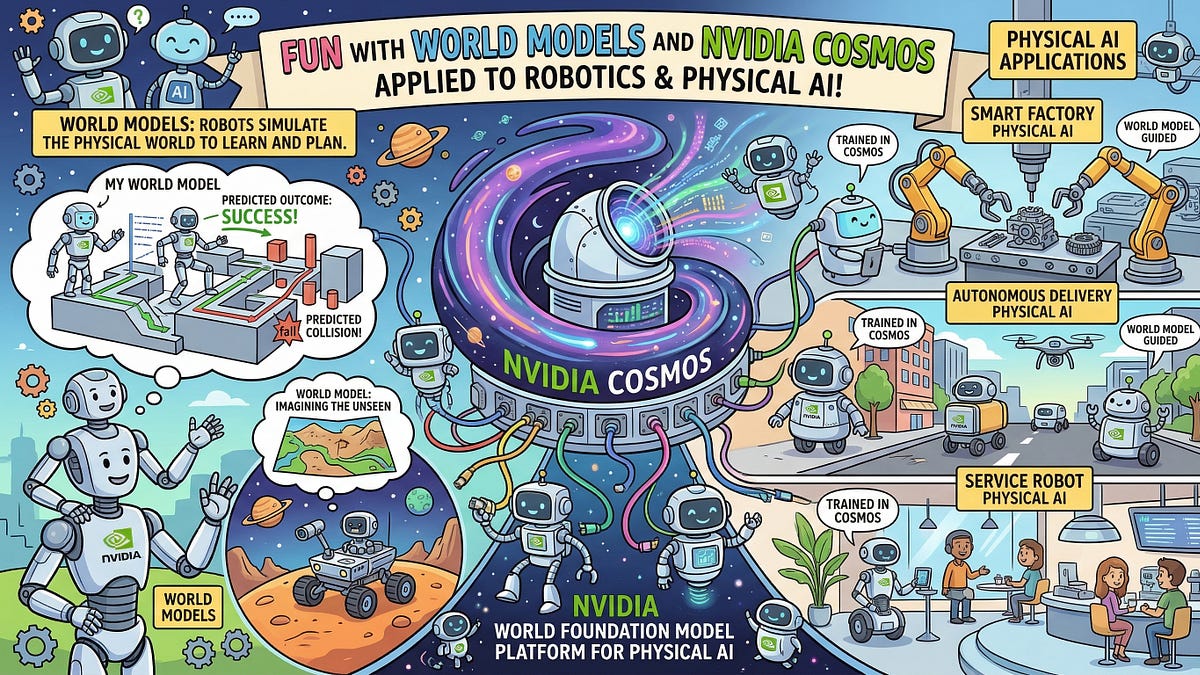
World models? They’re the crystal ball robots never had. Predict outcomes, plan moves — LLMs drool in envy. Funding jumped from $1.4B to $6.9B. Average Mosaic? 722, elite tier. But partnerships with hardware hacks are non-negotiable. Screw that up, and your model’s blind in the wild.
Is Multi-Robot Coordination a Pipe Dream?
Single bots? Yawn. US firms hoovered $17B on solo acts. China? $416M, same obsession. But fleets? Crickets. No one’s nailed the orchestra pit for mixed robot symphonies — warehouse drones dancing with AGVs.
That’s the chokepoint. Solve it, own industries. Ignore it, watch your unicorns trip over each other. Chinese outfits might leapfrog here — less ego, more hive-mind engineering. Bold prediction: Beijing coordination tech flips the script by 2027, while Silicon Valley solos fizzle.
Data & sims first. Synthetic generators spit images, sensors, scenes — cheap thrills. Demo data wranglers capture human flubs for imitation. Sims let bots die virtually.
Bottleneck? Real data’s scarce, pricey. Market’s maturing — 50% deployed. Nvidia rules sims, but real-world’s the grail.
Model approaches next. VLMs grok environs. VLAs spit actions. World models forecast doom — or dinner.
Foundation models mash ‘em for manipulation, driving, swarms. Leaders? Two US titans, but coordination’s AWOL.
Observability closes loops — watch deploys, feed back data. Smart.
Who’s Actually Going to Win This Mess?
70+ firms, 10 categories. Mosaic-filtered elites. Not exhaustive — good, ‘cause who’d read that?
Leaders hoard data via buys. But hype alert: world models sound sexy, yet need flawless data/hardware tango. Fail, and it’s vaporware on wheels.
Multi-robot? The ghost in the machine. US single-focus is myopic arrogance. Remember Detroit’s SUV bloat before EVs? Same vibe.
Physical AI models market map screams consolidation. Data kings eat model makers. Then fleet orchestrators feast on all.
Scale’s a monster — but overvalued? $16B for data plumbing? Smells like 2000 dot-com.
Nvidia’s sim lead? CUDA lock-in for robots. Sneaky.
OpenAI’s Medal flirt? Desperation peek. They’re late to hardware hell.
China’s underfunded but coordinated — pun intended. Watch ‘em.
The Hype Tax on Investors
$40B funding bonanza. 9% of all VC. But physical AI’s no slam dunk. Sims cheat physics. Real data’s a nightmare. Coordination? Sci-fi for now.
Dry humor: Robots will unionize before they sync flawlessly.
Unique spin — beyond the map: This ain’t software scale. Physical means factories, not clouds. Margins razor-thin, hardware drags. Winners need Tesla-level vert integration, not VC spray.
Will Physical AI Replace Your Warehouse Job?
Soon-ish. But first, data wars. Then models. Then — maybe — fleets that don’t crash.
Skepticism check: 2025 numbers dazzle, but deployment’s 50% in data alone. Rest? Labs.
🧬 Related Insights
- Read more: OpenCAA Lets Genetics Breed Smarter AI Agents – Humans Need Not Apply
- Read more: Hacking the JVM: Real-Time Algorithm Viz Without Source Code Changes
Frequently Asked Questions
What is the physical AI models market map?
It’s a breakdown of 70+ companies across data, models, foundations — the works fueling robot brains in 2025’s $40B boom.
Who are the leaders in physical AI data?
Scale (top Mosaic), Nvidia (sims), with acquirers like Meta and Nvidia grabbing moats.
Why does multi-robot coordination matter?
It’s the missing link for scaling fleets — without it, robots stay solo acts in a team sport world.