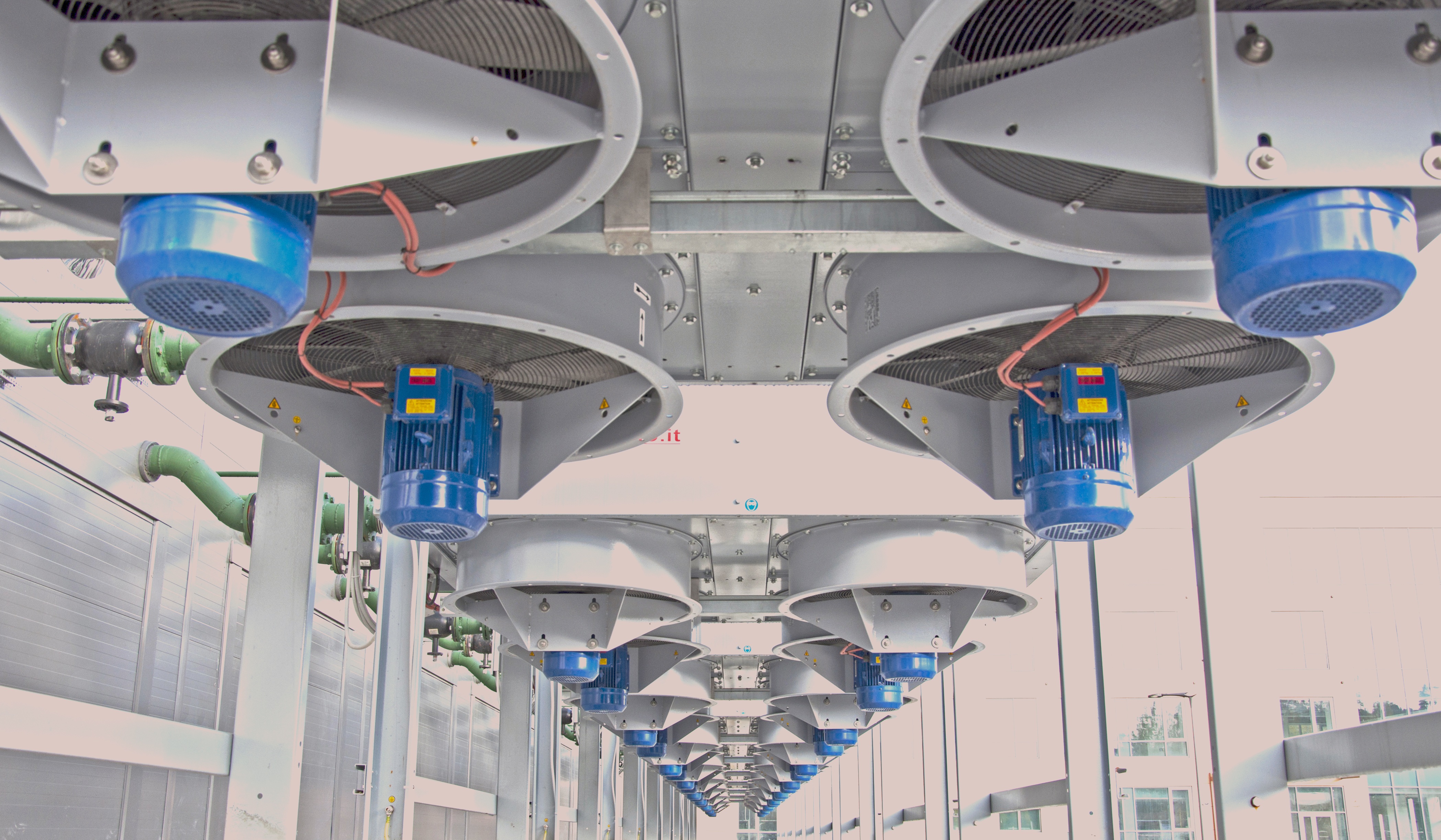
What if the very servers fueling your late-night AI chats are turning your block into a sweltering hotspot?
Yeah, you read that right. The AI data center heat island effect — that’s the buzz now — isn’t some distant sci-fi worry. It’s happening, right in our urban sprawl, where megawatts of waste heat blast out like dragon breath from these behemoths.
Picture this: a data center, humming like a hive of cybernetic bees, sucking in cool air (or water) to tame the inferno inside. Servers crunching through trillions of parameters don’t politely sip energy; they guzzle it, spitting out heat that has to go somewhere. And guess where? Straight into the air around you, cranking up local temps by an average of 2°C (3.6°F), per a fresh study. In nightmare scenarios? Up to 9.1°C (16°F). That’s not a warm breeze — that’s a heatwave on steroids.
How Bad Is the Heat Island Effect from AI Data Centers?
Here’s the kicker. We’ve obsessed over water guzzling — those headlines screaming about data centers draining rivers dry. Fair enough. But heat? It’s the sneaky side effect everyone’s ignored. That study models it out: exhaust plumes rising, mixing with city air, amplifying the classic urban heat island (you know, all that blacktop baking under the sun). Add AI’s explosive power demands — think Nvidia chips on overdrive — and boom. Local climates warped.
Around 2 C (3.6 F) on average, and potentially much more than that, according to a recent study on the data heat island effect.
Spot on. And don’t get me started on places like Phoenix or Hyderabad, where summers already flirt with unlivable. Toss in AI growth — hyperscalers building fleets of these monsters — and you’re not just warming a street; you’re reshaping weather patterns block by block.
But wait. Theoretical, right? The paper admits it needs real-world checks. No pristine before-and-after data yet on today’s giants. Still, huddle by any big building’s AC exhaust on a winter day — free heater! — and you’ll feel the truth. Urban heat islands from asphalt? Proven. Now layer on gigawatts of digital fire.
And here’s my hot take — pun intended. This echoes the Industrial Revolution’s dirty secret: steam engines birthed factories, railroads, modernity. But they choked London in pea-soup fog, until scrubbers and regs cleaned it up. AI data centers? Our new steam engines. Progress demands power, sure. But ignoring the smog — er, steam — invites backlash. Unique insight: we’ll see ‘heat recapture mandates’ by 2030, mandating winter district heating from exhaust, turning liability into asset. Futurist optimism meets hard reality.
Can We Cool Down AI’s Fiery Footprint?
Look, Big Tech spins tales of efficiency. “We’ve got PUEs down to 1.1!” they crow (Power Usage Effectiveness, for the uninitiated — how much juice turns into compute vs. waste). Impressive. But even saints leak heat. Solutions? Green roofs and reflective paints nibble at edges, but against terawatt-scale output? Laughable.
Water cooling dumps heat into rivers — controversial, as Finland’s dramas showed. Air cooling? Blasts it skyward, fueling heat islands. Hybrid? Maybe. But the real magic — capture and reuse. Sweden’s already piping data center heat into homes. Imagine Chicago winters warmed by ChatGPT’s glow. Poetic.
Yet hype alert: companies tout ‘sustainable’ builds while snapping up grid power faster than you can say ‘blackout.’ Skepticism dialed up — this isn’t zero-sum; it’s engineering evolution. We’re at platform shift infancy. AI isn’t a gadget; it’s infrastructure, like electricity was in 1900. And electricity got clean(er). So will this.
Short para punch: Regulations loom.
Governments sniffing around — EU’s green deal eyes data centers hard. U.S.? Patchy, but heatwave lawsuits could spark change. Prediction: by decade’s end, ‘heat island impact assessments’ join every permitting process, forcing redesigns.
Why Your AI Girlfriend’s Glow Costs You Sweat
Zoom out. AI’s boom — LLMs, image gens, autonomous everything — devours data centers. Global capacity doubling every few years. Each one a thermal titan. In a Canadian blizzard? Bonus radiator. But Austin, Texas? Or Bangalore’s monsoon-melt summers? Recipe for unrest.
Wander a bit: I’ve stood ventside at facilities, felt that whoosh — comforting in December, infernal in July. Real writers chase stories; this one’s simmering.
Corporate spin? They dodge with ‘cloud efficiencies’ and ‘renewables.’ Fine, but heat’s agnostic — solar-powered inferno still scorches. Call it: partial truths, not full picture.
Energy. Pace picks up. Wonder surges — what if we flip it? Data centers as urban oases, pumping heat for greenhouses, desalination in arid zones. Vivid? Absolutely. Feasible? With AI optimizing flows — meta, right?
Dense dive: modeling shows worst cases cluster near intakes — exhaust recirculates, vicious cycle. Mitigate with taller stacks, directed plumes, AI-driven wind modeling (irony!). Study gaps? Ground-truthing. Demand it — citizen sensors, satellite IR scans. Crowdsourced climate watch.
One sentence: Game on.
🧬 Related Insights
- Read more: Linear Attention Hybrids Challenge Transformer Grip on Open LLMs
- Read more: Claude Code Grabs 4% of GitHub Commits as AI Coding Arms Race Explodes
Frequently Asked Questions
What is the data heat island effect?
It’s the local temperature spike from data center exhaust, averaging 2°C but up to 9°C in bad spots, supercharging urban heat.
Will AI data centers make my city hotter?
Potentially yes, especially summers in dense areas — but recapture tech could turn heat into a winter win.
How can we fix AI data center heat problems?
Reuse exhaust for heating, better siting away from hot zones, and regs forcing efficiency beyond just power.