Imagine you’re a startup founder in San Francisco, scraping together credits for the next big GPT run. Or a researcher in Berlin, modeling climate data that could save cities. Suddenly, the world’s hungriest AI supercluster — OpenAI’s Stargate facility in Abu Dhabi — flashes up as enemy number one on some IRGC propaganda reel. That’s the gut punch here. Not abstract saber-rattling. Real delays, real shortages in the compute that’s already thinner than a politician’s promise.
And here’s the kicker: this isn’t just Trump trash-talk on Truth Social meeting Iranian bluster. It’s a stark reminder that AI’s exponential hunger for power now collides head-on with oil-rich sandboxes and ancient grudges. Stargate, that $500 billion behemoth backed by Oracle, Nvidia, Cisco, SoftBank, promises 16 gigawatts of raw compute muscle. Enough to eclipse entire nations’ grids. But plunked in the UAE? Amid whispers of US strikes on Iranian plants? It’s like building your dream house on a fault line.
Look.
Power grids don’t care about your prompt engineering. They’re cables, turbines, fragile as hell — and now weaponized.
Why Bet Billions on Abu Dhabi’s Sands?
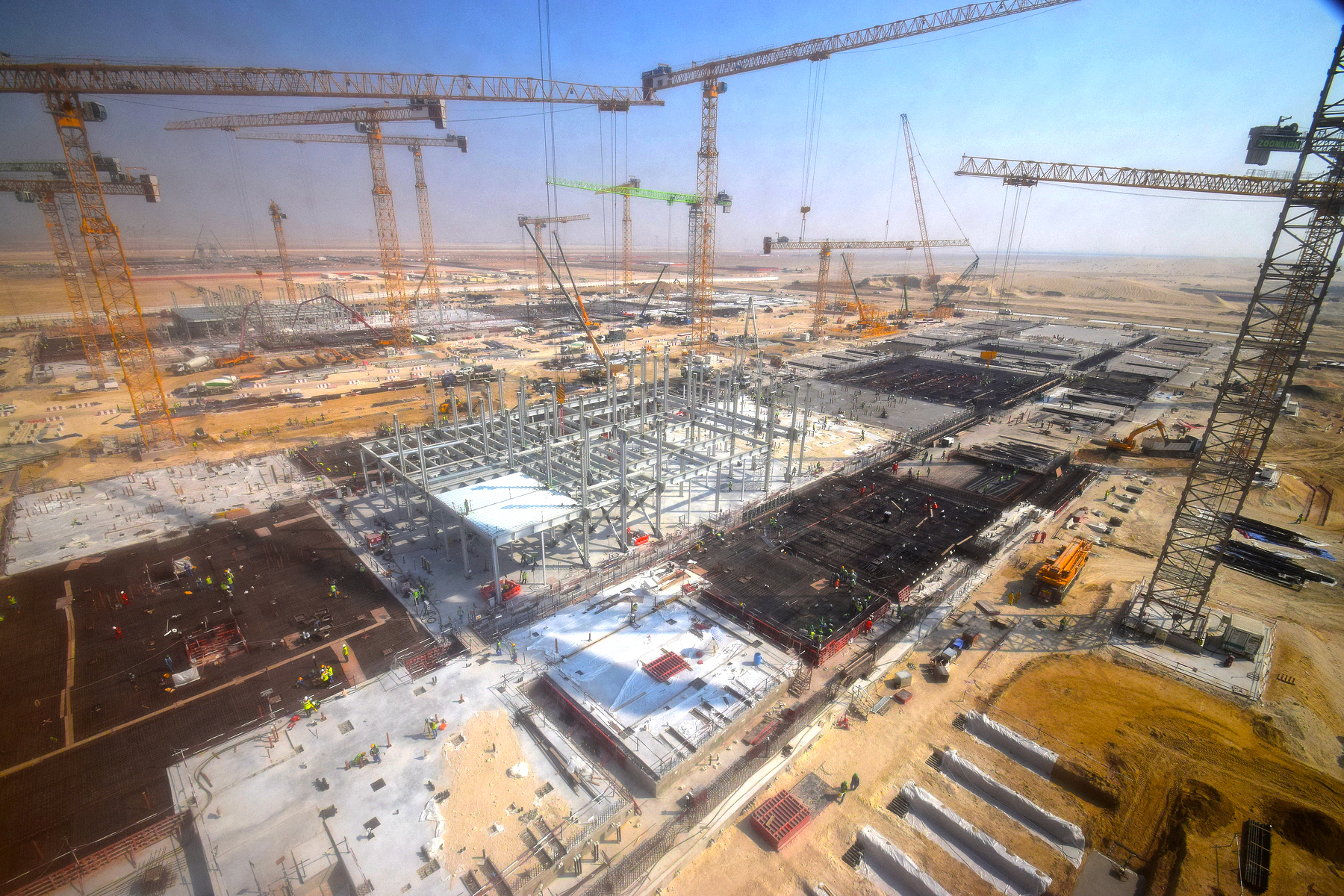
OpenAI didn’t pick the UAE for the falafel. Cheap energy, sure — oil money morphing into megawatts at a fraction of US red-tape costs. But dig deeper: it’s architectural chess. Sam Altman’s crew knows US soil means endless NIMBY fights, water wars over cooling towers, and regulators eyeballing every watt for carbon sins. Abu Dhabi? Sovereign wealth funds writing checks without the EPA breathing down your neck. October updates showed dirt moving fast — 200 megawatts online by 2026, scaling to god-tier levels. Satellite pics in the IRGC video? Grainy Google Maps grabs, but they nail the site’s sprawl.
Yet this exposes the ‘how’ of AI’s global sprint. Companies like OpenAI aren’t just stacking GPUs anymore. They’re engineering energy empires, chasing hyperscale clusters where physics — not politics — sets the limits. UAE’s pitch? Endless sun for solar backups, desalinated water for cooling, and neutrality in a mad world. Neutrality, that is, until Uncle Sam starts lobbing threats.
The video drops on an Iranian state X account, April 3rd. IRGC suit narration, ominous music, then boom: satellite shots of the site, exec photos (they botched Jeetu Patel as Satya Nadella — sloppy, but the intent lands).
The IRGC will carry out the “complete and utter annihilation” of US-linked energy and technology companies in the region.
Chilling. Not because it’s credible — more on that — but because it spotlights Stargate’s soft underbelly: visibility. These aren’t bunkers. They’re billboards from space.
Can Iran Actually Touch OpenAI’s Prize?
Short answer? Probably not without inviting Armageddon. IRGC’s got drones, proxies, cyber chops — remember the Saudi Aramco hack? — but hitting UAE turf means tangling with F-35s and Abraham Accords muscle. Abu Dhabi’s no pushover; they’ve got Iron Dome cousins and US bases nearby. Still, the ‘why’ matters: asymmetric terror. One drone swarm on transformers, and poof — gigawatts offline for months. Rebuilding? Years, billions extra.
Trump’s weekend rant seals it. “Power Plant Day, and Bridge Day” if Hormuz stays choked. ABC interview ups the ante: “blowing up the entire country.” Iran’s FM fires back, all sovereignty and might. Classic escalation loop. But my unique angle? This echoes the 1980s chip wars — when Japan’s MITI threatened US semis, forcing Reagan’s trade fists. Back then, it birthed export controls that starved Soviet supercomputers. Today? Bold prediction: if Stargate crumbles, OpenAI pivots hard to hyperscalers in stable spots — think Iceland’s volcanoes or Australia’s outback. No more Middle East mirage. AI infra fractures into a cold war of data fiefdoms.
Skeptical? Damn right. OpenAI’s radio silence to The Verge screams PR lockdown. They’re not admitting vulnerability. But whispers say construction’s ‘well underway’ — half-built means half-vulnerable. Nvidia chips en route? Oracle pipes? All chokepoints.
Real people angle sharpens. Indie devs on waitlists for frontier models? Kiss 2026 timelines goodbye if supply shocks hit. Enterprises betting on o1 reasoning? Budget overruns. And us normies? Slower updates, pricier subs — because compute scarcity bites everyone.
But wait — corporate spin alert. OpenAI’s framing this as ‘global expansion’ for resilience. Bull. It’s cost arbitrage until geopolitics gatecrashes. UAE’s not diverse; it’s a monoculture bet on petro-dollars.
What Happens If the Lights Go Out on Stargate?
Ripple effects? Cataclysmic for AI’s roadmap. Stargate’s 16GW dwarfs current clusters — think 100x H100 fleets churning exaflops. Offline? OpenAI rations cycles, rivals like xAI or Anthropic gorge. But here’s the architecture shift: forced redundancy. We’re talking air-gapped sites, undersea cables for data sync, even orbital compute dreams (Starlink + edge AI?). Why? Because megafarms like this reveal AI’s Achilles: centralization. One EMP, one sabotage, and the singularity stutters.
Iran’s play? Propaganda gold. Deter US strikes by tagging American icons. OpenAI as proxy pain point — brilliant psyops. Mis-ID’d execs aside, it humanizes the threat.
Developers, heads up: diversify clouds now. No monolith reliance.
And policymakers? Wake up. AI treaties needed yesterday — compute as critical infra, like nukes.
This isn’t hype. It’s the new normal: where your next image gen hinges on Strait shipping lanes.
🧬 Related Insights
- Read more: Snap: Prince Andrew’s Arm Around a Teen — And How AI Might Let Scandals Off the Hook
- Read more: Tech’s Last Four Jobs: AI’s Pruning Shears at Work
Frequently Asked Questions
What is OpenAI’s Stargate project?
OpenAI’s $500B plan for massive AI data centers, starting with a $30B Abu Dhabi site boasting 16GW compute power, backed by Nvidia, Oracle, and others.
Why is Iran threatening OpenAI’s data center?
Retaliation signal against US threats to hit Iranian power plants; IRGC video targets US-linked tech in the region if Trump escalates.
Will this delay OpenAI’s AI models?
Likely — construction risks and compute shortages could push back 2026 timelines for next-gen models by months or years.