Screens flicker in a dimly lit Beijing lab late at night—Chinese AI researchers, mid-scroll through NeurIPS submission guidelines, freeze at the sanctions link.
That mid-March moment in the NeurIPS 2026 handbook wasn’t just a bureaucratic slip. It thrust AI research straight into the heart of US-China geopolitics, where export controls on chips already cast long shadows over labs worldwide. Organizers linked to a US database flagging Huawei, Tencent—titans of Chinese AI—alongside Russian and Iranian entities. No services for them: no peer review, no editing, no publishing.
Backlash hit like a neural net overfitting on outrage.
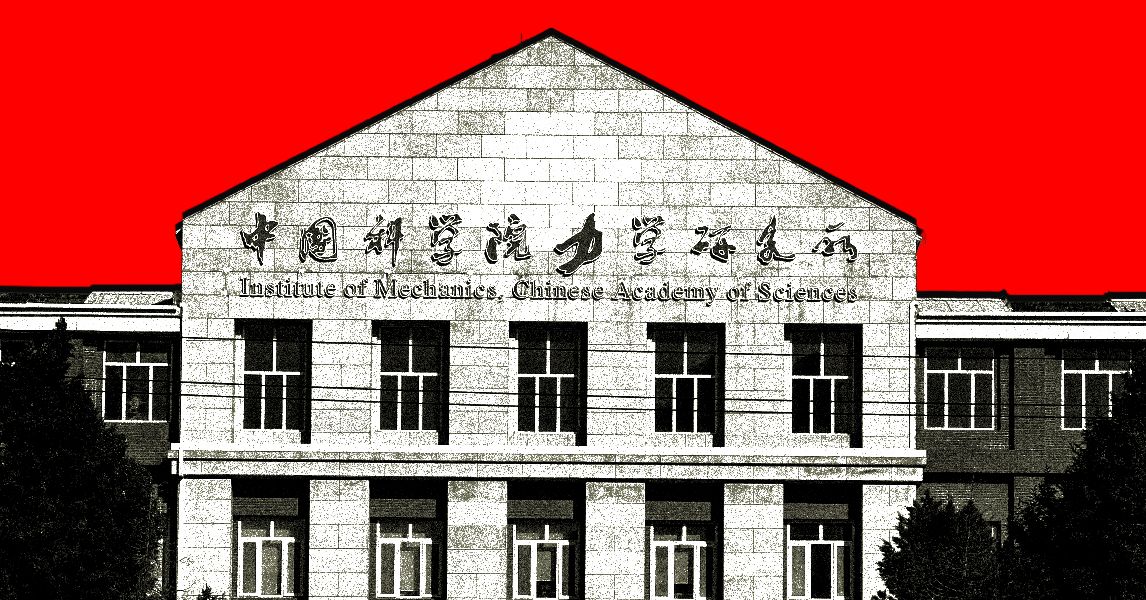
China’s science heavyweights mobilized fast. The China Association of Science and Technology (CAST)—government-backed, massively influential—slammed the door on funding NeurIPS trips. They’d redirect cash to conferences that “respect the rights of Chinese scholars.” Publications there? They won’t count toward funding evaluations anymore. At least six area chairs bailed publicly; others ghosted reviewer duties.
“I have served as [area chair] for NeurIPS every year since 2020. Just declined,” Nan Jiang, a machine learning researcher at the University of Illinois Urbana-Champaign, said in a social media post.
NeurIPS blinked. By Friday, the handbook narrowed to Specially Designated Nationals—terrorists, criminals—not the broader entity list. A classic oops: “miscommunication between the NeurIPS Foundation and our legal team,” they claimed.
But here’s the thing.
This wasn’t mere legalese gone awry. It’s a symptom of AI research buckling under geopolitical strain, where Washington’s hawks push decoupling from China’s military-linked tech. Paul Triolo, dissecting US-China ties at DGA-Albright Stonebridge, nails it: “This is a potential watershed moment.” Attracting Chinese talent bolsters US innovation—yet officials itch to sever ties in this “sensitive” field.
Why Did NeurIPS Even Try This?
Dig into the architecture of these conferences. NeurIPS, Vancouver-bound annually, thrives on global brainpower—China pumps out machine learning papers like it’s optimizing for volume. Sanction compliance? US rules curb business with flagged entities, but academia’s always danced freer. No laws block publishing or presenting.
Organizers cited “legal requirements” for the foundation, a US nonprofit. They consulted lawyers, doubled down initially. Fear of Treasury fines, perhaps? Or preemptive armor against Biden-era export curbs bleeding into soft power.
The reversal reeks of damage control. CAST’s funding pull? That’s not reversible with a tweet—scholar evaluations lock in now. Chinese academics, already visa-stressed, might pivot to ICML or domestic meets like CCML. Flow of ideas slows.
And US labs? They lose collaborators who train at Tsinghua one year, Stanford the next.
How US-China AI Decoupling Quietly Reshapes Labs
Look back to the Cold War—Sputnik scared the US into ARPA, birthing the internet from siloed genius. Science decoupled then, too, but proxy gains emerged. Today’s twist? AI’s dual-use nature makes every transformer a potential weapon.
Washington’s entity list—Huawei since 2019—already crimps hardware access. Now soft restrictions creep into papers. My unique angle: this foreshadows bifurcated AI ecosystems, like internet firewalls on steroids. China accelerates indigenous models (think DeepSeek), while the West frets over tainted data. Global progress? Fractures. Bold prediction—we’ll see NeurIPS-like splits by 2030, with parallel “Western NeurIPS” and “Global South” forums, halving citation networks and inflating hype cycles.
Researchers navigate minefields. A UIUC prof declines area chair duty from Illinois soil. Sapient Intelligence’s Yasin Abbasi-Yadkori shrugs off one less task—but skips submissions too. “At some level now it is going to be hard to keep basic AI research out of the [political] picture,” Triolo warns.
Corporate spin? NeurIPS calls it an “error.” Sure. But the handbook’s annual—why broaden now? Whispers of donor pressure, or boardroom paranoia over OFAC audits.
Will Chinese AI Talent Ghost US Campuses?
Short answer: increasingly yes.
US universities reel from visa crackdowns; H-1Bs tighten. Add conference chill, and the pipeline clogs. Chinese PhDs—over 30% of top AI talent—might stay home, bulking Baidu or ByteDance. US firms like OpenAI? They court globally, but geopolitics bites.
The how: funding bodies like CAST wield carrots (grants) and sticks (achievement demerits). Boycott threats worked—reversal in days. Next time? Entrenched.
Underlying shift—AI’s not physics anymore, where theorems transcend borders. It’s engineered scarcity: chips, data, now discourse. Conferences were neutral ground; now battlefields.
Skeptical eye on PR: NeurIPS walked back, but trust erodes. Chinese statements linger online; scholars remember slights.
One punchy truth. Progress demands friction—but this? It’s grinding gears.
The Long Game: Fractured Innovation Ahead
Imagine 2026 NeurIPS: thinner Chinese contingent, echoing rooms. CAST diverts millions to CCML, seeding a rival ecosystem. US policymakers cheer “security,” blind to stagnation risks.
Why it sticks: AI’s arms-race velocity. Export controls on Nvidia GPUs already spawn smuggling tales; paper barriers formalize the divide.
Critique the hype—both sides spin sovereignty. China: “respect rights.” US: “legal musts.” Reality? Power plays.
🧬 Related Insights
- Read more: Go Observability: Logs First, Then Unlock Traces and eBPF – Grafana’s Blueprint
- Read more: EFF’s FOIA Bomb on Medicare’s Denial Machine
Frequently Asked Questions
What happened with NeurIPS sanctions policy? NeurIPS added rules blocking services to US-sanctioned entities like Huawei, sparking Chinese backlash and boycott threats; they reversed to narrower terrorist-focused list.
Will Chinese researchers boycott NeurIPS 2026? CAST halted funding and devalued NeurIPS papers for evaluations—reversal might not fully restore participation.
How does US-China tension affect AI research? It risks splitting global collaboration, slowing innovation as talent and ideas segregate along geopolitical lines.