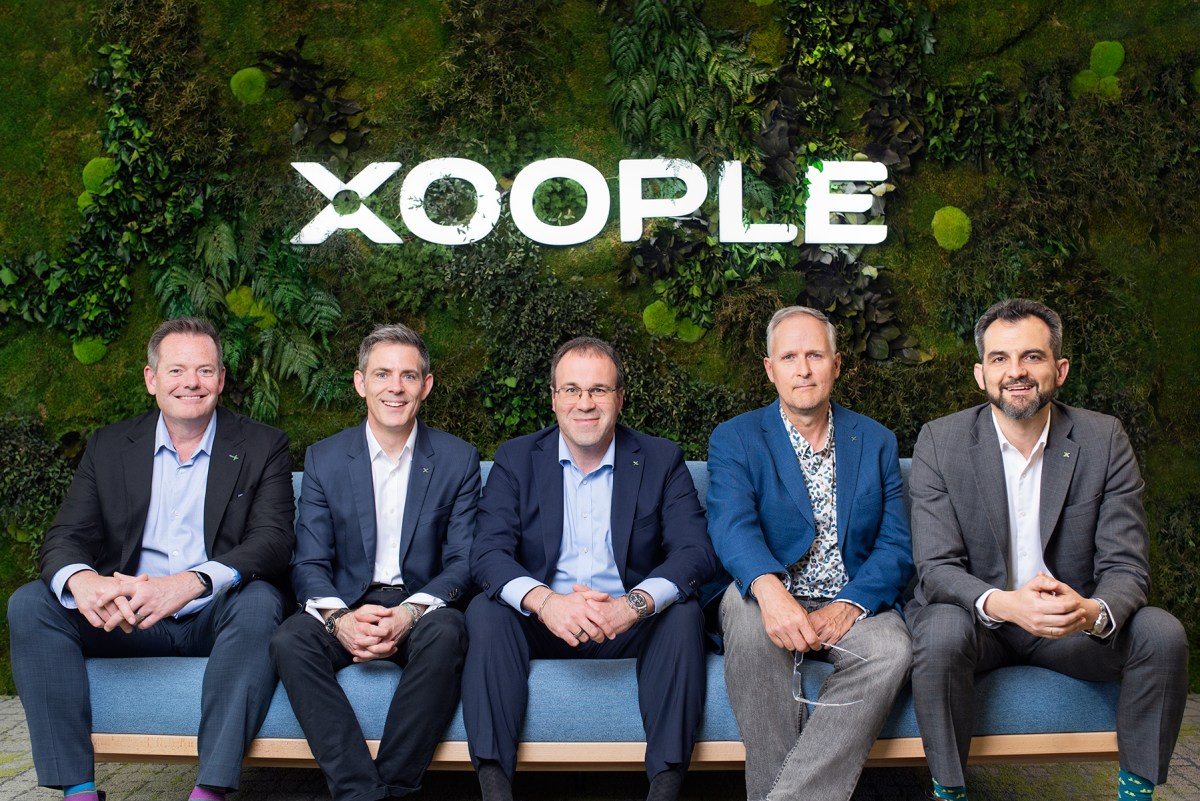
Xoople just inked a $130 million Series B, and it’s not chasing flashy demos—it’s wiring itself into enterprise pipes before a single bird lifts off.
Spain’s upstart, founded in 2019, claims unicorn status on the back of this round led by Nazca Capital. Total raised: $225 million. That’s cash to forge sensors with L3Harris, the U.S. defense giant behind some of orbit’s sharpest eyes, targeting optical data “two orders of magnitude better than existing monitoring systems,” per CEO Fabrizio Pirondini.
Why Drop $130M Before Launch?
Pirondini won’t spill satellite counts or timelines—classic space playbook, where vaporware accusations lurk. But here’s the data play: Xoople’s already slurping public feeds like ESA’s Sentinel-2, baking pipelines into Microsoft and Esri. Those are the GIS kingdoms where governments and corps live.
Aravind Ravichandran, TerraWatch Space CEO, nails it:
“They laid the distribution pipes before having their own data supply — embedding into Microsoft and Esri, the two platforms where enterprise, government and most GIS buyers already live, but neither has proprietary EO data.”
Smart? Absolutely, if you squint at history. Think AWS in 2006—Amazon built cloud plumbing before everyone needed it. Xoople’s betting enterprises crave proprietary ground truth for AI models, not yesterday’s freebies.
But. Cash burn’s brutal. Sensors ain’t cheap; L3Harris deals scream nine figures per bird. Competitors like Planet (daily global imaging, 200+ sats) and BlackSky (real-time tasking) are revenue-positive, orbiting now. Xoople? Pre-revenue, unicorn-branded.
A single sentence: Risky.
Zoom out to market dynamics. Earth observation hit $4.3 billion in 2023, per Euroconsult, ballooning to $8.4 billion by 2032—AI’s the rocket fuel. Deep learning starves for labeled data; satellites deliver pixels at petabyte scale. Agribusiness (crop stress), insurers (disaster claims), logistics (supply chains)—they’re all in. Xoople pitches embedding directly: “Our business model is all about embedding our data and our solutions directly to the ecosystem,” Pirondini says.
Is Xoople’s ‘Earth System of Record’ Unicorn-Worthy?
Unicorn territory, huh? Pirondini dropped that casually, post-round. Valuation undisclosed, but whispers peg it north of $1 billion. Compare: Planet’s public at $600M market cap after years of ops. BlackSky trades sub-$200M. Airbus? State-backed behemoth.
Xoople’s edge: precision for AI. Not broad scans—“precise data aimed at deep learning models.” Think hyperspectral vibes, though they stick to optical. Pirondini eyes an “AI world model” with partners, Earth’s ledger for training foundation models.
My take—and here’s the insight the PR glosses over: This mirrors the 2015 hyperspectral hype wave. Startups like Planet’s old kin promised god-tier spectral data for AI ag apps. Most flamed out on costs; resolution tanked in atmosphere. Xoople’s L3Harris tie-up could crack that—defense-grade optics—but if they miss “two orders better,” it’s WeWork-in-space: fat valuation, thin product.
Bold call: Deliver by 2027, and Xoople snags 15% of enterprise EO spend. Fumble? Dilution city.
Short para. Crowded skies.
Vantor, Airbus Europe—mature fleets. Xoople counters with enterprise glue, not raw pixels. Governments still dominate buys (80% of market), but AI flips that: Walmart tracking ships, John Deere scouting blight.
Can Xoople Outrun the Orbital Giants?
Planet’s 3-5m resolution daily? Solid. BlackSky tasks in hours. Xoople vows streams dwarfing both—sub-meter? Multispectral fusion? Unproven. But distribution wins wars. Esri’s ArcGIS users (millions) get Xoople layers smoothly, no ETL hell.
Ravichandran flags Google as the ghost: “Google’s head start on geospatial AI models is the benchmark.” True—Earth Engine’s free, AI-tuned. Xoople must premium-price proprietary precision.
Investor mix screams validation: Spanish gov via CDTI, Endeavor Catalyst (global VC syndicate). MCH, Buenavista. They’re betting on Europe’s space surge—post-Galileo, pre-Artemis cash.
One para, dense: Use cases stack up—track floods (post-Hurricane Helene style), monitor rail for strikes, audit solar farms. AI models train cleaner on Xoople feeds, slashing hallucination risks in geospatial LLMs. But execution’s king; 70% of space startups fizzle pre-orbit, per BryceTech. Xoople’s seven-year tech stack (wait, founded ‘19? Math off, but point stands) on gov data buys time. L3Harris buildout starts now—first light 2026?
Why This Matters for AI Builders
Data moats rule. OpenAI scarfs satellite feeds for GPT-5 vision; Xoople could be the next Scale AI for orbits. Enterprises skip raw SAR/optical dumps—need labeled, fused truth. Pirondini’s “System of Record”? Ambitious. Partners like Microsoft could Azure-integrate, minting billions.
Skepticism check: No revenue disclosed. Unicorn pre-orbit? Hype-adjacent. Yet market timing’s gold—Nvidia’s Earth-2 dreams need this fuel.
🧬 Related Insights
- Read more: Inside DeepSeek R1: The Four Paths to Smarter LLM Reasoning
- Read more: Coding Agents Unleashed: Tools, Memory, and the Harness Turning LLMs into Code Wizards
Frequently Asked Questions
What is Xoople building for AI?
Satellite constellation with L3Harris sensors for high-res optical data streams, tuned for enterprise AI training—crop health, disasters, supply chains.
Who invested in Xoople’s $130M Series B?
Nazca Capital led; MCH Private Equity, CDTI (Spanish gov fund), Buenavista Equity Partners, Endeavor Catalyst joined.
Will Xoople beat Planet Labs in Earth observation?
Tough—Planet’s operational now. Xoople’s enterprise embeds and precision claims could carve a niche, but needs launches to prove.