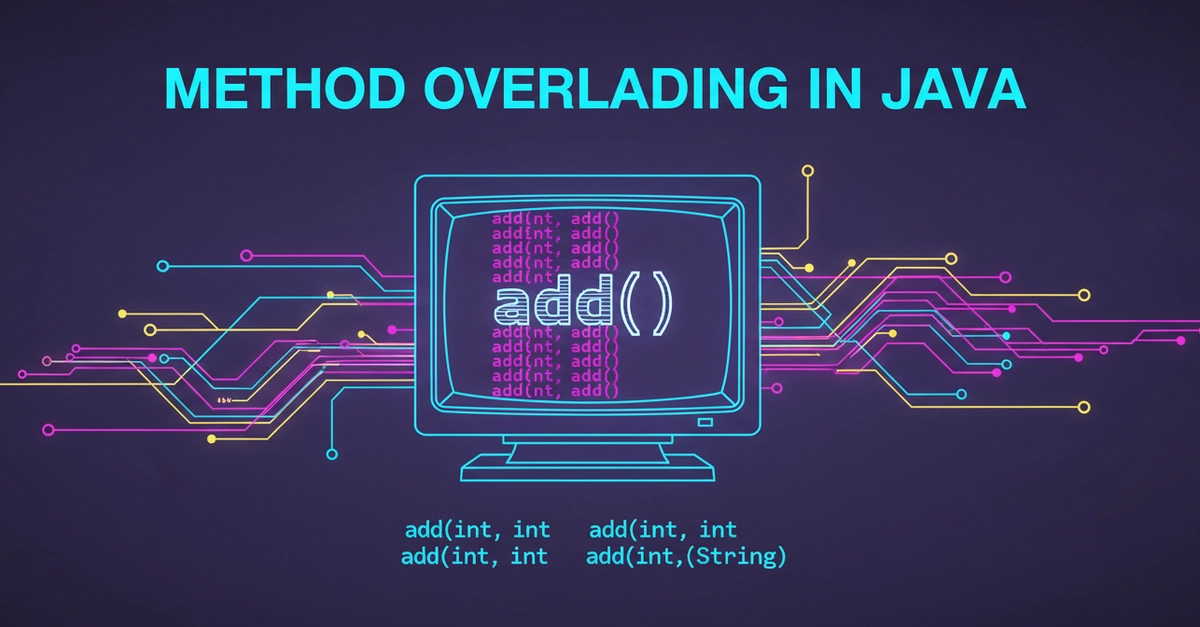
Look, back in the day — we’re talking early 2000s, when Java was the king of enterprise — devs expected every method to scream its purpose with a distinct name. addTwoNumbers, addThreeNumbers, you get it. Tedious. Then method overloading in Java swoops in, same name, different params, and suddenly code reads like English. Changes everything? Nah, not really. It just papers over Java’s verbosity.
But here’s the thing.
Method overloading isn’t some shiny new toy. It’s been there since Java 1.0, quietly enabling polymorphism-lite without the inheritance headaches. Everyone hyped full-on overriding for objects; this? It’s the pragmatic sibling nobody name-drops at conferences.
Why Does Method Overloading in Java Trip Up Even Seasoned Devs?
Rules first — because without ‘em, you’re lost. Change the number of parameters, types, or order. That’s it. Tweak just the return type? Java laughs. Compiler error, every time.
Take this gem from the docs — wait, the original rundown nails it:
To overload a method, you must change at least one of the following: Number of parameters, Type of parameters, Order of parameters, Changing only the return type is NOT allowed.
Spot on. No fluff.
Now, picture a Calci class. You’ve got add(int a, int b) spitting out “2 arguments” before summing. Call it with three ints? Boom, add(int a, int b, int c) kicks in. Clean. Readable. Until some intern adds a fourth version with floats, and poof — which one runs?
Java checks arguments at compile time. Number first. Then types. Order if ties. Miss a match? Error. Smart, right? But cynical me asks: who wins? The IDE vendors. IntelliJ feasts on your autocomplete woes.
And those examples. Student class shows int vs String. Integer: 100. String: Harini. Simple. Test class flips order: int then String prints “10 Java”. Reverse? “Hello 20”. Neat demo. But in a 10k-line service? Good luck tracing.
Can Method Overloading in Java Lead to Ambiguity Hell?
Oh yeah. Here’s my unique hot take, straight from 20 years graveyard-shifting Java monoliths: overloading mirrors C++’s operator tricks, but Java neutered defaults to avoid pitfalls. Historical parallel? Think Smalltalk’s pure messages — Java borrowed the idea, sanitized it for suits. Result? Enterprise codebases bloated with 50 add() variants, none documented. Who makes bank? Consultants refactoring it to Kotlin, where extension functions laugh at this mess.
Step-by-step, as the original lays out: main fires up, obj born, method called. JVM scans sigs — args count, types, boom match. Output. Predictable. Until generics enter. add(Integer, Integer) vs add(int, int)? Autoboxing saves you, mostly. But varargs? add(int… args) swallows all, last resort. Sneaky.
Real talk — I’ve seen teams burn weeks on “why this overload?” because primitives vs wrappers. Or String vs char[]. Order swaps seem cute in tutorials. Production? Nightmares when APIs evolve.
But.
It shines for APIs. Think Collections.sort(). Overloads galore: list, comparator. Intuitive. Users don’t care about innards.
Is Method Overloading Just Java’s Way of Faking Flexibility?
Cynical lens: Java’s static typing demands this rigidity. Python? Duck typing, no need. Rust? Traits handle it dynamically. Java sticks to overloading because — plot twist — Oracle’s JVM profits from compile-time checks. Faster JIT? Sure. But who’s paying? You, debugging.
Prediction: AI code-gen tools like GitHub Copilot will auto-suggest overloads perfectly in five years. Noobs won’t grok rules; bots will. Old Java hands? We’ll chuckle, then retire.
PR spin? None here — it’s textbook. But tutorials hype “improves readability” without the “maintainability tax.”
Examples evolve. main(String[] args) overloads with main(String… args)? Nope, varargs sugar. But print(int, String) vs print(String, int)? Works. Until you add print(Object, Object). Widening conversions bite.
Deep dive: primitives promote byte->short->int->long->float->double. So add(byte b) called with short? Matches. But overload add(short s)? Now ambiguous if caller passes byte. Compiler nags. Love it or hate it, enforces intent.
Wander a bit: remember JSP days? Overloaded doGet, doPost. Web devs lived it. Today, Spring @RequestMapping hides it. Progress?
Short para punch: Overloading works within class or inheritance. Static? Fine. Private? Useless, can’t override.
Enterprise truth. Megacorps like banks drown in overloaded utils. Logger.info(String), .info(Object). Fine. Until Lombok @Slf4j generates more. Bloat.
Method Overloading vs Overriding: Still Confusing Newbies?
Overriding: runtime, polymorphism. Overloading: compile, same class. Mix ‘em? Superclass overload not visible to subclass unless redeclared. Gotcha.
Final thought — before FAQ. It’s not hype. It’s survival. Java endures because basics like this scale to billions of lines. Buzzword-free reliability.
🧬 Related Insights
- Read more: Akamai’s 41 Datacenters Chase AI’s Edge: The Hybrid Inference Bet
- Read more: A Hacker News Clone for Indie Blogs: Skeptical Take on This Show HN Gem
Frequently Asked Questions
What is method overloading in Java?
Multiple methods, same name, different parameter lists (count, type, order). Improves readability, resolved at compile time.
Can you overload methods by return type only in Java?
No. Must differ in parameters. Return type alone triggers compile error.
Method overloading vs overriding in Java?
Overloading: compile-time, same class. Overriding: runtime, polymorphism via inheritance.