Fingers hovering over delete, I watched my IDE underline yet another ambiguous method call in Java.
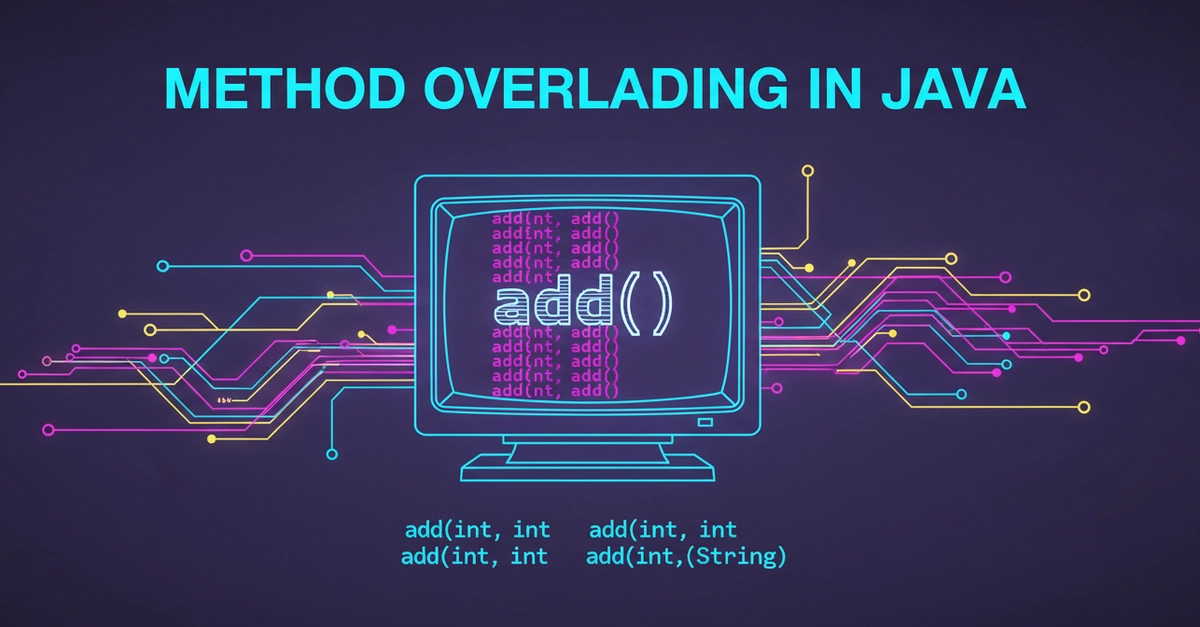
Method overloading. That old Java staple where you slap the same name on methods, tweak their parameters, and let the compiler sort it out at compile-time. It’s polymorphism’s quicker sibling — no virtual tables, just static smarts. But here’s the kicker: in 2024, with lambdas and records everywhere, does anyone still need this 90s relic?
What Even Is Method Overloading, Really?
Short answer: multiple methods, same name, different parameter lists. Number of args changes. Types differ. Order flips. Boom — overload resolved before runtime even blinks.
The original tutorial nails the basics, albeit with typos that’d make a freshman blush. “Method Overloading is a feature in Java where multiple methods have the same method name and same number of parameters,arguments but different parameters , different data type in the same class.” Wait, same number but different? Pick a lane.
Take their Sample class. Call add(10,20). Compiler picks the two-int version. Toss in a third? Different method. Zero args? Yet another. Outputs scream which one fired. Simple. Effective. Until it’s not.
public void add(int no1,int no2){ System.out.println(“2 arguments”); } public void add(){ System.out.println(“0 arguments method”); } public void add(int no1,int no2,int no3){ System.out.println(“3 arguments”); }
That’s the blockquote glory — straight from the source, proving it works. But real code? Parameters clash, and you’re debugging type promotions.
Why Can’t You Just Change the Return Type?
Java says no. Hard no.
Picture this: two multiply methods, both taking two ints, one returns int, the other double. Compiler shrugs — can’t tell ‘em apart without calling. Their Calculator example sneaks in a double-param overload to dodge it, but pretends return-type-only works. Spoiler: it doesn’t.
Changing only the return type is NOT allowed in Java.
Spot on. C++ lets you, warts and all. Java? Safer, maybe. But it forces awkward workarounds — extra params nobody wants. My unique hot take: this rule aged like milk. Java 21’s pattern matching could’ve obsoleted overloading entirely, letting you dispatch on return context. Instead, we’re stuck.
And the rules parade? Don’t keep parameter count same without type tweaks. Flip int then String vs. String then int — works, as ShowExample shows. Data types shift: print(int) vs. print(String). All compile-time magic.
But screw up order or promotion — int to long auto-boxes sneaky — and ambiguity strikes. Ever chased a “reference to add is ambiguous”? Soul-crushing.
Does Method Overloading Actually Clean Code?
Pros first. Same name for similar ops. add(10,20). add(10,20,30). Readable. No sumTwoInts vs. sumThreeDoubles nightmare.
Maintains sanity in math libs, printers, builders. Their SumExample? Clean output: 30, then 60.
Real-life? Camera button. Photo mode, video mode — same press, context decides. Eh, stretched. Better: print(“hello”) logs string; print(42) dumps number. One method rules ‘em all.
Cons — oh boy. Newbies trip over it. IDEs help, but in interviews? “Explain why this fails.” Gotcha city.
Worse: it hides intent. Why three adds? Overloaded or specialized? Refactor hell. Go and Rust ditched it for clarity — explicit names win. Java clings like a bad habit.
Historical parallel: remember CORBA’s IDL overloads? Promised interoperability, delivered interface bloat. Java’s version? Same vibe, tamer scale.
Step-by-step execution? Main spins up object. Calls method. Compiler matches args to sigs — exact, widening, varargs last. Picks best fit. Prints. Yawn.
Advantages listed: clean code, reuse names, easy maintenance. Sure. If you’re writing tutorial fodder.
Is Method Overloading Dying in Modern Java?
Look around. Streams chain without it. Optionals flatten hierarchies. Records cut boilerplate.
Overloading shines in fluent APIs — think AssertJ or Mockito. But even there, static imports blur lines.
Bold prediction: by Java 25, virtual extensions or sealed interfaces make it redundant. Why overload when interfaces auto-dispatch? Corporate spin calls it “polymorphism power.” Nah — it’s convenience with caveats.
Pitfalls galore. Varargs trump exact matches sometimes. Boxing unboxes weirdly. Generics? add(T a, T b) vs. concrete? Nightmares.
Their PrintExample? obj.print(100) grabs int. “Java” string. Fine. But print(Object)? Shadowed.
Real-World Gotchas No Tutorial Mentions
Ever overloaded on primitives vs. wrappers? int vs. Integer — compiler picks narrowest, but autoboxing bites.
Order matters hugely. show(int, String) vs. show(String, int). obj.show(10, “Java”) — first. “Hello”, 20 — second. Intuitive? Until strings look numeric.
No return-type distinction means duplicate code often. Extract to private helper — defeats purpose.
In teams? One dev adds overload, breaks downstream. Static analysis (SpotBugs) flags ambiguities — use it.
Mobile camera analogy? Laughable. Real: JDBC’s execute(String) vs. execute(Query). SQL variants, same verb. Useful.
Why Does This Matter for Developers in 2024?
If you’re green, master it — interviews love examples. Seasoned? Question every overload. Does it clarify or obscure?
Kotlin wrappers it nicer with extensions. Scala? Implicit hell. Java pure? Grind.
Verdict: handy tool, sharp edges. Wield carefully, or watch your build crumble.
🧬 Related Insights
- Read more: ContextZip Trims Docker Build Spam from 50 Lines to a Handful – Your AI Agent’s New Best Friend
- Read more: Claude Code Skills’ Hidden Model Trick: Slash Costs, Boost Speed Overnight
Frequently Asked Questions
What is method overloading in Java?
Multiple methods same name, different parameter lists (count, type, order). Compile-time polymorphism.
Can method overloading use different return types only?
No. Java forbids it — compiler can’t distinguish without invocation context.
What are the advantages of method overloading?
Cleaner names for similar ops, readable calls, less method proliferation. But risks ambiguity.