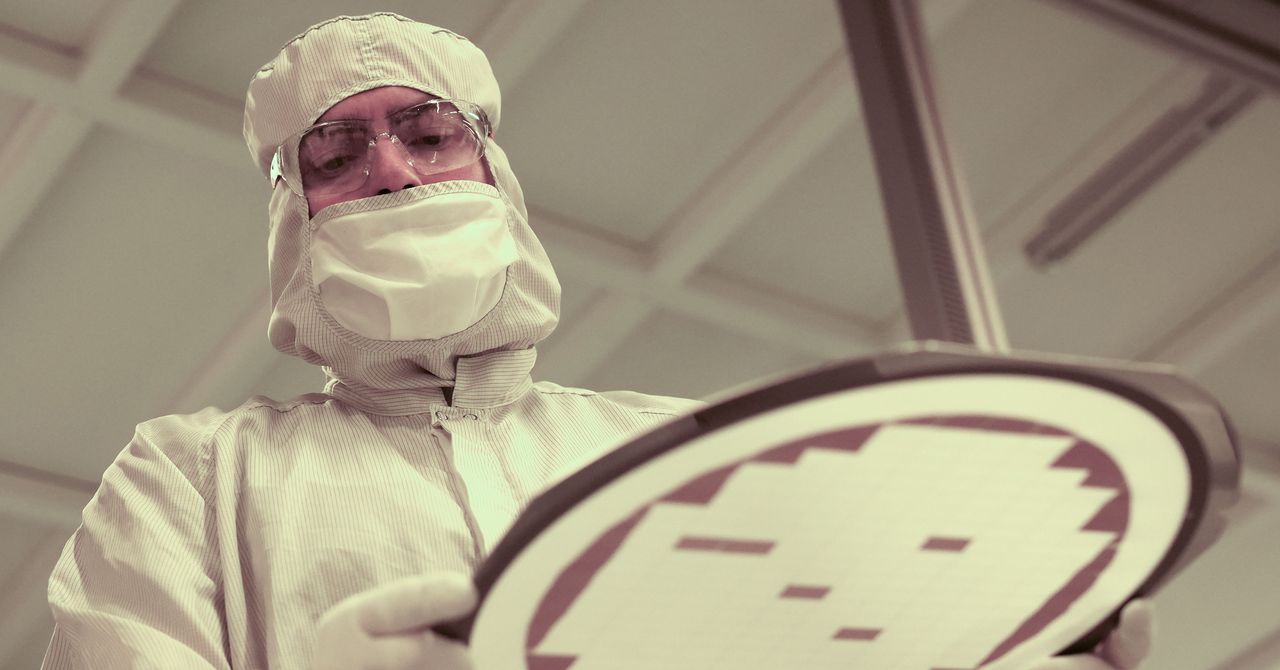
Raccoons scattered. A badger bolted. Fab 9 — that sprawling Intel relic in Rio Rancho, New Mexico — hadn’t hummed since 2007.
Then, January 2024: lights flicker on. Billions flow in, $500 million courtesy of the CHIPS Act. Suddenly, this sod-farm ghost is ground zero for Intel’s advanced chip packaging surge — the unglamorous glue binding chiplets into custom AI beasts.
Zoom out. Intel’s not just dusting off old fabs. They’re rewriting their playbook. Packaging? It’s the dark horse in the AI arms race, where hyperscalers crave tailored silicon without TSMC’s stranglehold. And Intel — battered by mobile misses and CEO churn — smells blood.
Here’s the thing: packaging mashes tiny chiplets onto one powerhouse die. Think Lego for semiconductors. AI demands it — massive compute, low power, custom fits for models gobbling exaflops. Intel’s Foundry arm, that aspirational half of the split company, is cranking here while wafer-fab revenue lags.
Why Dust Off a 1980s Dinosaur for Chip Packaging?
But why Fab 9? Why now? Look — AI’s exploding custom chip needs. Google, Amazon, they’re designing their own TPUs and Gravitons but outsourcing the tricky bits. Packaging’s not volume like wafers; it’s precision artistry. Scale it right, and you’re printing money.
Intel’s CFO Dave Zinsner spilled it on an earnings call:
“We expect to see revenue from packaging come in even before we start to see meaningful wafer revenue.”
He jacked projections from hundreds of millions to “well north of $1 billion.” March rolls around, Morgan Stanley confab: Zinsner dubs packaging “ironically, the more interesting part of the Foundry business today,” teasing “deals… in the billions of dollars per year.”
Skeptical? Yeah. Intel’s PR machine loves billion-dollar teases. But sources whisper Google and Amazon in talks. No comments from them — classic supplier silence. Intel stonewalls too. Still, if true, it’s jet fuel for a comeback.
Picture this: sixteen miles north of Albuquerque, 200 acres baking under desert sun. Fab 9 idled, wildlife paradise. Neighbor Fab 11X joins the party. Together, they’re Intel’s packaging war chest, eyeing TSMC’s crown.
TSMC dwarfs them in scale. Always has. But Intel’s got US soil, CHIPS cash, and a hunger. Packaging margins? Zinsner eyes 40% — same as their CPUs. Ambitious.
Who’s Buying Intel’s Packaging Magic?
The customers. That’s the rub.
Google fabs its TPUs partly at TSMC, but packaging? Intel could snag that. Amazon’s Trainium chips — same story. Multiple insiders confirm ongoing huddles. Billions annual? Per deal? If packaging revenue hits first, as Zinsner bets, Foundry flips profitable fast.
Don’t buy the hype wholesale. Intel’s cycled CEOs like jerseys. Fab buildouts start, stutter. Analysts watch yields like hawks.
Jim McGregor, Tirias Research founder, nails it: “Packaging is not as easy as saying ‘I want to run 100,000 wafers per month.’” Deals first, expansion second. See ramps? Pencil in success.
And ramps are coming. Malaysia’s PM Anwar Ibrahim posted last month: Intel’s expanding Penang since the ’70s, advanced packaging phase one. Intel confirms: more assembly-test amid “rising global demand.”
Naga Chandrasekaran, new Foundry head since 2025, told WIRED they’re primed.
Short version: Intel’s globalizing packaging muscle.
Can Intel’s Packaging Outrun TSMC in the AI Stampede?
TSMC’s the gorilla. Intel’s the scrappy underchip. But here’s my take — the unique angle you’re not reading elsewhere: this echoes Intel’s 1970s packaging revolution. Back then, their ceramic packages birthed the PC era, letting chips scale cheap. They owned it. Lost it to Asia. Now? AI’s chiplet era is their remix. If they nail yields, it’s not just billions — it’s Foundry independence, weaning off PC slumps.
Prediction: close those Google/Amazon deals by EOY, and Intel funds its own fabs sans more Uncle Sam. Miss? Back to CEO roulette.
Challenges stack high. Packaging’s finicky — thermal wars, interconnect hell. Intel’s playing catch-up. But CHIPS Act billions buy time. Rio Rancho’s no fluke; Malaysia’s proof of demand.
CEO Lip-Bu Tan calls it a “very big differentiator.” Spin? Partly. But revenue whispers say real.
It’s a nerdy bet, yeah. Gluing silicon slivers. But in AI’s compute famine, it’s the pickaxe seller in a gold rush.
Intel’s half the company now: product side chugs CPUs; Foundry dreams big. Packaging bridges ‘em. Gross margins match? Game on.
One fab hums. Another expands. Deals loom.
Will it rake billions? Watch the ramps.
Why Does Intel’s Packaging Bet Matter for AI Hardware?
AI chips aren’t monolithic anymore. Chiplets rule — AMD’s MI300X, Nvidia’s Blackwell tease ‘em. Packaging knits the puzzle. Intel wins here, they slice the hyperscaler pie. Lose? TSMC feasts alone.
US angle: derisking supply. CHIPS Act’s no gift; it’s strategic. Intel’s fabs onshore mean faster AI ramps for American clouds.
But hype check: Zinsner’s billions sound CEO-fied. Real growth? Q2 earnings will tell.
Deep dive: packaging’s architecture shift. 2.5D, 3D stacking — Intel’s EMIB, Foveros tech leads in spots. TSMC’s CoWoS dominates volume, but Intel’s customized.
Malaysia move? Smart. Penang’s cheap labor, established. Phase one later this year.
Historical parallel: Intel invented EPROM packaging. Dominated. Now circling wagons.
Bold call — packaging saves Intel. Not wafers. Not tomorrow’s nodes. This.
🧬 Related Insights
- Read more: DeepSeek V4 Unleashed: China’s Sparse Attention Revolution Hits Now
- Read more: SpaceX’s $2 Trillion AI Moonshot: Valuation Madness or Infrastructure Mastery?
Frequently Asked Questions
What is advanced chip packaging?
It’s stacking chiplets — small chip pieces — into one high-performance unit, key for AI’s power-hungry needs without melting servers.
Will Intel’s packaging deals with Google and Amazon happen?
Talks are advanced per sources, potentially billions yearly, but no confirmations — watch expansions in New Mexico and Malaysia.
Can Intel compete with TSMC in chip packaging?
Scale lags, but US funding, custom tech, and AI demand give a shot — if yields hit 40% margins.