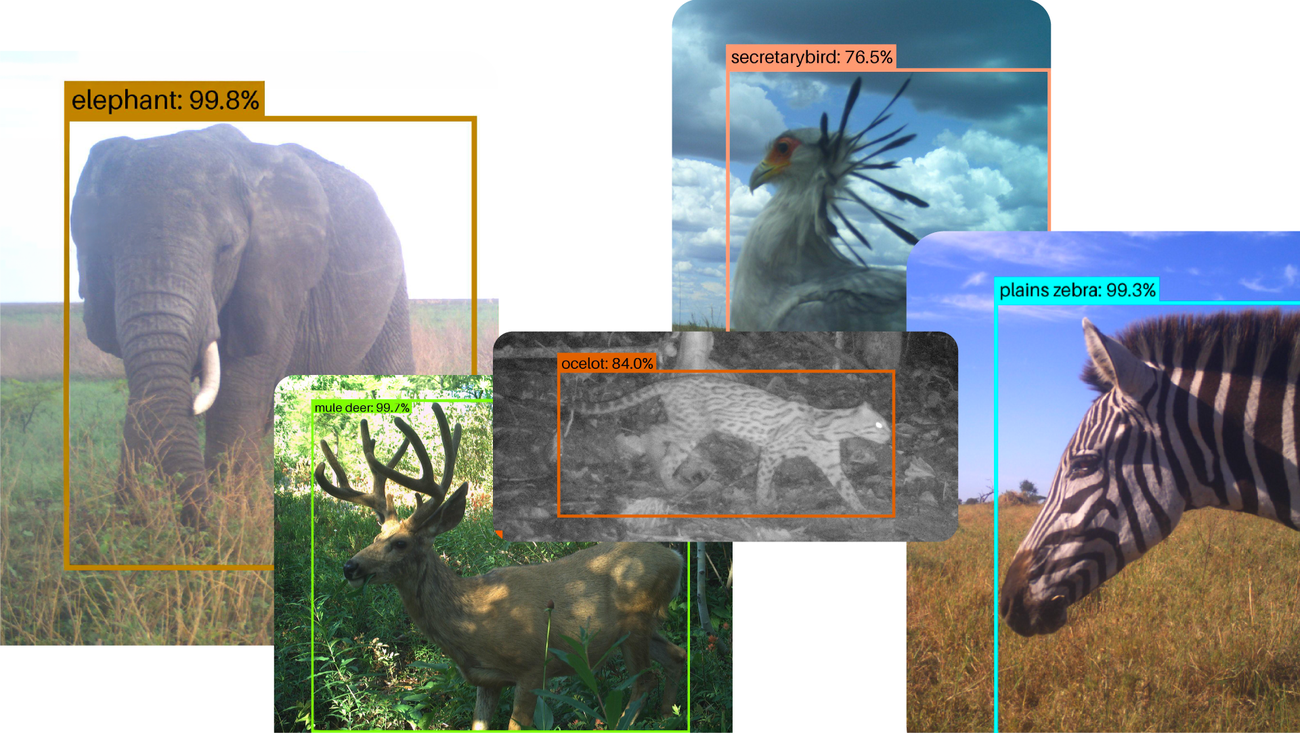
Real people—biologists knee-deep in mud, rangers dodging poachers—finally get a break from sorting endless camera trap photos. SpeciesNet, this open-source AI model spotting nearly 2,500 species of mammals, birds, and reptiles, crunches data that used to take months in days.
That’s the promise, anyway.
Does SpeciesNet Deliver for the Frontlines?
Look, I’ve covered enough Silicon Valley fairy tales to know when something smells like genuine utility. Camera traps? They’ve exploded—millions of snaps from pumas in Colombia to cassowaries in Australia. But humans labeling them? Nightmare fuel. Enter SpeciesNet, launched free and open-source a year back via Wildlife Insights (Google’s pet project since 2019).
Snapshot Serengeti in Tanzania’s got 11 million backlog images. Project lead Todd Michael Anderson at Wake Forest zapped through decades of data in days. Elephants at night, lions prowling—now they’ve got long-term trends on behavior and abundance in one of Africa’s biodiversity hotspots.
“Project leader Todd Michael Anderson at North Carolina’s Wake Forest University used SpeciesNet to analyze a backlog of 11 million photos, processing decades’ worth of data in just days.”
That’s from the announcement itself. Solid quote, right? No fluff.
But here’s my unique take, one you won’t find in the press release: this echoes the early days of genomic sequencing in the ’90s. Back then, open tools democratized DNA analysis, slashing costs and sparking conservation genomics booms—like tracking poached elephant ivory. SpeciesNet could do the same for visual ecology, but only if researchers tweak it locally without Google’s strings attached. Australia’s WildObs already did, fine-tuning for endemic critters like red-legged pademelons. Smart move.
Colombia’s Humboldt Institute? They’re scaling up with Red Otus, nationwide cameras on public and private land. Tens of thousands of images reveal mammals going nocturnal—dodging humans, maybe—and birds delaying dawn chorus in developed spots. Puma portraits, ocelot stealth shots. Actionable? You bet, for rainforest defenders watching deforestation chew through biodiversity.
Idaho Fish and Game deploys hundreds in northern forests. Bears, coyotes, elk—SpeciesNet sorts first, experts verify later. Millions reviewed yearly, no aerial surveys needed everywhere.
Short version: it speeds workflows. Real people win time to actually protect animals, not play image tag.
Who’s Really Cashing In Here?
Cynic hat on. Google’s doling out SpeciesNet like candy—open-source, they say. But Wildlife Insights? Their platform. Partners feed data back, enriching models. Who’s making money? Not poachers, hopefully. Google? Indirectly, via goodwill and datasets for broader CV training. Conservationists get tools; Big Tech gets planetary-scale animal pics. Fair trade?
I’ve seen this movie: self-driving car data hoards, facial rec training sets. Remember Clearview AI scraping faces? Here, it’s zebras and warthogs—less creepy, but precedent matters. Still, if it nails species from wonky angles, dim light, partial views? Impressive engineering. No buzzword bingo—just results.
And the PR spin? “Unprecedented view,” they gush. Please. Cameras have spied wildlife for decades; AI just automates the grunt work.
Skeptical Wins and Lingering Doubts
So, bold prediction: within five years, SpeciesNet forks will hunt poachers real-time, alerting rangers via satellite cams. Pair it with drones—boom, dynamic protection. But accuracy? It stumbles on obscurities, needs local tuning. Australia’s tweak proves it.
U.S. agencies like Idaho lean on it for population health checks. Stable elk herds mean hunter tags, economic ripple. Real stakes.
Yet, open-source purity? Downloadable, yes. But training data origins? Opaque. Who audited biases—like over-repping charismatic megafauna?
Bottom line: for cash-strapped biologists, it’s a godsend. Don’t drink the full Kool-Aid, though.
What about scalability? Red Otus nationwide— that’s ambition. Changes in migration timing scream climate signal. Mammals nocturnalizing? Human pressure fingerprint.
Why Bother with AI for Critters?
Because extinction’s forever. Tech’s littered with flops, but this? Tangible. Volunteers drowned in Snapshot Serengeti pics pre-AI. Now, insights flow.
One caveat: final human review essential. AI hallucinates—blurry warthog as lion? Disaster for policy.
🧬 Related Insights
- Read more: Agentic AI’s Hidden Exploits Expose Governance’s Fatal Flaw
- Read more: OpenAI’s Superintelligence Dreams Clash with Insiders’ Altman Distrust
Frequently Asked Questions
What is SpeciesNet and how does it work?
SpeciesNet’s an open-source AI trained on camera trap images to ID 2,500+ wildlife species automatically, handling poor angles and lighting.
Is SpeciesNet accurate enough for conservation decisions?
Pretty good for broad categories, but needs human verification and local fine-tuning for best results, as Australian teams did.
Can anyone download and use SpeciesNet for free?
Yep, fully open-source via Wildlife Insights—perfect for your backyard trail cams or global projects.