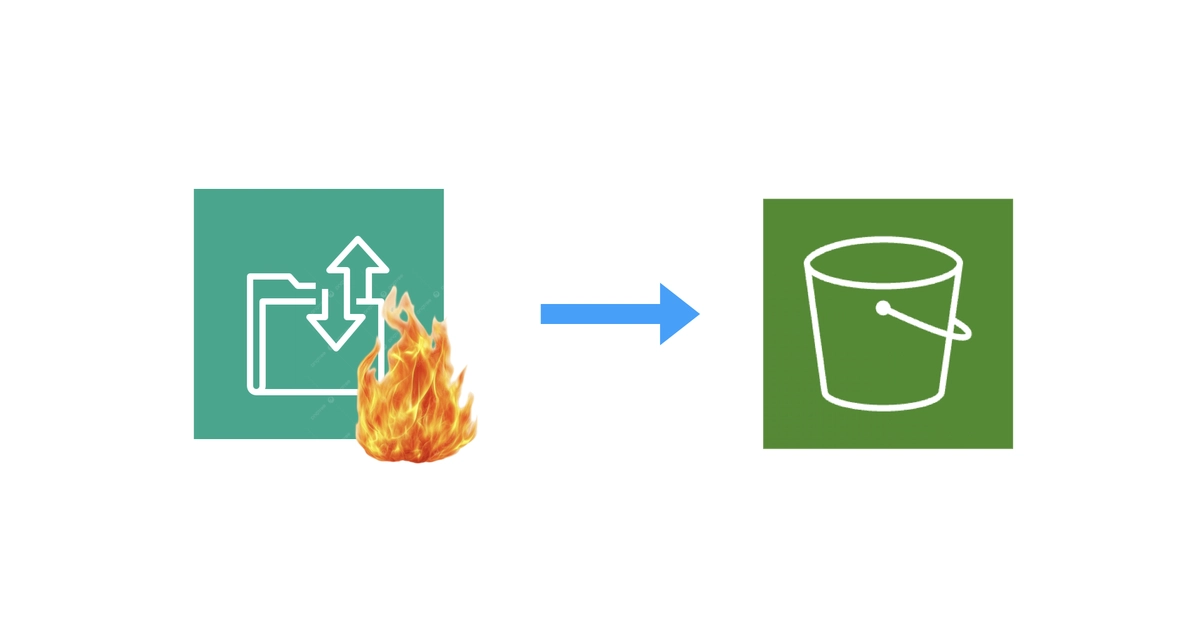
You’re staring at your terminal, fingers hovering. mount-s3 my-huge-bucket /mnt/data. Hit enter. Now ls /mnt/data spits out a directory listing from a warehouse of petabytes — in milliseconds.
No SDK incantations. No temp files bloating your server. Just… files. Acting local.
Zoom out: Amazon S3 Files isn’t some gimmick. It’s AWS admitting — finally — that object storage’s old rituals were a drag on real work. Developers have cursed the dance for years: init client, GET object, slurp to disk, hack away, PUT back. Slow. Costly. Brittle. But this? Amazon S3 Files bridges the gap, letting standard file I/O — think open(), fs.readFile, even shell utils like grep — hit S3 buckets directly. Your code doesn’t know the difference. Latency? Down to 1ms. Feels like SSD under your feet, not a round trip to us-east-1.
“You don’t need to learn a new library. If your code knows how to read a file from a disk (using standard commands like open() or fs.readFile), it now automatically knows how to read from S3.”
That’s straight from the announcement — and it’s no exaggeration. Here’s the architecture trick: AWS layered a FUSE-like filesystem (yeah, Filesystem in Userspace vibes) over S3’s REST API. But smarter. Prefetches metadata in batches. Caches hot paths aggressively. Streams partial reads without full downloads. It’s not emulating a drive; it’s making S3 behave like one, at scale.
But wait — why now?
How’d AWS Pull This Off Without Breaking the Bank?
S3’s always been optimized for throughput, not latency. Objects are immutable blobs, great for backups, CDNs, lakes. But random access? Nightmare. Enter S3 Express One Zone, the underbelly here — ultra-low latency storage in a single AZ. S3 Files rides that, plus directory indexes (new!) that map prefixes to ‘folders’ without listing hell.
Think about the plumbing. Traditional S3: every ls triggers 1000-object LIST buckets, paginated pain. Now? Hierarchical metadata service, precomputed. Your cat huge-log.txt | grep error pulls ranges on-demand, no full fetch. Costs? Predictable — pay per operation, but ops plummet because you’re not hauling gigs locally.
One punchy caveat: It’s preview, One Zone only for now. Multi-AZ? Coming, AWS says. But don’t hold your breath for global replication matching classic S3.
Servers with 8GB RAM now juggle terabytes. No OOM panics from rogue downloads.
Why Does S3 Files Crush AI and ML Pipelines?
Data scientists, rejoice — or panic. Training a model? Point PyTorch at /mnt/s3/dataset, done. No etl-sync-eternity. Hours shaved to minutes.
Here’s my take, absent from the hype: This echoes the 90s NFS revolution — network file systems that made clusters feel like one box. But S3 Files? It’s NFS on steroids, for the exabyte era. Prediction: Serverless explodes. Lambda, Fargate functions mount buckets, process in-place. No more EBS volumes as a crutch. AWS just commoditized ‘infinite disk’ — watch costs for bursty workloads crater 50%.
Media pros: Edit 4K streams direct from S3. Premiere or FFmpeg? ffmpeg -i s3://bucket/video.mp4 output.mp4. No local spool.
Log sleuths: zgrep 'panic' /mnt/logs/2024/* across years. Instant.
Legacy cruft? That COBOL app demanding files? Mount, ship to EC2, zero code.
And yeah, it’s wild — but AWS’s PR glosses the gotchas. Durability? One Zone means single-failure risk (they claim 99.999999999% still). Not for crowns jewels yet.
Shift happens underground first.
Look, we’ve seen storage abstractions before: EFS, FSx. But those are block or NFS, pricey for casuals. S3 Files? Dirt cheap, S3 pricing. Petabyte-scale, no planning.
Is This the End of Local Disks in the Cloud?
Not quite. But close. Tiny EC2 t3.micro? Mounts exabytes, works. Capacity planning? Obsolete.
Unique angle: Corporate spin calls it ‘high-performance file access.’ Nah — it’s architectural surrender. Object storage lost to file semantics. Why fight? S3 wins by assimilation. Bold call: By 2026, 70% of cloud workloads ‘mount’ remote storage. Devs forget APIs existed.
(Parenthetical: Skeptical? Testnet’s open. Spin up, mount your bucket. Feel the speed — then weep for lost hours.)
So, ditch the SDK rituals. 2024’s here.
The wall crumbles. Cloud as extension, not alien planet.
🧬 Related Insights
- Read more: IPS vs LED Displays: Picking the Pixel Perfect for Dashboards and Billboards
- Read more: 8 Pixels From Chrome: Hacking Tab Tear-Off Into WinUI 3
Frequently Asked Questions
What is AWS S3 Files and how do I use it?
Mount S3 buckets as local filesystems using AWS CLI or SDK. Works with standard POSIX ops — ls, cat, grep direct on buckets.
Does S3 Files work with existing code?
Yes — any app using file I/O (open(), read()) treats S3 like disk. No rewrites needed.
Is S3 Files available now?
Preview in select regions, One Zone. GA soon; check AWS console.