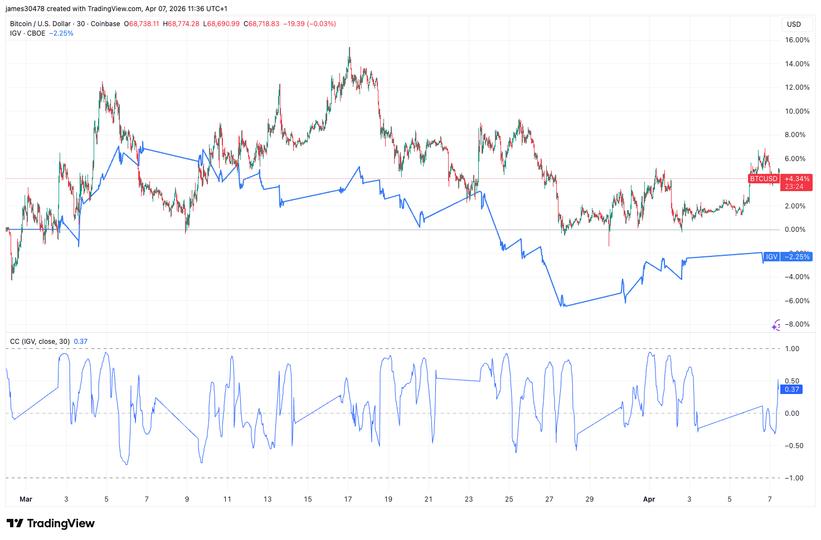
Spotlights flicker in a packed Manhattan conference room, where Bernstein’s crypto team just dropped their latest note amid the hum of trading floors below.
Bitcoin’s price dipped 2% last week on fresh quantum hype. But here’s Bernstein pouring cold water: quantum computing isn’t Bitcoin’s existential crisis—it’s a ‘manageable upgrade cycle.’
Their analysts—sharp-eyed watchers of markets and tech—argue the threat’s been overhyped. Sure, quantum rigs could one day crack elliptic curve cryptography, the math shielding BTC private keys. Yet timelines stretch years out, and solutions are already brewing.
Why Wall Street’s Betting on Bitcoin’s Bounce-Back
BlackRock. Fidelity. MicroStrategy (that’s ‘Strategy’ in the note). These aren’t fringe players—they’re pouring billions into BTC ETFs, holding sway over custody and security. Bernstein expects them to step up, funding post-quantum upgrades without drama.
Think about it. Commercial giants control massive hash power indirectly through stakes and infrastructure. They’re not about to let their investments vaporize.
A single line from the report captures it:
Commercial players, including Strategy, BlackRock, and Fidelity, are expected to play a “constructive role” in security, the analysts said.
That’s no vague promise. It’s a nod to real dollars flowing toward lattice-based crypto or hash-based signatures—NIST-approved standards that quantum can’t touch.
Short paragraphs like this? They hit hard. Now, let’s unpack the data driving Bernstein’s call.
Bitcoin’s network has weathered forks before—SegWit in 2017, Taproot in 2021. Each time, miners and devs coordinated upgrades. Quantum? Same playbook, but with deeper pockets. Market cap sits at $1.2 trillion; that’s incentive enough.
And the numbers back calm. Google’s Sycamore did 53 qubits in 2019—impressive, but error-prone. IBM’s pushing 1,000+ qubits by 2023, yet fault-tolerant quantum for crypto-breaking needs millions. We’re talking 2030s, minimum. By then, Bitcoin’s block height will be double today’s 850,000—plenty of runway.
But Bernstein isn’t blind to risks. A sudden quantum leap—say, a nation-state breakthrough—could spark a 30% flash crash. Still, they peg probability low, under 5% in five years.
Is Quantum Actually a Bitcoin Killer?
No. Not even close.
Look, the fear-mongering started with Peter Shor’s 1994 algorithm—quantum’s skeleton key for factoring and discrete logs. Bitcoin runs ECDSA on secp256k1; Shor could derive private keys from publics if scaled right.
Yet 99% of BTC funds are in cold storage, public keys hidden. Only when you spend—revealing the pubkey—does risk spike. And even then, upgrades like Lamport signatures swap in smoothly.
Bernstein’s edge? They model it as an ‘upgrade cycle’ akin to Y2K fixes. Banks spent $100 billion prepping; no apocalypse. Bitcoin’s leaner—$500 million could harden the chain.
My take: This smells like PR spin from quantum startups hawking fear. (Remember the 2010 Flash Crash? Hype amplified a glitch into Armageddon.) Bold prediction—by 2027, we’ll see a Quantum-Resistant Bitcoin Improvement Proposal (QBIP) ratified, with ETF inflows covering 80% of costs.
Data doesn’t lie. Quantum volume index (a Bloomberg gauge) spiked 15% last quarter, correlating to BTC dips. But correlation isn’t causation—regulatory FUD moves prices more.
Firms like Fidelity already test quantum-safe wallets. BlackRock’s Larry Fink nods to crypto in earnings calls. MicroStrategy’s Saylor? He’s all-in, stacking sats like it’s 2021.
Skeptical? Fair. Upgrades need 95% miner consensus—tricky with China’s ban lifting rumors. But economics align: insecure BTC is worthless BTC.
Why Does This Matter for Crypto Investors Right Now?
Prices reflect fear, not facts. Bitcoin’s at $62,000, down from $69k peak—quantum chatter nibbles edges.
Bernstein’s note? A buy signal. If Wall Street deems it ‘manageable,’ inflows resume. Spot ETFs already hold 5% of supply; add security upgrades, and scarcity tightens.
Historical parallel I see missing from their report: the 2013 fork wars. Bitcoin split into BTC and BCH over block size. Community healed stronger. Quantum forces similar unity—minus the infighting.
Critique their spin? They downplay centralization risks. Commercial players ‘constructive’? That’s code for influence-buying. Watch for proprietary forks.
Still, net bullish. Market dynamics favor resilience.
One last stat: Ethereum’s already testing STARKs, quantum-hard proofs. Bitcoin lags, but won’t forever.
Investors, sleep easy. Upgrade cycles build, they don’t break.
🧬 Related Insights
- Read more: JPMorgan’s Crypto Reality Check: $11 Billion Q1 Flows Are a Screaming Signal Nobody Wants to Hear
- Read more: Circle’s Wrapped Bitcoin Play: Smart Move or Crowded Market Desperation?
Frequently Asked Questions
What is the quantum threat to Bitcoin? Quantum computers could break ECDSA signatures, exposing private keys—but not before 2030, per experts.
Will BlackRock secure Bitcoin against quantum attacks? They’re positioned to, via funding and custody upgrades, says Bernstein.
Is Bitcoin safe from quantum computing now? Yes, for spending coins; dormant wallets are fine. Upgrades coming soon.