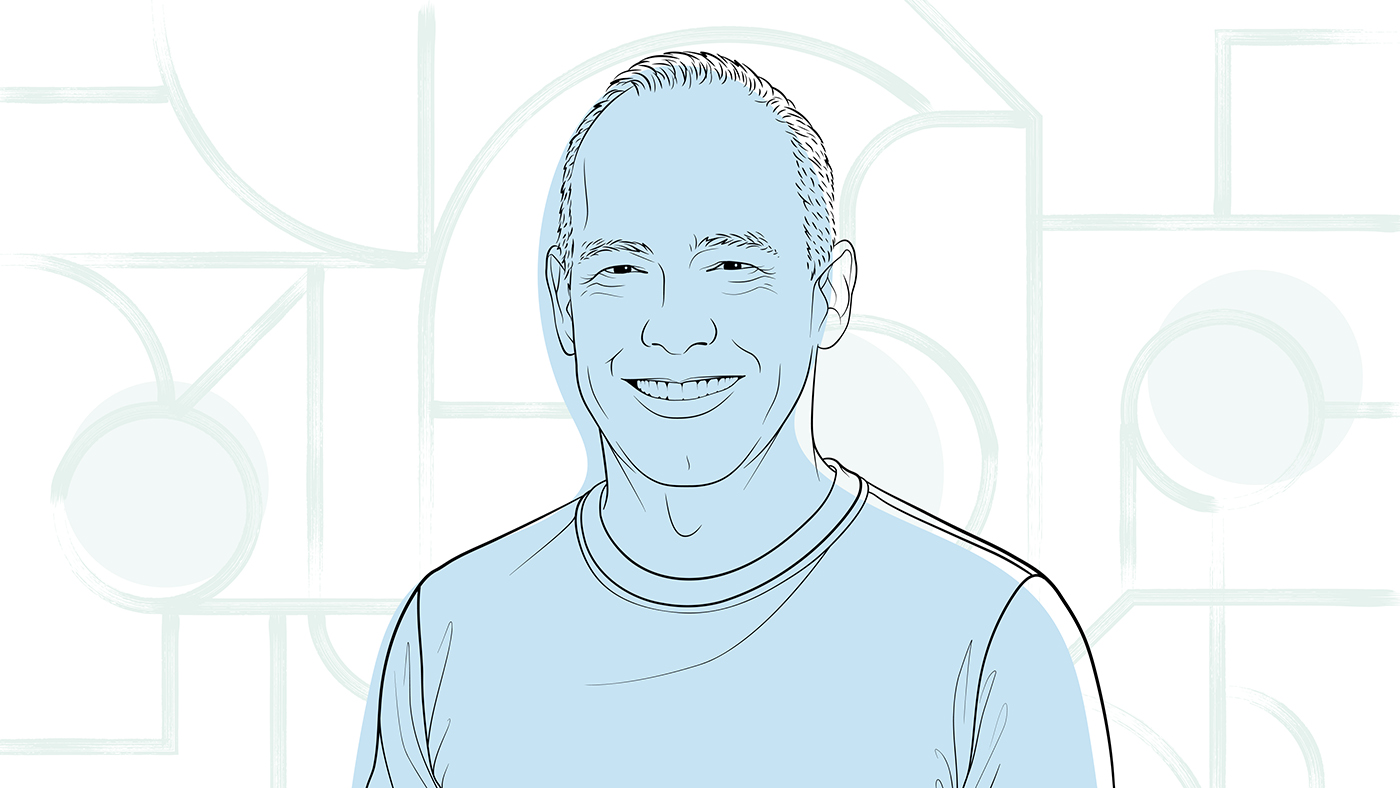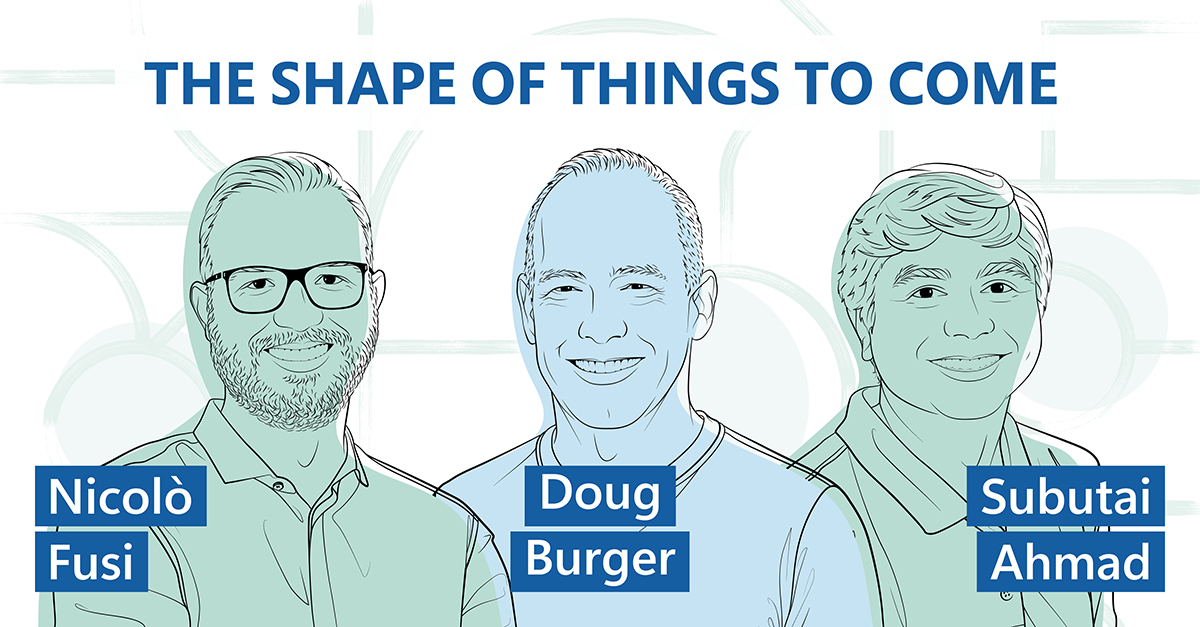
Doug Burger’s podcast mic crackles to life, pulling listeners into Microsoft’s war room on AI’s big question.
And there it is, right up front: will machines ever be intelligent? Not just parroting words, but grasping the world like we do. Burger, Microsoft Research’s heavy hitter, ropes in Nicolò Fusi (transformer wizard) and Subutai Ahmad (brain geek from Numenta) to hash it out. This isn’t fluffy futurism—it’s a cage match between silicon scale and biology’s sneaky efficiency, with billions in AI bets hanging in the balance.
Transformers vs. Brain: Efficiency Gap Exposed
Fusi lays it out clean: he’s knee-deep in LLMs, those info-theory beasts sucking up data like vacuums. Started in Bayesian nonparametrics—Gaussian processes, computational biology—then pivoted to transformers because, well, that’s where the action is. But here’s the rub. LLMs chug gigawatts to mimic smarts, while your brain sips 20 watts. Market fact: OpenAI’s GPT-4 training scorched enough power for 1,000 U.S. homes yearly. Scale that to human-level? We’re talking national grids buckling.
Ahmad? He’s the contrarian. Computer scientist turned brain chaser, minoring in cognitive psych back in undergrad. Sees intelligence as comp sci’s Everest—too tough for quick bucks, so he detoured to startups. Now? Back at it, arguing biology’s distributed, always-on learning crushes digital silos.
“Are digital intelligence, large language models, on a path to surpass humans, or are the architectures just so fundamentally different that one will do one set of things well, the other will do something else very well?”
Burger nails the stakes there. Transformers excel at pattern-matching text—hello, ChatGPT’s $100B valuation hype—but flop on sensory grounding. No hands, no eyes, just tokens. Brains? Wired for movement, senses feeding back in loops. Data point: LLMs hallucinate 20-30% on facts; humans rarely do post-infancy.
Short para punch: Architectures clash hard.
But let’s unpack the market dynamics—because this isn’t academic. NVIDIA’s stock tripled on LLM frenzy, hitting $3T market cap. Yet efficiency stalls: each gen doubles params, halves gains (Chinchilla scaling laws). Fusi admits transformers lean on info theory for compression, but without real-world anchors, it’s brittle. Ahmad pushes sparse, hierarchical reps—like neocortex layers predicting surprises. Numenta’s tech mimics that; early tests show 100x data efficiency over dense nets.
Why Does Sensory Grounding Kill LLM Hype?
Look, LLMs shine in benchmarks—GLUE, MMLU—but real intelligence? Needs embodiment. Burger prods: representation matters. Brains encode sparse, active inference; transformers? Massive embeddings, recomputed every inference. Cost? $0.01 per 1K tokens now, but at human scale—trillions of inferences daily—that’s economic suicide.
Fusi counters gently (gotta play nice with the boss): yeah, transformers scale via data, but biology’s continuous learning dodges catastrophic forgetting. Plug in senses? You’d need robotics integration—hello, Figure AI’s $2.6B raise betting on it. Yet market’s 90% text-first; hardware lags.
Here’s my unique take, absent from their chat: this echoes the 1980s expert systems bust. Back then, rule-based AI promised intelligence, scaled via logic trees—crashed on brittleness. LLMs? Probabilistic trees. History screams: without bio-mimicry, we’re repeating AI winters. Bold call—by 2030, 70% of AI R&D shifts to neuromorphic chips (Intel’s Loihi already 1,000x efficient on sparse tasks), starving pure transformers.
And efficiency? Brains parallelize across 86B neurons; LLMs serialize on GPUs. Ahmad’s point: distributed hierarchies spot anomalies fast—no backprop slog. Tests? Numenta’s HTM detects fraud in streams where LSTMs choke.
One sentence: Numbers don’t lie—biology wins watts-per-insight.
Can Machines Surpass Humans—or Just Mimic?
Burger frames it binary: surpass, or parallel paths? Fusi: transformers generalize zero-shot, humans don’t always. But wait—humans ground in physics, causality. LLMs? Statistical mirages. Market proof: autonomous driving—Waymo logs 20M miles, still babysat; brains navigate chaos intuitively.
Critique time: Microsoft’s spin—“net positive AI”—feels PR-polished. Sure, amplify understanding, but dodging compute walls? That’s the elephant. Global AI energy demand hits 10% of electricity by 2026 (IEA forecast). Policymakers yawn; shareholders cheer till blackouts.
Future bridge? Hybrids. Ahmad’s sparse nets + Fusi’s scaling. Or sensory loops—robots learning like toddlers. Prediction: no solo winner. Machines excel narrow (AlphaFold’s protein folds), humans broad adaptation. True intelligence? Ensemble architectures, $500B market by decade’s end.
Wander a bit: remember Deep Blue? Beat Kasparov 1997, chess solved. Intelligence? Nah, search tree. LLMs same trap—scale trumps structure.
The $200B Bet on Wrong Architecture
Stakeholders—policymakers, biz—need this debate. Transformers dominate 80% papers (arXiv stats), but brain-inspired? <5%. Shift coming: EU’s neuromorphic grants, DARPA’s programs. Microsoft? Fusi’s team eyes it, but Azure’s GPU river runs deep.
Sharp position: doubling down on LLMs is folly. Efficiency chasm dooms general intelligence. Pivot to bio-digital, or watch China lap with energy-cheap alternatives.
Data dive: human brain—10^16 synapses, lifelong learning. LLMs? 10^12 params, retrain epochs. Gap: orders of magnitude.
Punchy close: Intelligence isn’t tokens. It’s grounded, efficient world-models.
🧬 Related Insights
- Read more: Word2Vec Cracked: It Just Runs PCA on Word Co-Occurrences
- Read more: AGI Economy Alert: Your Job Might Soon Be Checking AI’s Homework
Frequently Asked Questions
Will machines ever be intelligent? Machines might mimic narrow intelligence, but human-level needs brain-like efficiency and sensory grounding—don’t bet the farm on transformers alone.
How do LLMs compare to the human brain? LLMs crush text prediction but guzzle power without continuous learning or embodiment; brains win on sparse, adaptive reps.
What’s next for AI architectures? Hybrids blending transformers with neuromorphic sparsity—expect market pivot by 2027 as compute costs bite.