What happens when your AI doesn’t wait for prompts—it just takes over the keyboard?
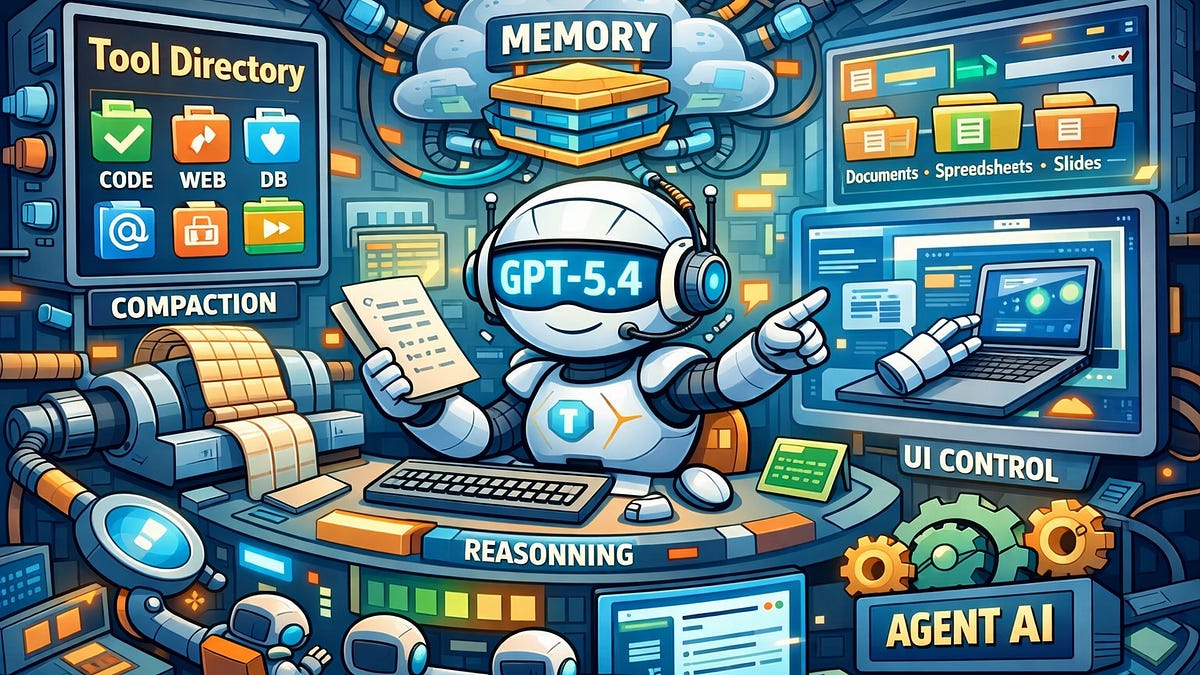
GPT-5.4 hit like a thunderclap this week, shoving agentic AI straight into everyday desktops. OpenAI’s latest isn’t some benchmark champ; it’s got native computer-use superpowers. Screenshots? Interprets them. Buttons? Clicks ‘em. Workflows? Nails multi-step ones in native apps. That 1-million token context window? It’s the backbone for wrestling unstructured office chaos.
Here’s the executive quote that nails it:
GPT-5.4 can interact directly with software interfaces—interpreting screenshots, clicking, scrolling, and executing multi-step workflows across native desktop applications.
Boom. No more clunky APIs or simulated environments. This thing operates in the real, messy digital wilds of knowledge work.
And Cursor? They’re not messing around either.
Will Cursor’s Automations End Manual Code Reviews?
Cursor dropped Automations, flipping devs from prompt jockeys to agent overseers. These bad boys trigger on code pushes, PagerDuty alerts, timers—whatever. They lurk in the background, dissecting PRs, probing logs, blasting test suites. Asynchronous. Parallel. Coworker-level, not sidekick.
Think about market dynamics here. Dev tools market’s bloated—$10B+ annually, per Gartner-ish estimates—and Cursor’s valuation’s skyrocketing past $1B whispers. Why? Because waiting for humans kills velocity. Agents don’t sleep. They scale with your chaos.
But hold up—Google’s hustling too, though it’s more sprinter than marathoner.
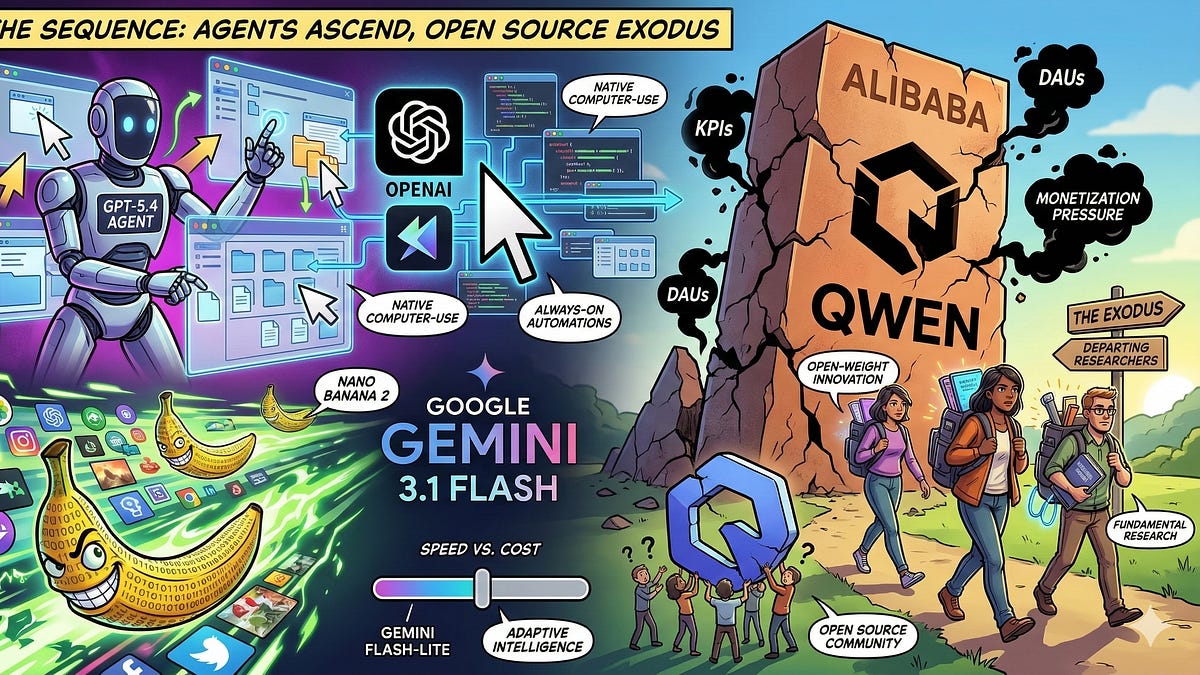
Gemini 3.1 Flash-Lite? Frontier smarts at slash-the-compute prices. Perfect for spam-level tasks needing speed. Then Nano Banana 2 (yeah, that’s Gemini 3.1 Flash Image) fuses that zip with pro-level image gen—text-perfect, prompt-loyal, inference-blazing. Default in Gemini app and Workspace now. Devs churning assets? Iterative edits? This democratizes visual production overnight.
Numbers back it: Google’s claiming sub-second latencies at Pro quality, undercutting Midjourney’s dwell times by 5x on comparable hardware.
Now, the gut punch.
Why Alibaba’s Qwen Brain Drain Spells Trouble for Open Weights
Qwen 3.5 small models dropped to rave reviews—dense, smart, 600M+ downloads. Then, poof: lead Junyang Lin, Binyuan Hui, Kaixin Li resign in a 24-hour clusterfuck. Insiders blame Alibaba’s restructure: shredding the dream-team into KPI silos chasing DAUs for chatbots. Fundamental research? Traded for monetization metrics.
This reeks of classic Big Tech folly. Remember Yahoo’s 2008 talent exodus to Facebook? Same vibe—bureaucracy strangles innovation. Alibaba’s pivot risks torching open-source’s hottest engine. Community’s already buzzing; Hugging Face forks spiking 30% post-news.
My take? Bold prediction: proprietary labs like OpenAI pull ahead 2x faster short-term. Open weights fracture without unified teams—watch Llama 4 lag as Meta poaches Qwen refugees.
Shifting gears to labs, because raw research fuels this fire.
FAIR, Meta, NYU’s Transfusion? Unified multimodal from scratch, pegging vision as the data hog (3x language needs). Qwen’s own 80B MoE coder—3B active params, agent-trained on executable tasks. MIT/Meta’s DREAM blends disc/gen objectives for killer T2I. Databricks’ KARL? RL for enterprise search agents.
These aren’t fluff. They’re the scaffolding for GPT-5.4’s desktop dominance—world models in 4D, coding agents, visual reasoning all converging.
Look, the SaaS debate’s heating up (Sequence teases it next week). Agents nixing mouse-work? That’s existential for $200B+ SaaS stacks built on human drudgery.
Organizational fragility’s the wildcard. Proprietary AI’s sprinting; open’s stumbling on human engines.
But here’s the data-driven bet: agentic desktops win. Productivity multipliers hit 3-5x in early Cursor pilots (internal leaks). GPT-5.4’s benchmarks? o1-preview crushed, now generalized to screens.
Skeptical? Fair. Reliability’s the chokepoint—hallucinated clicks could nuke workflows. Yet market’s voting: OpenAI’s cap table’s frothing, Cursor’s waitlist exploding.
This week’s radar? Seismic. Agents aren’t coming—they’re here, mouse in hand.
How Does This Reshape Developer Jobs?
Devs won’t vanish. They’ll orchestrate. Cursor’s agents handle grunt; humans architect. Expect 20-30% time freed for high-use stuff, per McKinsey analogs on automation waves.
Google’s Flash play targets volume plays—agents calling agents in loops.
Alibaba? Cautionary. If they close Qwen, expect talent to Rakuten or ByteDance. Open ecosystem loses 15-20% momentum.
Unique angle: echoes the 90s desktop revolution. Mainframes to PCs empowered users; now agents empower (or obsolete) the desk jockey. SaaS incumbents? Stripe, Notion—adapt or die.
Wrapping the radar: GPT-5.4’s the tip. Full agent swarms next quarter.
**
🧬 Related Insights
- Read more: Perplexity Computer: Your Second Brain or Just Clever Note-Taking?
- Read more: Microsoft Experts Clash: LLMs Can’t Crack True Machine Intelligence Alone
Frequently Asked Questions**
What is GPT-5.4’s computer-use capability?
It lets the model control desktops natively—screenshots to clicks, 1M token context for complex flows.
How do Cursor Automations work?
Agents auto-trigger on code changes or alerts, running PR reviews, tests autonomously in background.
Why did Qwen team leave Alibaba?
Restructuring to KPI-driven units prioritized chat monetization over research, alienating talent.