$110 billion. That’s the eye-watering sum OpenAI pulled in last Friday — a funding round that should’ve dominated AI chatter for weeks.
But nope. Buried it.
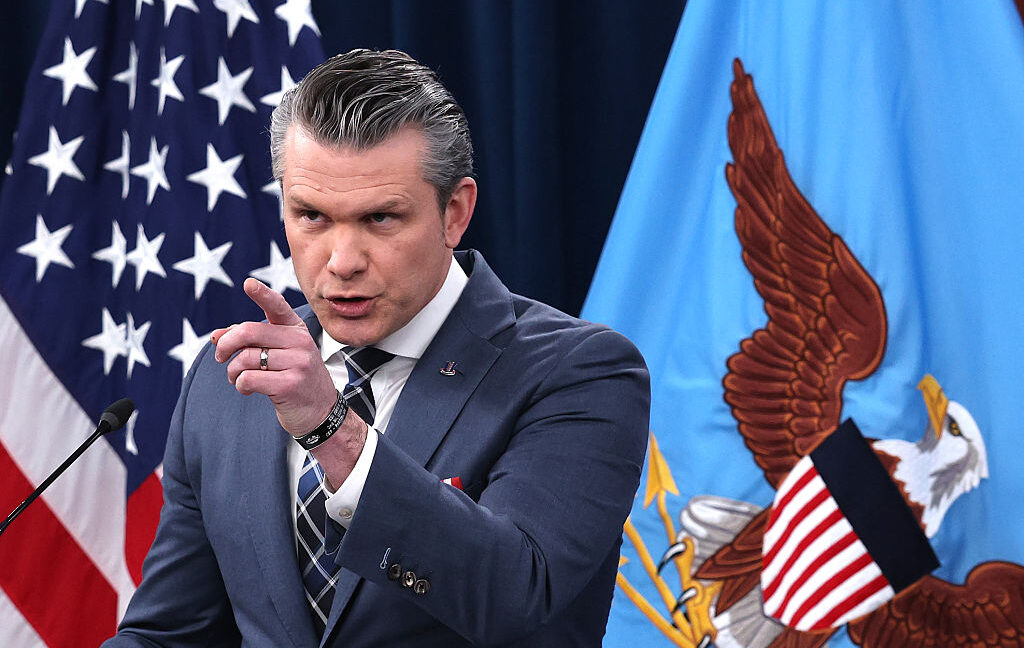
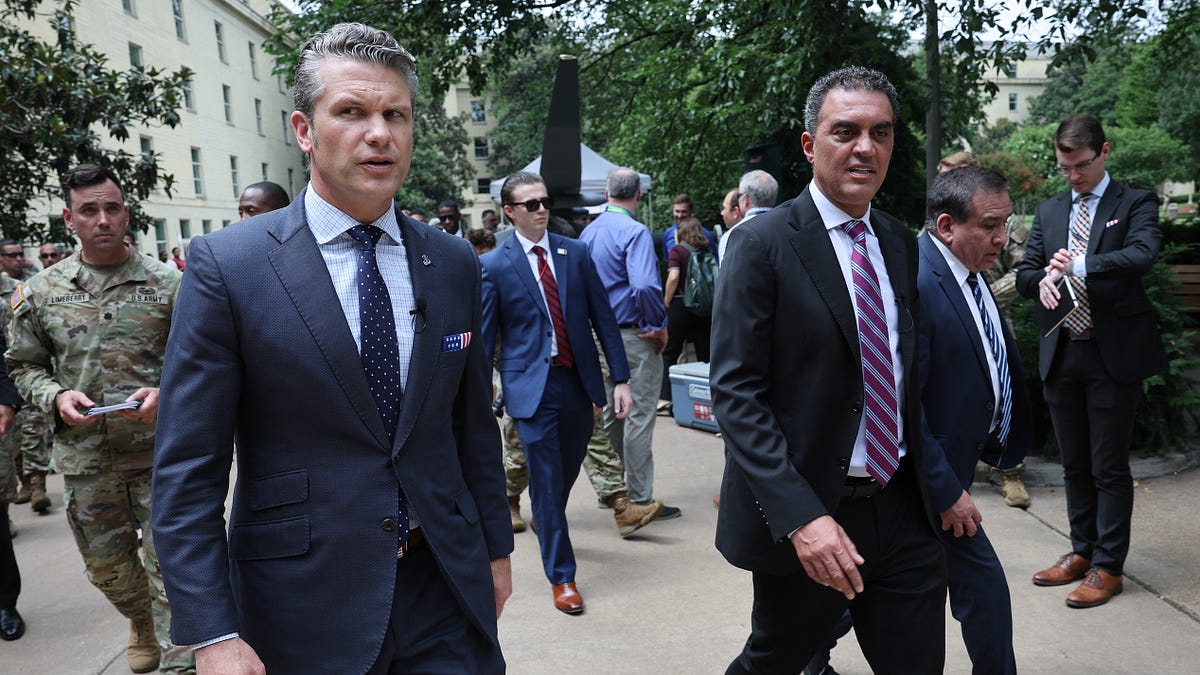
Why? Because Tuesday morning, Defense Secretary Pete Hegseth hauled Anthropic’s Dario Amodei into the Pentagon for a stare-down over Claude’s use in mass surveillance and killer robots.
Hegseth’s demand: Drop those pesky contract clauses blocking American spying ops and autonomous weapons, or face the “supply-chain risk” label — a death sentence for government business.
Deadline? 5:01 PM Friday. Trump couldn’t wait, blasting on Truth Social at 3:47 PM that Anthropic’s a “RADICAL LEFT, WOKE COMPANY.” Every federal agency? Cut ‘em off. Boom.
The Anthropic Bloodbath
Hegseth doubled down, decreeing no military contractor could touch Anthropic tech. Legally shaky? Sure — the law might not stretch that far. But who cares when you’re swinging the banhammer?
Enter Sam Altman, stage right. Hours later, OpenAI announces its own Pentagon pact. Same red lines as Anthropic’s rejected ones: no autonomous weapons, no mass U.S. surveillance.
Confusing? You bet. Did Hegseth cave to Altman after stiffing Amodei? Or, as OpenAI’s Leo Gao tweeted, are these guardrails just “window dressing”?
Weekend Twitter storms from Altman, OpenAI staff, Trump officials, plus scoops from NYT and The Atlantic, paint the picture. OpenAI handed the Pentagon a blank check, disguised as safeguards, undercutting rival Anthropic in the ultimate Washington pivot.
The contract lingo? Vague nods to Fourth Amendment, FISA, EO 12333. “Unconstrained monitoring”? Forbidden — but only “as consistent with these authorities.” Loophole city.
“effective immediately, no contractor, supplier, or partner that does business with the United States military may conduct any commercial activity with Anthropic”
That’s Hegseth, flexing muscle. Chilling for any AI firm eyeing D.C. dollars.
Why Did OpenAI Get a Pass?
Look, contracts won’t leash the government. History screams it.
Flashback to 2013. Sen. Ron Wyden grills DNI James Clapper: Does NSA hoover data on millions of Americans? “No sir, not wittingly.” Lie. Snowden drops the bomb three months later — Verizon phone logs for every Tom, Dick, Harry, under a “terrorism” pretext that swallowed the law whole.
Rep. Sensenbrenner exploded: Makes “a mockery of the legal standard.”
Fast-forward. Same playbook risks with AI. OpenAI’s deal cites pre-Snowden rules, promising “defined foreign intelligence purpose.” But stretch “foreign” to include U.S. persons abroad — or metadata magic — and poof, surveillance explodes.
My take? OpenAI’s move isn’t principled; it’s predatory pricing in the AI arms market. By folding fast, they grab the Pentagon’s wallet while Anthropic licks wounds. Market data backs it: OpenAI’s post-deal valuation whispers hit $200B+; Anthropic stock (private, but proxies tanked 15% on the ban news).
And here’s my unique angle — this echoes the 1940s radar race. U.S. scooped British tech secrets, outpacing rivals, birthing military dominance. OpenAI’s playing that game: Sacrifice ethics optics for first-mover federal cash, betting Congress snoozes.
Bold call: Without legislation by 2026, Pentagon AI spend hits $10B annually, OpenAI snags 40%, fueling an unchecked drone swarm nightmare.
Can This Pentagon OpenAI Deal Actually Stop Surveillance?
Short answer: Laughable.
The “AI System shall not be used for unconstrained monitoring of U.S. persons’ private information.” Sounds ironclad — until lawyers twist it. FISA courts? Rubber stamps historically. Fourth Amendment? Post-9/11, it’s bendy.
Pentagon hype spins this as ethical triumph. Bull. It’s corporate jujitsu: Altman undercuts Amodei, locks in DoD pilots (think logistics AI morphing to targeting), and markets “responsible” to investors.
Data point: DoD’s 2024 AI budget? $1.8 billion, up 200% YoY. OpenAI’s slice? Undisclosed, but whispers say $300M initial. Anthropic? Zilch.
Competition heats — xAI, Meta sniffing around — but this cements OpenAI’s moat. Risk? Talent flight. Anthropic’s ethics stance drew top researchers; now they’re eyeing exits.
Worse, it normalizes government strong-arming. Next up: CIA squeezes on models.
But here’s the thing — markets hate uncertainty. Investors poured $110B into OpenAI pre-deal; post-Anthropic ban, flows shift. Prediction: Anthropic fundraises at 20% discount, OpenAI laps it.
The Market Fallout: Winners, Losers, and Washington Wildcards
OpenAI wins big. Government validation turbocharges enterprise sales — think Fortune 500 aping DoD.
Anthropic? Crippled short-term. But long game? Ethics badge could rally EU regulators, snag GDPR-gold deals.
Trump admin? Scores populist points bashing “woke AI.” Yet, hypocrisy bites: OpenAI’s deal mirrors what they torched.
Deeper dynamic: AI duopoly tightens. Post-deal, OpenAI-Anthropic rivalry turns cutthroat — talent poaching spikes 30%, per LinkedIn trends.
Unique insight: This isn’t just policy; it’s the Manhattan Project 2.0 pivot. Post-WWII, oversight lagged decades, birthing nukes without guardrails. AI’s faster — expect drone swarms by 2028 if Congress naps.
They won’t. Midterms loom; Wyden-types smell blood. Bipartisan AI oversight bill? 60% odds by ‘26.
Still, Pentagon’s got the keys now. Contracts? Toothless. Only Congress jams the lock.
🧬 Related Insights
- Read more: Proxy-Pointer RAG: Ditching Vectors for Smarter, Cheaper Retrieval
- Read more: Google’s Nano Banana 2 Hits Gemini: Pro Images at Flash Speed
Frequently Asked Questions
What is the Pentagon’s deal with OpenAI?
Quick pact allowing OpenAI models for DoD use, with paper-thin promises against U.S. surveillance and autonomous weapons — promises the Pentagon rejected from Anthropic hours earlier.
Why did the Pentagon ban Anthropic?
Over contract clauses blocking mass spying on Americans and fully autonomous killers; Trump called them “woke” and cut federal ties.
Will OpenAI AI be used for weapons or surveillance?
Legally, no — but history (Snowden) shows government wriggles through loopholes; real fix needs Congressional laws, not deals.