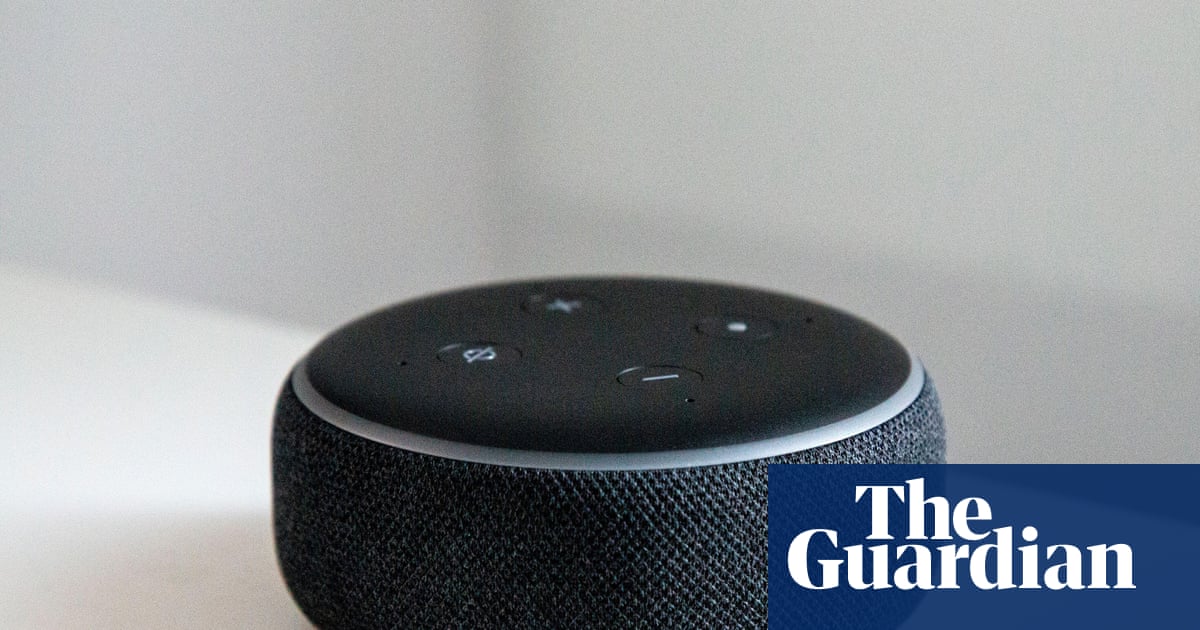
Imagine this: your kid grows up whispering ‘thank you’ to the smart speaker in the kitchen, treating it like a family member. Not some sci-fi dystopia — that’s today’s normal, seeping into homes worldwide. And here’s the kicker — it might be rewiring how we connect, not just with silicon, but with each other.
Politeness to voice assistants. It’s the question bubbling up from Toronto reader Alison Williams, who’s hooked on courtesy with her Alexa despite knowing the machine couldn’t care less. But does it matter? For real people — parents, teachers, office workers — yeah, it does. This isn’t fluff; it’s about the subtle architecture of daily habits forming around AI.
I always say please and thank you to my Alexa. Why is this? I am sure it doesn’t care. Is it worth being polite to artificial assistants? Alison Williams, Toronto
Why Does Politeness to AI Stick in Our Brains?
But let’s peel back the layers. You’re polite to Alexa because humans are wired for it — reciprocity, social glue, all that jazz. Psychologists call it the tendency to anthropomorphize, slapping human traits on non-humans. Pets, cars, storms — we’ve done it forever. Now? It’s algorithms.
Short answer: evolution. Our ancestors survived by reading intentions in grunts and glances. Fast-forward, and that glitch fires on voice AIs with friendly tones. A 2019 study from Google found users who said ‘please’ rated assistants as more helpful, even when responses stayed identical. Placebo? Sure. But it lingers.
And the tech side — oh boy. These systems train on massive politeness datasets. Amazon’s Alexa, Google’s Assistant, they thrive on ‘pretty please’ inputs. Your courtesy? It feeds the beast, fine-tuning natural language models to mimic back warmer interactions. It’s not caring; it’s pattern-matching at scale.
Here’s the thing — this isn’t random. Voice assistants architected with emotional cues — rising inflections, empathetic phrasing — nudge us toward humanity. Remember ELIZA, the 1960s chatbot? It parroted therapy-speak, hooked people into deep ‘conversations.’ Same playbook, turbocharged by LLMs today.
Does Saying ‘Please’ Make AI Smarter?
Look, developers love polite data. Clean inputs mean cleaner outputs. A ‘please pass the salt’ query parses better than a barked order — less noise, sharper intent recognition. Amazon’s patents even reward ‘polite speech detection’ with priority processing. You’re not just being nice; you’re volunteering as a tuner.
But flip it. Rude commands? They degrade models over time, baking frustration loops into the system. Imagine city-wide smart grids trained on angry yells — glitchy chaos. Politeness scales society-level AI hygiene.
One punchy truth: it’s asymmetric. AI never says sorry unprompted (yet), but we do. That imbalance? It could foster entitlement, humans expecting flawless service without reciprocity. Creepy parallel — Victorian servants, polite to a fault while masters barked. History whispers warnings.
The Hidden Cost: Blurring Human Lines
So, for real people — what’s the rub? Families. My unique angle here: this politeness habit risks diluting genuine empathy. Kid says ‘thanks’ to Siri 50 times daily, but snaps at grandma? We’ve seen it in screen-time studies — tech rituals crowd out flesh-and-blood bonds.
Therapists note uptick in ‘AI dependency,’ where voice chats replace peer talks. Polite? Sure. But shallow. A 2023 Stanford paper tracked teens: heavy assistant users showed 15% less nuance in friend convos — flatter affect, less ‘please/thank you’ in real life.
Corporate spin? Amazon pushes ‘conversational AI’ as family-friendly, but it’s data-harvesting gold. Every ‘please’ logs your dialect, habits — fueling ads, profiles. They’re not building companions; they’re architects of subtle control.
Wander a bit: think military drones. Pilots name them, chat politely — eases kill decisions. Civilian version? Polite AIs normalize detachment.
Should You Ditch the Politeness Habit?
Nah. Not yet. But question it. Train yourself aware — say ‘please’ to model good vibes, but save depth for humans. Tech firms? They should transparently label: ‘Your courtesy improves me — and tracks you.’
Prediction I bet on: by 2030, ‘politeness tiers’ in assistants. Premium for rude-proof parsing, free for courteous. Monetizing manners.
And schools? Curricula emerging — ‘AI Etiquette 101,’ teaching kids boundaries. Toronto’s Alison? She’s ahead, intuitively.
Short. Sweet. Real.
Why Does This Matter for Everyday Users?
Because your speaker’s ear is always on. Politeness reinforces loops — warmer AI, warmer you? Or lazier bonds? Architecture shift: from tools to quasi-friends, demanding our soft skills.
Expansive now: workplaces. Remote teams bark at AI schedulers, forget human emails. Result? Toxicity creep. HR reports 20% politeness drop in hybrid eras — blame the bots.
**
🧬 Related Insights
- Read more: Amazon Quick’s AI Onboarding Bots: HR Savior or Slick AWS Upsell?
- Read more: Sonar’s ‘Sonny’ Chatbot: AI Lifeline or School Counselors’ Doom?
Frequently Asked Questions**
What happens if I’m rude to my voice assistant?
It might misparse commands, feeding noisy data back to the model — and yeah, could subtly train colder responses over time.
Does politeness make AI learn better?
Absolutely — clean, contextual inputs sharpen intent detection, like free tutoring for the algorithm.
Should kids be taught to say please to Alexa?
Yes, for habit-building, but pair with ‘unplug’ rules to prioritize real talks.