What if the reason Apple Pay and Google Pay haven’t conquered e-commerce checkout isn’t because they’re missing features — but because half your customers don’t trust them?
That’s the opening Paze is trying to wedge itself into. Early Warning Services, the banking consortium behind Zelle (which processed $1.2 trillion in peer-to-peer payments last year), is launching a bank-backed digital wallet designed specifically for online shopping. And unlike Apple’s closed ecosystem or Google’s ad-driven platform, Paze wants to be the “wallet of the banks” — a checkout tool that lives inside your existing bank app, authenticated with a PIN, no separate download required.
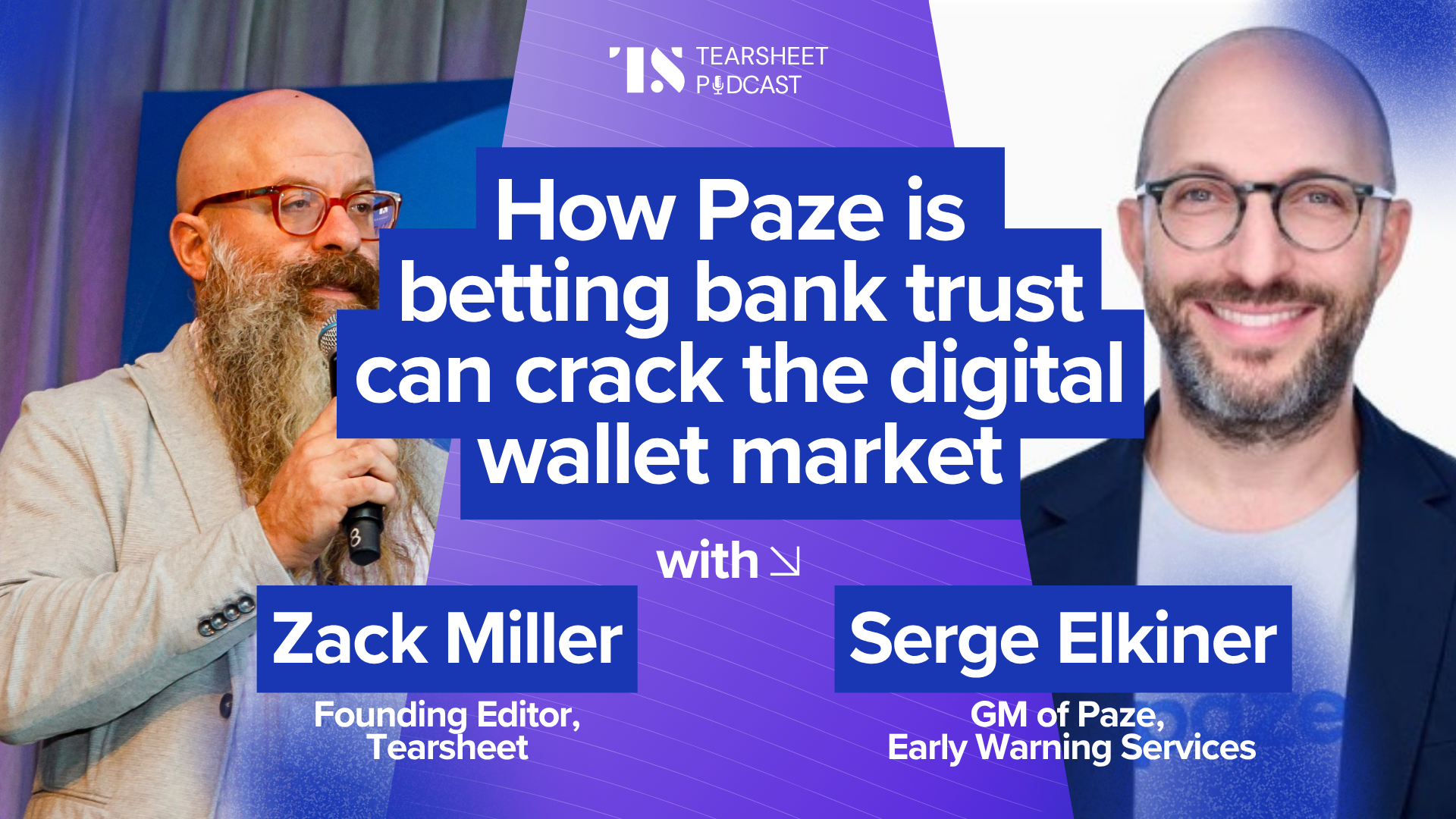
Serge Elkiner, the newly appointed GM brought over from Visa, is tasked with a five-year goal: make Paze one of the top three e-commerce wallets in America. It’s audacious. And it might actually work. Or it might be the biggest infrastructure-to-consumer miscalculation in fintech since Square tried to be a bank.
The Trust Wedge That Actually Matters
Here’s what the market data reveals: only 20-25% of e-commerce transactions currently use a digital wallet. That means 75% of shoppers are still manually entering card details or using guest checkout every single time. That’s not laziness — that’s friction born from distrust.
Research cited by Elkiner identifies two key segments: “protectionists” and “security seekers.” These aren’t luddites. They’re people who have high confidence in banking security infrastructure but genuine skepticism of Big Tech platforms, particularly around data privacy and secondary uses of their payment information.
“They have a distrust of big tech. They have a high trust and high confidence in the security of the banking system and their banks.”
This is the permission structure Paze is building on. And unlike most fintech pivots, it’s not theoretical. Zelle proved that consumers will embrace a bank-led payments product at scale — not because it’s shiny, but because it’s legible as “my bank’s thing.” Early Warning now has 165 million eligible cards across seven major banks (Bank of America, Wells Fargo, JPMorgan Chase, and others), all already registered in consumer bank apps.
That’s not a startup problem. That’s distribution that most unicorns would mortgage their Series C for.
Why the Merchant Game Is Totally Different
But here’s where Paze’s bet gets dicey. Converting peer-to-peer payments infrastructure into e-commerce checkout adoption is not the same ballgame. It never is.
Zelle worked because the use case was simple and recurring: send money to your friend. Everyone does it. It became habitual fast. E-commerce checkout is different. You’re asking a merchant to integrate a new payment rail, and you’re asking a consumer to adopt a new habit at a specific moment — during checkout — when they’re already mentally committed to completing the transaction right now, not learning something new.
Paze’s merchant strategy shows they understand the friction: they’ve signed Fiserv, Worldpay, and ACI to distribution deals, which means integration comes through payment processors most merchants already use. That’s smart infrastructure play. But they’ve also announced partnerships with Fanatics, United Airlines, PayRange (laundry), and Domino’s.
Notice the problem? United Airlines. How many airline tickets does anyone buy per year? That’s not habit formation — that’s novelty. Domino’s and PayRange make more sense (recurring daily/weekly spend), but they also point to a uncomfortable truth: Paze needs to win both on the merchant side and the consumer side simultaneously. They can’t just be in your bank app passively. They need to show up where you actually spend money, repeatedly, until claiming your wallet through your bank becomes automatic.
That’s a two-sided marketplace problem wearing a one-sided infrastructure costume.
Is Bank Branding Actually a Moat?
Let’s interrogate the core thesis. The narrative goes like this: consumers distrust Big Tech, so they’ll prefer a bank-backed wallet. The data supporting this does exist. But there’s a critical assumption hiding in plain sight — that consumers actually know it’s bank-backed, and that they care when they’re in the moment of checkout.
Zelle worked partly because it was marketed as a bank product from day one. The branding was coherent. But Paze faces a disclosure problem. When a consumer is at Domino’s, checking out on mobile, and they see “Paze” as an option — do they immediately understand that it’s backed by their bank? Or does it look like yet another third-party wallet option alongside PayPal, Apple Pay, and Google Pay?
Elkiner acknowledges the branding strategy: “We don’t want you to have to download an app… We want everybody to think, okay, that’s a feature of my bank account.” The two-click registration through your bank app is designed to anchor that perception. Smart UX. But if 75% of consumers aren’t using wallets at all, you’re not just competing with Apple and Google — you’re competing with the psychological inertia of entering your card manually, which feels safer (you’re in control) even though it’s objectively less secure.
That’s a harder sell than the fintech narrative allows.
The Real Timeline We Should Be Watching
Paze’s five-year plan to crack the top three assumes no major competitive moves from Apple, Google, or Amazon — all of whom have massive incentive and resources to improve their checkout experiences. It also assumes that a 2025 product overhaul actually addressed what Elkiner found: a wallet that “had the right reason to be, but it wasn’t yet where it needed to be to really scale.”
We haven’t seen the new product. So we’re taking his word for it that the UX problem is solved. That’s fair for a GM to claim. It’s not fair for an investor to assume.
The real test will arrive in Q4 2025 and Q1 2026: Do merchant partnerships translate to actual transaction volume? Does claiming a wallet through your bank app actually convert to checkout usage? If daily spend adoption is still in single digits by summer 2026, the narrative of “bank trust as a moat” will start to feel more like “late-mover in a category already won by scale and convenience.”
Early Warning has the institutional backing, the distribution, and the brand permission structure. What they don’t have is time, because the consumer expectation for payment simplicity only accelerates.
FAQs
What is Paze digital wallet and how does it work? Paze is a bank-backed digital wallet for e-commerce checkout created by Early Warning Services. You claim your wallet through your bank app (with two clicks), register with a PIN or passkey, and your cards auto-populate. At checkout, you authenticate with your PIN instead of manually entering card details. No separate app download required.
Is Paze better than Apple Pay or Google Pay for online shopping? Paze targets consumers who distrust Big Tech platforms but trust their banks. It integrates directly into your bank app and uses bank-backed security. However, Apple Pay and Google Pay have 10+ years of consumer habit and near-universal merchant adoption. Paze’s advantage is permission and trust, not convenience — yet.
How many banks support Paze right now? Seven major U.S. banks back Paze through Early Warning Services: Bank of America, Wells Fargo, JPMorgan Chase, and others. This covers approximately 165 million eligible cards. Adoption depends on whether individual banks actively promote Paze within their apps to customers.