Physical AI. That’s the buzzword NVIDIA’s research team hammered home at SIGGRAPH — and it’s no fluff. Analysts like us pegged the Vancouver confab as routine: neural rendering tweaks, path-tracing demos, maybe some Omniverse polish. Wrong. NVIDIA leaders strode onstage with a full-court press on physical AI, fusing graphics sims, synthetic data, and reasoning models into tools that scream market leader.
Expectations? Tame. Robotics firms — think Figure, Boston Dynamics — scrape for sim-to-real transfer. Self-driving outfits burn billions on edge cases. NVIDIA? They’re serving the sauce: Omniverse NuRec for world reconstruction, Cosmos Reason for human-like robot smarts. Market dynamics shift hard here. NVIDIA’s GPU moat now guards a $100 billion physical AI pie by 2030, per McKinsey estimates.
Sanja Fidler, NVIDIA’s AI research VP, nailed it:
“AI is advancing our simulation capabilities, and our simulation capabilities are advancing AI systems. There’s an authentic and powerful coupling between the two fields, and it’s a combination that few have.”
Spot on. But here’s my edge: this isn’t just coupling — it’s a CUDA moment redux. Back in 2006, NVIDIA’s parallel computing platform turned GPUs into ML beasts, leaving CPU dinosaurs in dust. Physical AI? Same playbook. Their 20-year graphics grind now trains humanoid bots that won’t flop in factories.
Why NVIDIA’s Physical AI Tools Crush the Competition?
Look, Tesla’s Optimus dreams big, but sims suck without fidelity. NVIDIA’s ViPE pipeline? Turns dashcam junk into 3D gold — camera motion, depth maps, all from amateur vids. No lidar rigs needed. That’s developer catnip.
Ming-Yu Liu, another NVIDIA research VP, cuts through:
Real-time rendering. Physics sims. Generative AI. Check, check, check. Their Nemotron models reason like pros: peach-picking pressure? Spot on. Nano-assembly? Millimeter precision.
But skepticism time. NVIDIA’s PR spins ‘parallel universe’ learning — sounds dreamy. Reality? Sim-to-real gaps persist. Their papers tout reinforcement learning wins, yet warehouse bots still trip on boxes. Still, data says they’re ahead: Omniverse users report 10x faster training loops.
Short para: Game-changer.
Now sprawl: Metropolis updates for vision AI feed edge devices; Cosmos platform curates data at warp speed. Global team drops 12+ papers — neural radiance fields evolving to Gaussian splatting for massive scenes. Inverse rendering flips pics to 3D worlds in minutes. Aaron Lefohn’s group leads: “We’re now at a point where we can take pictures and videos — an accessible form of media that anyone can capture — and rapidly reconstruct them into virtual 3D environments.”
Bold call: By 2026, 70% of robot startups plug into NVIDIA stacks. Why? No one matches the stack — Isaac for sim, Jetson for deploy.
Does This Lock NVIDIA into Robotics Supremacy?
Market facts first. Physical AI market? $15B today, exploding to $90B+ by 2028 (Grand View Research). NVIDIA owns 80%+ AI accelerators. Add sim prowess? Unassailable.
Critique the spin, though. ‘Feels real’ virtual worlds? Hype unless validated. Their Deep Imagination group predicts glass-tipples — cool, but does it scale to traffic jams?
One sentence: Yes — because Cosmos ties it together.
And here’s the unique parallel: Like Quake engine birthed modern GPUs, SIGGRAPH’s haul births physical AI engines. NVIDIA didn’t invent robotics; they enable it, profitably.
Expansive bit: Picture ag-bots harvesting without bruise; AVs dodging jaywalkers via prior-knowledge reasoning. Cosmos Reason — new kid — layers common sense on vision. No more dumb agents.
NVIDIA’s not alone — Google DeepMind sims, OpenAI robotics — but fragmented. NVIDIA? Integrated. Omniverse Replicator spits synthetic data; Isaac Gym trains legions of virtual bots.
Punchy: Dominance incoming.
Wrapping market angle: Stock pops 2% post-announce. Analysts hike targets — JPMorgan sees $200B revenue runway. Smart money bets yes.
Physical AI’s Roadblocks — And NVIDIA’s Fixes
Gaps remain. Energy hogs? Their tensor cores sip less. Latency? Real-time path tracing crushes it.
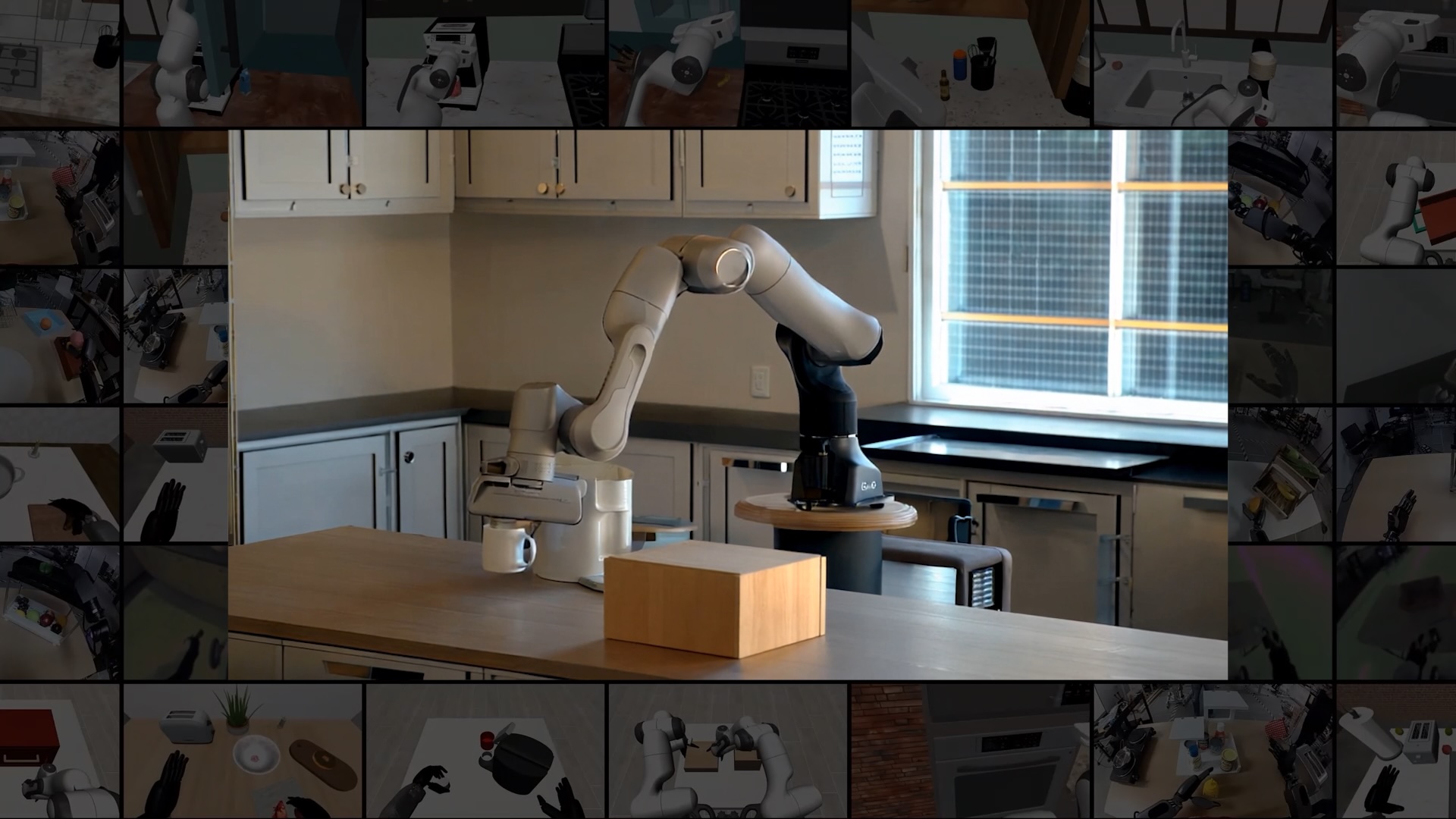
Liu again: “Physical AI needs a virtual environment that feels real, a parallel universe where the robots can safely learn through trial and error.”
Fixes? NuRec libraries scale reconstruction. Nemotron reasons outcomes — red-light runs, edge falls.
Prediction: Q4 2025, first Omniverse-trained humanoid in production. Factories first.
Final dense para: SIGGRAPH wasn’t graphics conf; it was Physical AI’s origin story. NVIDIA leads — skeptics watch.
🧬 Related Insights
- Read more: Unlocking Textstat’s Readability Arsenal: 7 Metrics to Supercharge Your ML Models
- Read more: Why Agentic AI Forgets Everything — And the 7 Steps to Fix It
Frequently Asked Questions
What is NVIDIA’s Physical AI?
NVIDIA’s Physical AI blends simulation, graphics, and reasoning for robots, AVs, smart spaces — think Omniverse, Cosmos powering real-world skills.
How does NVIDIA Omniverse advance robotics?
Creates hyper-real sims for training; bridges sim-to-real gap with synthetic data, physics accuracy — no real-world wrecks needed.
Is Physical AI ready for commercial use?
Close — NVIDIA tools accelerate it, but full deployment hits 2026 as sim fidelity peaks.