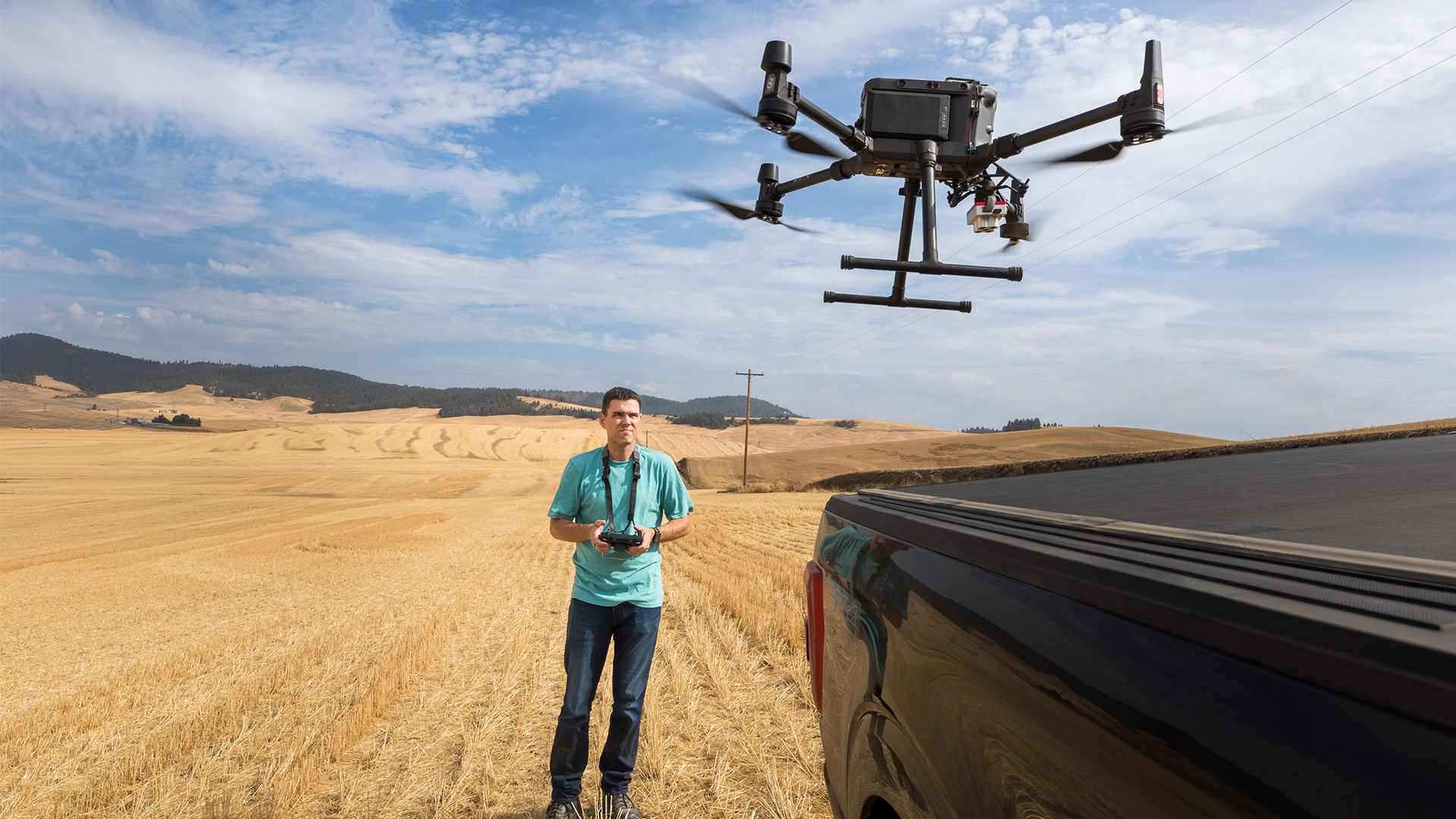
Sensors buried inches deep in the loamy soil of Andrew Nelson’s 7,500-acre spread in Farmington, Washington, ping data every hour—moisture levels spiking after a rare rain, nutrients leaching out under relentless sun.
Drones slice the sky above, satellites peer down from orbit, all funneling intel into Microsoft FarmVibes.AI, the open-source toolkit Microsoft Research just unleashed on GitHub. Nelson, fifth-gen farmer and closet software engineer, isn’t waiting for permission. He’s already wielding it to slash fertilizer waste, dodge tractor-mired disasters, and lock carbon into his fields.
Zoom out. This isn’t some isolated hack. Microsoft’s dropping FarmVibes like a seed bomb on global ag, betting open-source AI can double food output by 2050 amid climate chaos—arable land shrinking, droughts biting harder.
How Does FarmVibes.AI Fuse the Farm’s Chaos into Clarity?
Take Async Fusion, one of the toolkit’s core algorithms. It mashes drone multispectral shots—those infrared glows revealing nutrient-poor patches—with ground sensors’ gritty readings. Boom: heat maps that tell Nelson exactly where to dial back fertilizer, juicing yields without the runoff guilt.
Soil moisture maps from the same mash-up dictate seed depth, planting order. Tractors stay on firm ground; sprayers hit weeds precisely. No more guesswork, no more overkill.
SpaceEye? AI wizardry stripping clouds from satellite pics. Nelson scouts what drones miss, spots weed clusters, then varies herbicide sprays—heavy where it’s thick, feather-light elsewhere. It’s precision warfare on invasives.
DeepMC crunches weather forecasts with on-farm sensors for microclimate predictions. Local Met Office says 10 meters up? FarmVibes nails it ground-level, timing sprays when wind dies down.
All this runs on Azure, but now it’s yours on GitHub—fork it, tweak it, deploy it.
“Project FarmVibes is allowing us to build the farm of the future,” said Nelson, who has partnered with Microsoft Research to turn his 7,500 acres into a proving ground for Project FarmVibes. “We’re showcasing the impact technology and AI can have in agriculture. For me, Project FarmVibes is saving a lot in time, it’s saving a lot in costs and it’s helping us control any issues we have on the farm.”
Nelson’s no outlier. His farm was a connectivity black hole—Wi-Fi died at the doorstep. Enter FarmVibes.Connect (open-sourcing soon): solar-powered TV white spaces antennas, hijacking unused TV spectrum to blanket 7,500 acres in broadband. Snowy channel ghosts now beam data flows.
Why Open-Source Now? Microsoft’s Play for Ag Supremacy
Microsoft didn’t cook this up in a Redmond lab vacuum. It sprouted from gigs with Land O’Lakes, Bayer—giants drowning in siloed data. FarmVibes stitches it: sensors, satellites, weather, all into actionable nudges.
Ranveer Chandra, Microsoft Research for Industry boss, spells it out: double food by 2050, sustainably. Data-driven ag as the hammer. But here’s the rub—and my unique angle: this echoes the 1960s Green Revolution’s hybrid seeds and chemicals, which tripled yields but poisoned rivers, sparked debt traps for smallholders.
FarmVibes flips the script. No miracle fertilizers; just algorithms democratizing smarts. Open-source means Brazilian soy barons or Kenyan smallholders remix it free. Microsoft’s not selling shovels—they’re handing out the mine maps. Bold prediction: by 2030, this sparks an AI ag gold rush, but watch for data monopolies if Big Ag gobbles the derivatives.
Skeptical? Sure, corporate open-source often hides the good stuff behind APIs. But FarmVibes.AI drops full algorithms—Async Fusion’s fusion logic, SpaceEye’s cloud-zapping nets. That’s architecturally generous, shifting from black-box SaaS to communal tinkering.
Can FarmVibes Double Global Food Production by 2050?
Chandra says yes, via data augmenting farmer know-how. Yields up 20% in pilots, costs down 15-30%. Nelson’s living it: variable-rate apps mean less input, more output.
But architecture matters. Legacy farms lack Nelson’s broadband. FarmVibes.Connect bridges that—TV whitespaces scale cheap in rural dead zones worldwide. India’s villages, Africa’s savannas? Ripe.
Critique the spin: Microsoft’s framing it as altruism, but Azure lock-in looms. Algorithms love cloud; on-prem tweaks needed for dirt-poor ops. Still, open code invites porting—Raspberry Pi drone swarms, anyone?
The why: climate’s rewriting rules. Water wars brew, soils erode. FarmVibes’ carbon sequestration models (crop rotations optimizing drawdown) aren’t side quests; they’re core. It’s sustainable ag’s missing OS.
Why Does This Matter for Data Scientists and Researchers?
GitHub drop includes sample pipelines—plug your models. Async Fusion’s modular; swap in your vision nets. SpaceEye’s cloud removal? State-of-the-art, ripe for fine-tuning on ag datasets.
Researchers: benchmark against proprietary John Deere or Trimble black boxes. Prove open beats closed. Data scientists: real-world fusion problems—temporal misalignment of drone/sat data, noisy sensors. FarmVibes solves ‘em scalably.
Architectural shift: from siloed IoT to orchestrated AI pipelines. That’s the deep-dive gold.
🧬 Related Insights
- Read more: Amazon’s Hybrid RAG Hack: Bedrock Meets OpenSearch to Outsmart Fuzzy AI Searches
- Read more: What If You Could Talk an AI Out of Its Deepest Convictions?
Frequently Asked Questions
What is Microsoft FarmVibes?
FarmVibes is Microsoft’s open-source toolkit for AI-driven agriculture, blending sensor, drone, and satellite data into tools for precision planting, fertilizing, and spraying to boost yields sustainably.
How does FarmVibes help farmers save money?
By creating precise maps for variable-rate inputs—less fertilizer waste, targeted herbicides—it cuts costs 15-30% while lifting outputs, as proven on Andrew Nelson’s Washington farm.
Is FarmVibes.AI fully open source?
Yes, the core algorithms like Async Fusion and SpaceEye are on GitHub now, runnable on Azure or adaptable elsewhere, with Connect coming soon for rural broadband.