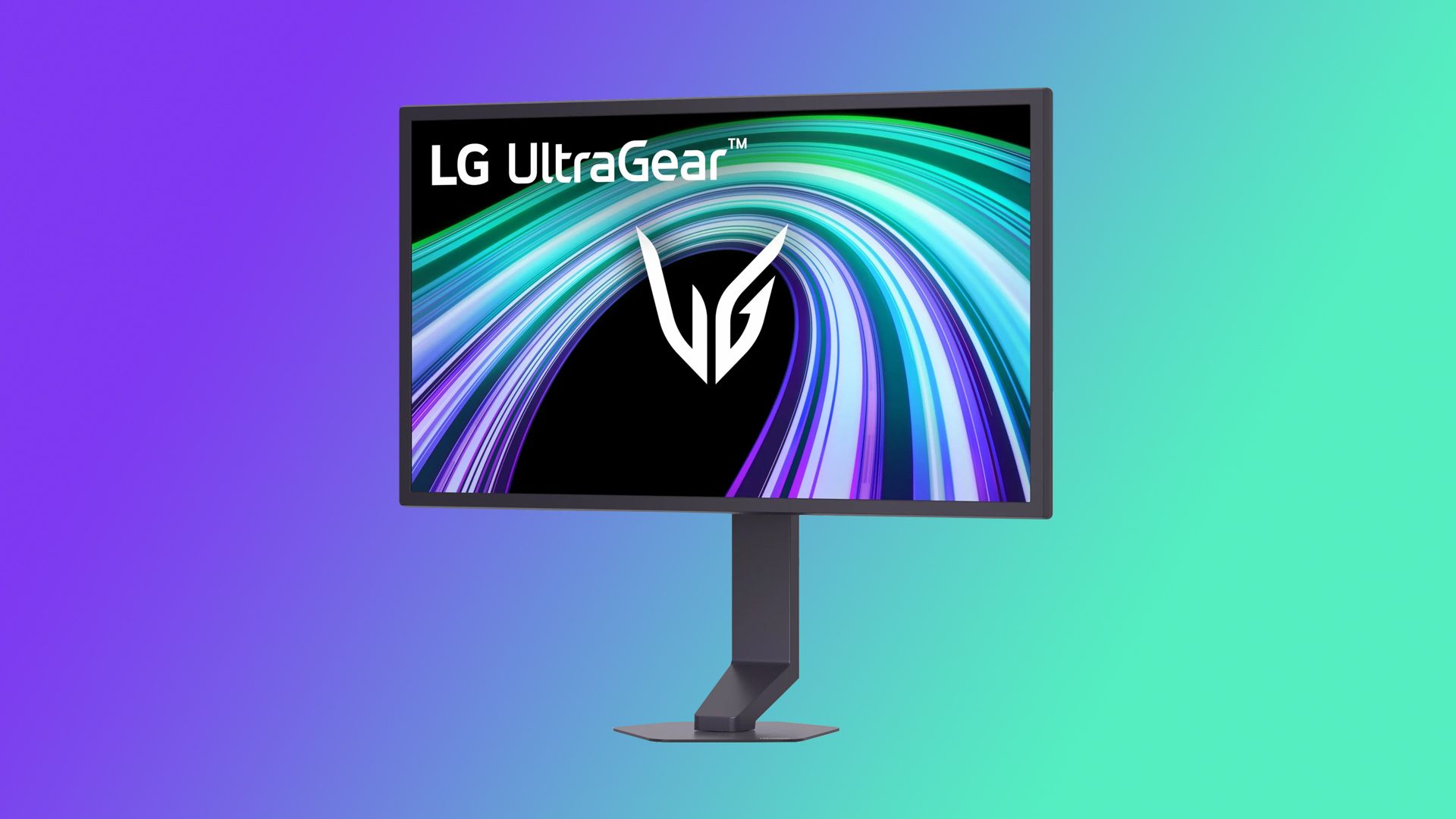
LG’s new UltraGear 25G590B gaming monitor. The headline? A supposed “world’s first” native 1000 Hz refresh rate at a crisp 1080p resolution. And it’s slated for release in the second half of 2026.
Yeah, you read that right. 2026. We’re talking about a piece of hardware that’s still over two years away, being trumpeted with a number that sounds less like a technological advancement and more like a dial someone accidentally spun to eleven.
Look, I’ve been covering this tech circus for what feels like an eternity. I’ve seen GPUs promise the moon and deliver a slightly shinier rock. I’ve witnessed software updates that added more bugs than features. So when I see a number like “1000 Hz,” my Spidey senses start tingling. Not with excitement, but with suspicion.
Who is this for, really?
LG is leaning heavily on the “serious competitive gaming” angle, specifically for first-person shooter (FPS) enthusiasts. They’re promising enhanced smoothness, razor-sharp motion clarity, and an edge in responsiveness. They’ve even thrown in some AI scene optimization and AI sound tech, because apparently, even monitors need artificial intelligence to tell them how to display a pixel or make a beep.
But here’s the rub: This isn’t the first time we’ve heard about 1,000 Hz refresh rates. It’s just the first time someone’s claiming it’s native at a palatable 1080p. Until now, achieving that kind of speed usually meant some sort of dual-mode wizardry, often at significantly reduced resolutions. Acer’s Predator XB273U F6, for instance, hit 1,000 Hz, but only at a blurry 1280 x 720. HKC’s AntGamer ANT275PQ MAX did something similar. They were doing math, not magic. This LG panel, at least on paper, is trying to avoid that compromise.
When a player or object quickly moves across the display, it should stay sharper and easier to spot instead of turning into a blur.
That’s the promise. And it’s a nice one, I’ll grant them that. But at what cost? And more importantly, who can actually perceive the difference? Human eyes aren’t exactly built for processing 1,000 frames per second. Most people will struggle to see a meaningful difference beyond 240 Hz, maybe 360 Hz if they’ve got eyes like a hawk and have spent their lives training them on laser beams. Beyond that, it’s diminishing returns, bordering on pure sensory overload.
So, let’s talk brass tacks. Who’s actually making money here? LG, obviously. They get to slap “world’s first” on a product and generate buzz. But for the average gamer? The enthusiast who spends their hard-earned cash on twitch shooters? They’re being sold a dream based on a spec that might be imperceptible to their own biology.
Think about it historically. We’ve been through spec wars before. Megapixels, gigahertz, RAM speeds. Often, manufacturers chase the highest number because it’s easy to market, even if the real-world benefit is marginal. This 1000 Hz monitor feels like the latest iteration of that old playbook.
LG’s Motion Blur Reduction Pro technology is also in the mix, designed to combat smearing. Good. Because a blurry image at 1000 Hz is just a faster blurry image. The low-reflection IPS panel is standard fare these days for decent color and glare reduction. Nothing to write home about, but it’s a box they needed to tick.
And then there are the AI features. AI Scene Optimization, AI Sound. It’s the same old song and dance. Companies are desperate to inject AI into everything, even if it’s just a fancy algorithm tweaking brightness settings. It sounds impressive on a press release, but does it actually make games look or sound demonstrably better for the average user? I’m skeptical.
This isn’t to say there’s no benefit whatsoever. For elite esports professionals, those infinitesimal milliseconds of advantage might matter. For them, a monitor like this, assuming it actually delivers on its promise, could be a significant investment. But for the vast majority of players who just want to frag out after a long day at work? You’re likely spending a premium for a few extra Hz your eyes simply can’t process.
LG’s UltraGear 25G590B is a statement. It’s a marker in the sand for what LG can do. But whether it’s a practical, accessible leap forward for gaming, or just another headline-grabbing spec that will fade into the background as soon as the next “world’s first” is announced, remains to be seen. And given it’s still two years out, and pricing is yet to be revealed, we’ve got plenty of time to ponder that.
Why the Fuss About 1000Hz? Does it Actually Matter?
Simply put, the theoretical advantage of a 1000 Hz refresh rate is that it displays 1000 frames per second. For competitive gamers, this translates to incredibly smooth motion and reduced input lag, meaning the time between pressing a button and seeing the action on screen is minimized. In fast-paced FPS games, where every millisecond counts, this can theoretically offer a competitive edge, allowing players to react faster to on-screen events and track moving targets with greater clarity. However, the human eye’s ability to perceive these ultra-high frame rates is a subject of ongoing debate, with many experts suggesting that the benefits become negligible for most individuals beyond 240-360 Hz.
Who is Actually Buying This Stuff?
LG is clearly aiming this monitor at the absolute apex of competitive gaming: esports professionals and serious hobbyists who are willing to invest heavily for any perceived advantage. These are individuals who likely train for hours daily and whose careers or rankings depend on split-second reactions. For them, the difference between 360 Hz and 1000 Hz, however small, might be the deciding factor in a crucial match. For the average consumer or even most PC gamers, the substantial price premium associated with such bleeding-edge technology, coupled with the debatable human ability to perceive the full benefits, makes it a less practical purchase.
**
🧬 Related Insights
- Read more: Bitcoin’s Holiday Trap: Why $66,600 Could Crack When the Institutional Bid Vanishes
- Read more: States’ Websites Stumble on Accessibility Scans — 16 Days to ADA Deadline
Frequently Asked Questions**
What is the refresh rate of the LG UltraGear 25G590B? LG claims this monitor offers a native 1000 Hz refresh rate at 1080p resolution.
When will the LG UltraGear 25G590B be released? It is scheduled for launch in the second half of 2026.
Is a 1000 Hz monitor worth it for casual gamers? For most casual gamers, a 1000 Hz monitor is likely not worth the investment, as the human eye’s ability to perceive such high frame rates is limited and benefits beyond 240-360 Hz are debatable.