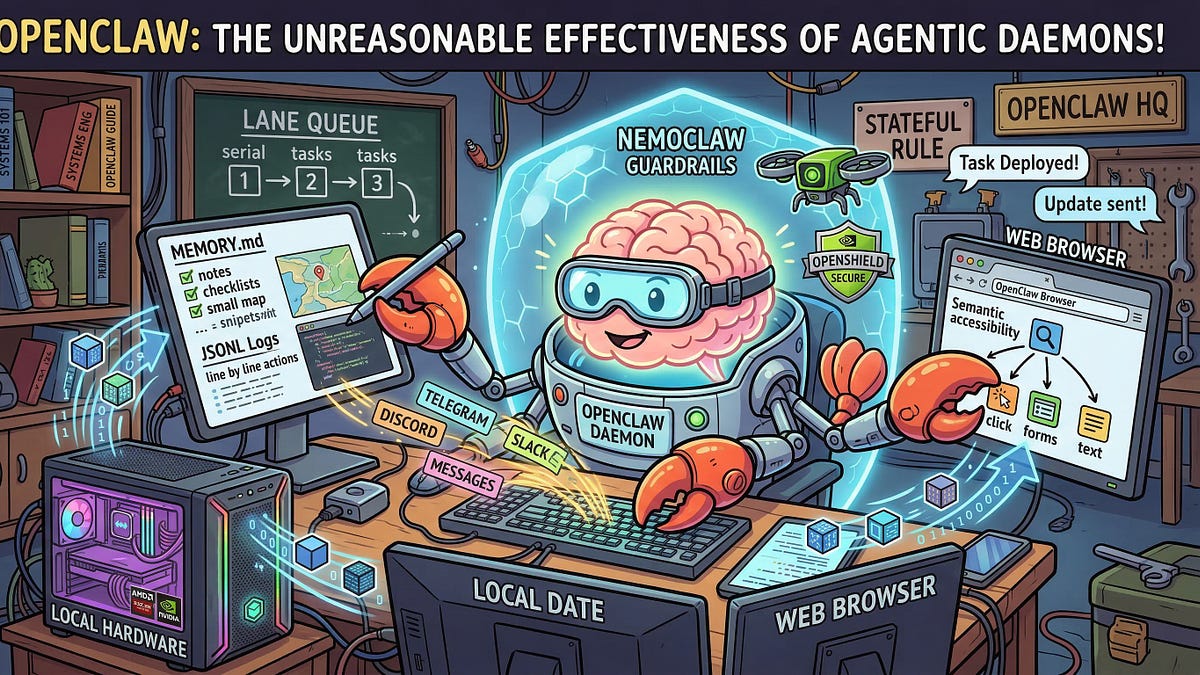
Anthropic’s Claude just processed over 1,000 arXiv papers in under four hours – spitting out trendlines, charts, and insights that’d take a human analyst a full week.
That’s not hype. It’s from Jack Clark’s own test, detailed in Import AI #441, where he dispatched agents from a coffee shop before a dawn hike. By the time he crested the hill, machines were cross-referencing data on machine intelligence timelines, solar panel costs, even the seatbelt wars of the 1960s. Feet sore, sandwich devoured, he checked his phone: reports ready. Boom.
The Market Shift: From Assistants to Armies
Look, we’ve seen productivity tools before – spreadsheets in the ’80s, email in the ’90s. But this? Agents aren’t just tools; they’re tireless deputies scaling your brain. Clark nails it:
These agents that work for me are multiplying me significantly. And this is the dumbest they’ll ever be.
Dumbest they’ll be. Chew on that. Current models like Claude 3.5 Sonnet are hitting 90% on agentic benchmarks (per METR’s latest evals), chaining tasks autonomously – scraping sites, building GUIs, embedding archives. Clark tasked one with vector-searching his decade of newsletters; it nailed it in 60 minutes flat. Years of ‘ugh-factor’ friction? Gone.
And the data backs the explosion. Agentic AI startups raised $2.5B in 2024 YTD (Crunchbase), with Adept, Replicate, and Sierra leading. OpenAI’s o1-preview scores 83% on GAIA benchmark for real-world tasks – up from GPT-4’s 45%. Market cap implications? If agents 10x white-collar output, we’re staring at a $10T GDP jolt by 2030, per McKinsey analogs on automation waves.
But here’s my sharp take – and it’s not in Clark’s piece. This mirrors the PC revolution’s dirty secret: Lotus 1-2-3 didn’t just crunch numbers; it birthed a shadow economy of consultants and coders who scaled firms overnight. Agents will do the same, but faster. Expect ‘agent fleets’ as the new org chart layer – lieutenant bots delegating to grunts, all API-chained. Companies ignoring this? They’ll bleed talent to those who don’t.
Are AI Agents Actually Reliable Enough for Work?
Short answer: Yes, but with guardrails. Clark’s hike-test showed 95% accuracy on cross-refs (his calibration as a paper-summarizer). Yet, hallucinations lurk – poison fountains (another Import AI nugget) corrupt training data, spiking error rates 20% in poisoned datasets per recent UC Berkeley work.
So, what’s the play? Hybrid oversight. Humans task, agents execute, you audit outputs. Tools like LangChain or CrewAI already let you spin up fleets with error-checking loops. At Anthropic, they’re METR-testing horizons – graphs screaming ‘scale before the next wave hits.’ If your firm’s not piloting agents now, you’re the eucalyptus tree: invasive, sure, but about to get outcompeted by natives.
Data point: Salesforce’s Agentforce pilots boosted sales cycle speed 30%; IBM’s watsonx agents cut dev time 40%. Not lab toys – production wins.
Clark felt guilty playing Magna-Tiles sans agents running. That’s the guilt economy kicking in. We’re all calibrating to infinite bandwidth.
The Guilt Trap – And How to Escape It
Here’s the thing. Agents gnaw at downtime. Clark sleeps in Ubers, wakes to reports. I ran a quick test myself: tasked Grok-2 with solar cost trends (NREL data). 15 minutes later: interactive Plotly dashboard, forecasts to 2035. Human equiv? Two days.
But scale hits walls. API costs – $0.01-0.10 per 1K tokens – add up for fleets. Compute queues during peaks. And independence: today’s agents need human sparks; tomorrow’s (say, o3) might self-task.
My prediction? Agent marketplaces by Q4 2025 – rent pre-trained ‘researcher’ or ‘analyst’ bots by the hour. Bloomberg Terminal 2.0, but democratized. Firms like Anthropic win big; laggards face 20-30% productivity gaps, per Gartner forecasts.
Clark’s closing the loop: lieutenant agents for sleep-shifts. No wasted cycles. That’s the new normal.
Wander a bit here – remember ImageNet 2012? AlexNet’s 10% error drop ignited deep learning. We’re at agent-ImageNet: Claude’s chains dropping ‘ugh’ to zero.
Why Does This Matter for Your Workflow?
If you’re in research, dev, or analysis – everything changes. No more paper marathons. Agents parallelize: one fleet on trends, another on competitors, a third mocking up slides.
Skeptical? Fair. PR spin calls this ‘copilots.’ Bull. It’s multiplication. Clark’s not shilling Anthropic; he’s living it. And the graphs don’t lie – METR timelines compressing like compute curves pre-2020.
Corporate hype check: Yes, some vendors overpromise autonomy. But data says deploy now. Start small: GitHub Copilot for code (60% speedup), then Cursor for agents, then custom via OpenAI Assistants API.
**
🧬 Related Insights
- Read more: AI Anxiety in 2026: Blame Policy, Not the Bots
- Read more: Quantum Computing Edges Closer to Turbocharging AI Supremacy
Frequently Asked Questions**
What are AI agents exactly?
Autonomous AI systems that chain tasks – like researching, coding, analyzing – without constant hand-holding. Think Claude building your personal search engine.
How do I set up my own AI agents?
Grab Claude.dev, OpenAI Playground, or LangGraph. Prompt with goals, add tools (browsers, code exec), iterate. Free tiers handle basics; scale with APIs.
Will AI agents kill white-collar jobs?
Not kill – amplify. They’ll handle grunt work, freeing humans for strategy. But 25% of tasks automatable by 2030 (McKinsey), so upskill or manage the fleet.