What if your security dashboard didn’t bury you in alerts — it just handed you the three things to fix right now?
That’s the question Cloudflare’s forcing on security teams with its revamped Security Overview dashboard. And damn, in a world where pros waste hours pivoting between tools, it’s about time someone asked.
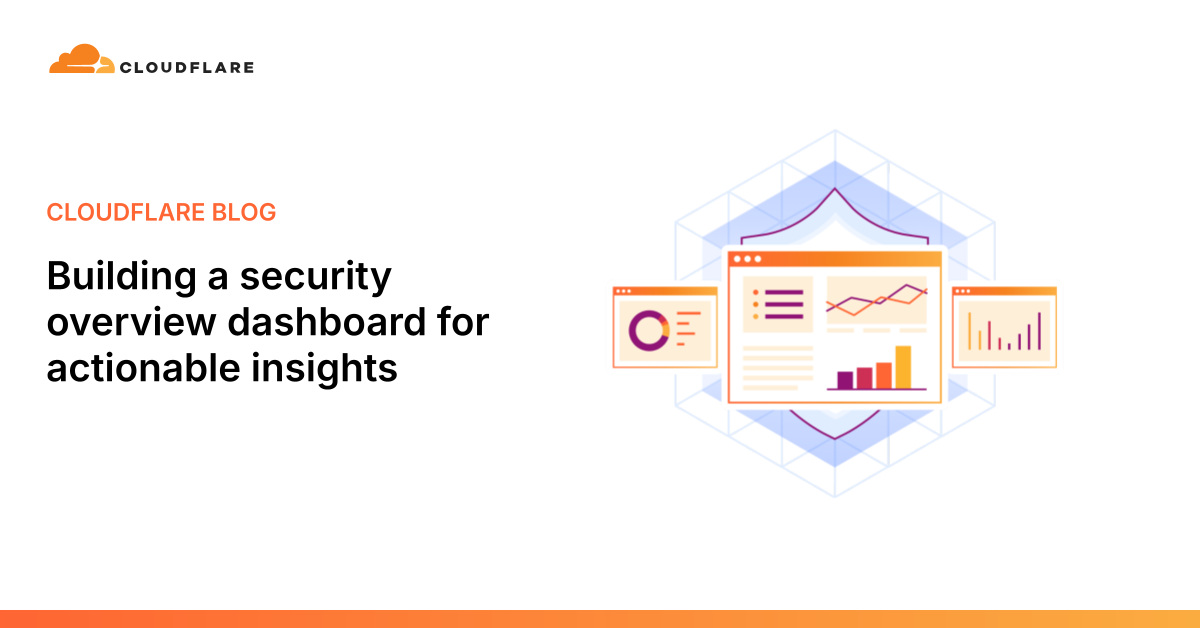
Look, we’ve all been there. You log in, eyes glaze over a dozen graphs, and you’re left wondering: what now? The industry’s peddled ‘more visibility’ for years — but as Cloudflare bluntly puts it, that’s just noise without context. Their fix? A single pane that ranks risks, spots config gaps, and links straight to analytics. No more tab-switching hell.
Why Do Security Dashboards Suck So Much?
Short answer: too much everything. Security analysts swim in logs from endpoints, clouds, APIs — you name it. But hunting misconfigs across tools? That’s where breaches sneak in. Cloudflare nails this with Security Action Items, triaged by criticality: critical (fix now or get pwned), moderate (posture boost), low (nice-to-haves).
Filter by insight type — suspicious activity, insecure configs — and boom, tailored threats. It’s not revolutionary on paper, but here’s the rub: it bridges detection to response without the usual friction.
For years, the industry’s answer to threats was “more visibility.” But more visibility without context is just more noise.
Spot on. And Cloudflare’s not stopping at prioritization. Their Detection Tools module exposes the ‘configuration gap’ — that killer where tools sit idle in ‘log only’ mode. One glance: are shields up? Shadow APIs discovered? It’s shifting the convo from ‘do we have it?’ to ‘is it protecting us?’
But wait — suspicious activity cards now deep-link to Security Analytics with filters pre-applied. Click a red flag on overview? You’re investigating, no recreation needed. Workflow fluid. Response fast. Security pros, rejoice.
How Cloudflare Built This Beast at Scale
Under the hood? A monster engine cranking 10 million insights daily. Scale’s brutal — petabytes of data — but breadth’s the real killer: SSL certs to AI bot rules, all horizontal.
They cracked it with checkers: microservices, each a ninja for one stack slice (DNS records, say). Hook in via scheduled deep scans or real-time listeners. Orchestrator flings tasks — ‘scan zone xyz.com for DNS anomalies’ — checkers parallel-process with smart rules on A/AAAA, DMARC, SPF.
Scheduled for depth; real-time for speed. Independent scaling means no bottlenecks. It’s elegant architecture — reminds me of early container orchestration before Kubernetes bloated everything.
And the insight lifecycle? Generate, rank, surface, act. Refresh constantly. Proactive defense, not yesterday’s logs.
Here’s my unique take, absent from Cloudflare’s spin: this mirrors the shift in devops from monoliths to microservices, but for security. Back in 2010, SIEMs drowned teams in false positives — remember ArcSight nightmares? Cloudflare’s checkers are the Kubernetes of threat intel: composable, scalable, domain-specific. Bold prediction: orgs adopting this slash MTTR by 40%, forcing laggards like Splunk to pivot hard or perish.
Skeptical? Fair. Cloudflare’s PR hypes ‘empower defenders,’ but is it vendor lock-in candy? Nah — the deep-links and unification scream real user pain solved. Still, watch for edge cases: massive enterprises with hybrid stacks might need custom checkers.
Is Cloudflare’s Security Overview Dashboard Actually Better?
Better than what? The fragmented mess of today? Hell yes. It doesn’t just visualize — it operationalizes. Action items aren’t vague; they’re ranked, filterable, tool-status aware.
Critics might cry ‘simplification sells short nuance.’ True, but nuance without action is paralysis. This dashboard bets on speed over perfection — and in breaches, that’s gold.
Engineering-wise, those checkers? Genius for breadth. No single service chokes on ‘everything.’ Parallelism crushes scale; listeners catch live risks. It’s the how that sells me: not hype, but modular mastery.
One nit: the original post cuts off on insight lifecycle — sloppy, Cloudflare. But the vision’s clear.
Why Does This Matter for DevSecOps Teams?
Shift left meets runtime reality. Devs bake security in CI/CD, but ops needs runtime guardrails. This dashboard unifies: config gaps flagged pre-prod, suspicious activity post-deploy.
For platform engineers, it’s a force multiplier — less alert fatigue means more innovation time. Security posture as code? Checkers enable that, validating stacks continuously.
Prediction holds: as AI threats spike (bot configs mentioned), horizontal checkers future-proof better than vertical tools.
🧬 Related Insights
Frequently Asked Questions
What is Cloudflare’s Security Overview dashboard?
It’s a unified view prioritizing action items by risk, spotting config gaps, and deep-linking to analytics — turning security noise into fixes.
How does it handle security action items?
Ranks by criticality (critical, moderate, low), filters by type like suspicious activity or misconfigs, so you triage fast.
Does it scale for large enterprises?
Yes, via 10M daily insights from specialized ‘checkers’ — microservices scaling independently for massive stacks.