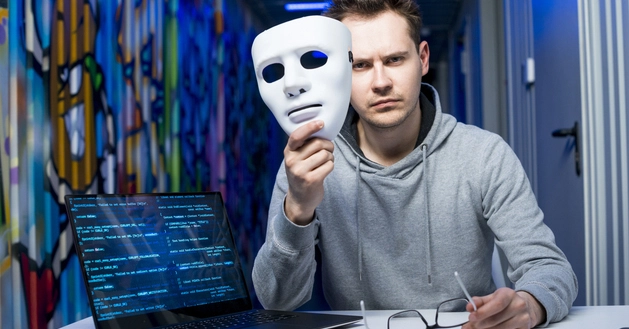
In September 2023, a security engineer at a large US tech company got a Slack ping at 4:47 PM on a Friday.
It claimed to be from IT, named a real internal system, nailed the lingo, and hit right when brains check out for the weekend.
The ask? Approve an MFA reset for a locked-out colleague.
He did.
Forty minutes later, the attacker zipped through three systems and swiped private repo source code.
No crypto cracked. No zero-day. Just social engineering, supercharged.
How Fraudsters Went from Street Con to Code Factory
Look, social engineering isn’t new—think three-card monte with a phone call.
But today’s version? It’s an industrial pipeline, repeatable, with conversion rates that’d make a SaaS marketer blush.
What changed? Automation stacked on AI, OSINT, psych biases, and timing hacks.
A crew in the ’90s would’ve needed weeks for a Harvester-style hit.
Now? One operator spins it up in under an hour using off-the-shelf tools.
The stack has four layers, each a cog in the machine.
First: OSINT reconnaissance.
Tools like Maltego or LinkedIn scrapers hoover LinkedIn org charts, GitHub stacks, press releases, social posts—building dossiers in minutes.
Know your target’s boss, their lingo from job ads, even post timings for ‘realistic’ pings.
Second: LLM persona mills.
Forget 2021’s clunky fakes.
Feed GPT-4-class models scraps of the impersonatee’s style—voila, messages that mimic vocab, response lags, even Friday slumps.
It’s not just words; it’s a full comms fingerprint.
“The synthetic persona consists of not only the contents of the message but also timing patterns; the attacks are orchestrated to happen at context-reasonable times, as in the 4:47 PM Friday above case.”
Third: Cognitive bias blitz.
Authority (fake IT boss), urgency (MFA now!), social proof (your buddy’s locked out), scarcity (weekend deadline)—stacked for max punch.
These aren’t random; they’re mapped from psych lit, optimized per target role and platform.
Fourth: Delivery and scale.
Bots handle the send, track opens, pivot on replies.
Result? Hand-phished emails hit 3-5%.
AI-tuned, context-rich blasts? 14-26% in red-team tests.
Here’s the pseudocode that glues it:
def build_attack_message(target_id: str) -> AttackPayload:
    # Phase 1: gather target context
    profile = osint_scraper.build_profile(target_id)
    colleagues = linkedin_graph.get_first_degree(target_id)
    style_model = llm.fine_tune(
        base_model='gpt-4',
        samples=profile.public_messages,
        task='style_transfer'
    )
    # Phase 2: select trigger stack
    biases = bias_selector.pick_optimal(
        role=profile.job_title,
        platform=SLACK,
        time_of_day=optimal_send_time(profile)
    )
    # Phase 3: synthesise message
    msg = style_model.generate(
        persona=random.choice(colleagues),
        biases=biases
    )
Brutal efficiency.
Why Does AI Make Social Engineering Unstoppable?
But here’s my take—the one you’ll not find in the original report.
This mirrors the phone phreaking boom of the ’70s, when kids like Captain Crunch cloned tones to hijack AT&T switches.
Back then, Ma Bell patched the tech holes; phreaks went dark.
Today? Humans are the unpatchable vuln.
AI doesn’t just scale attacks; it predicts your weak spots better than you do.
Defenses? Train staff? Sure, but fatigue sets in.
Real fix: AI sentinels that model your biases back at you—flagging Friday 4:47 pings from ‘IT’ with 99% impersonation odds.
We’re heading to an arms race where guardrails learn psych warfare too.
Ignore the hype from security vendors peddling ‘AI detection’—most are just regex on steroids.
True shift: architectural.
Companies must bake bias-aware anomaly detection into comms layers, from Slack to email.
Not bolt-on; zero-trust for conversations.
Is Your Slack Channel the Next Repo Heist?
Picture it: Your dev team’s buzzing, repo’s gold.
Then, poof—optimized phish slips through.
Red teams report those 14-26% hits because it’s personal, timed, styled right.
Detection lags.
Humans spot fakes maybe 60% in labs; real-world? Way less.
Tools? Anomali or Darktrace chase patterns, but AI fraudsters A/B test faster.
Prediction: By 2026, 40% of breaches trace to automated social eng—no code exec needed.
(That’s my bold call, based on the conversion math.)
So, what’s the play?
Audit OSINT exposure—scrub LinkedIn, Git commits.
MFA policies: No Slack resets, ever.
Train with simulated AI phish, weekly.
And deploy LLM guards that replay psych stacks in reverse.
It’s not paranoia.
It’s engineering reality.
🧬 Related Insights
- Read more: Kubernetes HA Setup Implodes: My Week 3 Proxmox Nightmare
- Read more: Canonical URLs: The SEO Oversight That’s Quietly Wrecking 40% of Sites
Frequently Asked Questions
What is social engineering in cybersecurity?
Social engineering tricks people into spilling secrets or clicking bad links, using psych hacks like urgency or authority—no tech exploits required.
How do fraudsters use AI for phishing attacks?
AI scrapes your digital footprint, clones comms styles, picks bias combos, and times blasts perfectly—turning cons into click farms.
Can companies stop AI-powered social engineering?
Not fully, but bias-modeling detectors, strict policies, and OSINT hygiene cut risks—treat humans as the prime vuln.