Real developers aren’t sleeping easier tonight. They’re staring at agent frameworks promising autonomous magic, only to watch their bots hallucinate into oblivion when memory fails. Best AI agent frameworks in 2026? Forget the hype. Pick wrong, and you’re debugging spaghetti code at 3 a.m.
Here’s the thing. By early 2026, everyone’s got an agent framework — labs, startups, that guy in his garage. But only six deserve your code. The rest? Dead projects or wrappers thinner than a prompt engineer’s resume.
And yeah, framework choice ranks low on the failure list. Eval rigor, scope lockdown, state persistence — those kill agents. Still, trade-offs matter. Let’s rip into them.
LangGraph: Graphs for Agents, Headaches Included
State as first-class. Pausable mid-task. Human tweaks on the fly. Sounds dreamy — until you write 50 lines of boilerplate for a hello-world bot.
“What makes LangGraph genuinely different is its treatment of state as a first-class citizen. An agent mid-task can be paused, inspected, modified by a human, and resumed exactly at the node where it stopped, with the exact state it had. No other open-source framework does this as cleanly.”
Uber, LinkedIn, Klarna swear by it. Production pedigree? Check. LangSmith traces like a boss. But that proprietary license? Enterprise lawyers cringe. No baked-in semantic memory either — bolt on Mem0 or cry.
Steep curve. Think graphs, not scripts. Pick it for branching beasts needing oversight. Simple tasks? Use a damn API call.
Memory’s checkpointed workflow gold — SQLite, Postgres, survives crashes. Cross-session? Hack in a recall node. Clean, but you’re the janitor.
CrewAI: Backstories and Goals, or Agent Cosplay?
Agents with roles, goals, backstories. Like D&D for LLMs. Crews collaborate, flows orchestrate. IBM, PwC, NVIDIA nod approval. Andrew Ng’s cash backs it.
Fast prototypes. That’s the hook. But production? Collaboration crumbles under scale — too many chef agents spoiling the prompt soup.
Strengths scream startup speed: assign tasks, watch ‘em swarm. Weaknesses? Opaque innards. Debug why Agent Bob ghosted Task X? Good luck.
Memory’s basic — task histories, not semantic smarts. Wire external vector stores, or your agents forget users exist.
It’s fun for demos. Real work? Feels like herding caffeinated squirrels.
Why Does AutoGen Still Hang On in 2026?
Microsoft’s old warhorse. Multi-agent convos baked in. Humans join chats smoothly. No graphs, just scripts chatting via group text.
Evolved, sure — better tooling, async support. But it’s script-heavy. Scale to 10 agents? Your CPU weeps.
“Evaluation rigor, scope control, and how you handle state across sessions matter far more.”
Memory? Conversational buffers. Fine for chats, flops for long-haul recall. Add Pinecone or weep.
Pick for research hacks. Prod? Too brittle.
And look — it’s free, MIT-licensed. No drama. But 2026 calls for durability, not dorm-room vibes.
LlamaIndex Agents: Indexing Meets Agency
RAG kings pivot to agents. Tools, queries, routers — all indexed magic. Strengths: Retrieval superpowers. Your agent remembers docs forever.
Weaknesses pile up. Orchestration’s loose — feels bolted-on. No native checkpointing; crashes erase progress.
Memory shines: Semantic search across sessions, vector-native. But workflows? Linear, not loopy. Complex branches? Reinvent wheels.
Great if data’s your bottleneck. Otherwise, skip.
Haystack 2.0: Pipelines for the Pipelined
Deepset’s NLP beast, now agent-ready. Modular pipelines, document stores galore. Elasticsearch heart.
Production-tough. Scales horizontally. Observability? Traces everywhere.
But agents? Tacked on. Feels like a search engine wearing an agent hat.
Memory: Vector + graph stores. Cross-session recall? Native-ish.
Pick for enterprise search-agents. Dev toys? Nah.
Semantic Kernel: Microsoft’s Other Agent Bet
.NET and Python. Planners, memories, connectors. Azure tight.
Strengths: Plugin ecosystem. Weaknesses: Microsoft lock-in vibes. Python port lags.
Memory: Hierarchical — short/long-term. Decent, not dazzling.
It’s polished. But cross-platform dreams hit reality.
The Real Dirt: Memory’s the Silent Killer
Every framework punts on memory. Checkpoint state? Some nail it. Semantic recall? External hacks everywhere — Mem0, Redis, vectors.
LangGraph + Mem0 combo slays. CrewAI needs it desperately.
Here’s my hot take, absent from the originals: This echoes 2010s microservices fever. Everyone built frameworks; Kubernetes ate them. By 2027, LangGraph and one closed titan consolidate 80%. The rest? Github tombstones.
Trade-offs table it:
LangGraph: Control max, boilerplate high.
CrewAI: Speed first, debug last.
AutoGen: Flexible, flaky.
LlamaIndex: Data deep, flow shallow.
Haystack: Scale strong, agent weak.
Kernel: Enterprise safe, fun low.
You’re not choosing a winner. You’re picking pain points.
But. Eval your agent outside the framework. Scope creep kills faster than bad graphs.
Why Your Framework Won’t Save a Dumb Agent
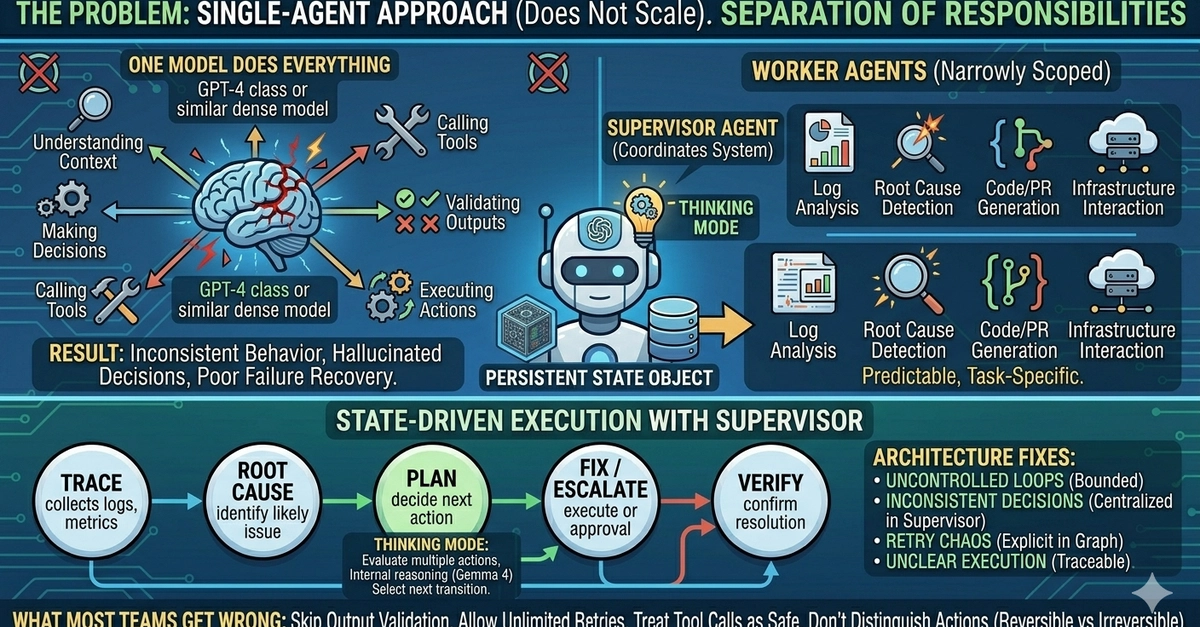
Prod agents fail on basics. Infinite loops. Hallucinated actions. State loss.
Frameworks help — marginally. Rigorous evals (LangSmith-style) expose flaws pre-launch.
Human-in-loop? LangGraph owns it. Others fake it.
Prediction: Open-source fractures. Closed labs (Anthropic, OpenAI) drop polished alternatives, poach mindshare.
Dev weary? Build minimal. Frameworks amplify mistakes.
🧬 Related Insights
- Read more: Static IAM Keys Are a Terraform Trap: The AWS SSO Switch Every Team Needs
- Read more: asqav-mcp Hits Docker Hub: Governance for AI Agents That Won’t Ghost You
Frequently Asked Questions
What are the best AI agent frameworks in 2026?
LangGraph for production workflows, CrewAI for quick prototypes, LlamaIndex if retrieval rules your world. Skip the rest unless they fit tight.
Does LangGraph beat CrewAI for memory?
Yes — native checkpointing crushes it, but add Mem0 for semantics. CrewAI’s task memory fades fast.
Will AI agent frameworks consolidate soon?
Bet on it. Two survivors by 2027, like Kubernetes did for orchestration hell.