Alert storm. Midnight. Pager duty roulette.
That’s where most ops folks live, right? And now AI’s crashing the party in observability, promising to sift through the chaos, spot anomalies before your site’s down, even whip up dashboards on the fly. Grafana Labs’ 2026 Observability Survey—over 1,300 respondents strong—drops the data: 92% see value in AI generating dashboards or alerts. But hold on. That same survey screams reservations, especially about letting bots play god with autonomous actions.
Zoom out. I’ve chased these cycles for 20 years—hype waves from Java applets to Kubernetes gold rush. AI in observability? It’s the latest flavor, but Grafana’s numbers (their survey, their spin) show practitioners nodding yes to helpers, no to overlords. Who’s making bank here? Vendors like Grafana, peddling platforms that ‘integrate’ this magic.
Why Devs Crave AI for the Grunt Work
Ninety-two percent. That’s the chunk saying AI surfacing anomalies before downtime hits would be valuable. Forecasts? Trends? Root cause? All over 90%. Newbies ramping up faster? Eighty-nine percent thumbs up.
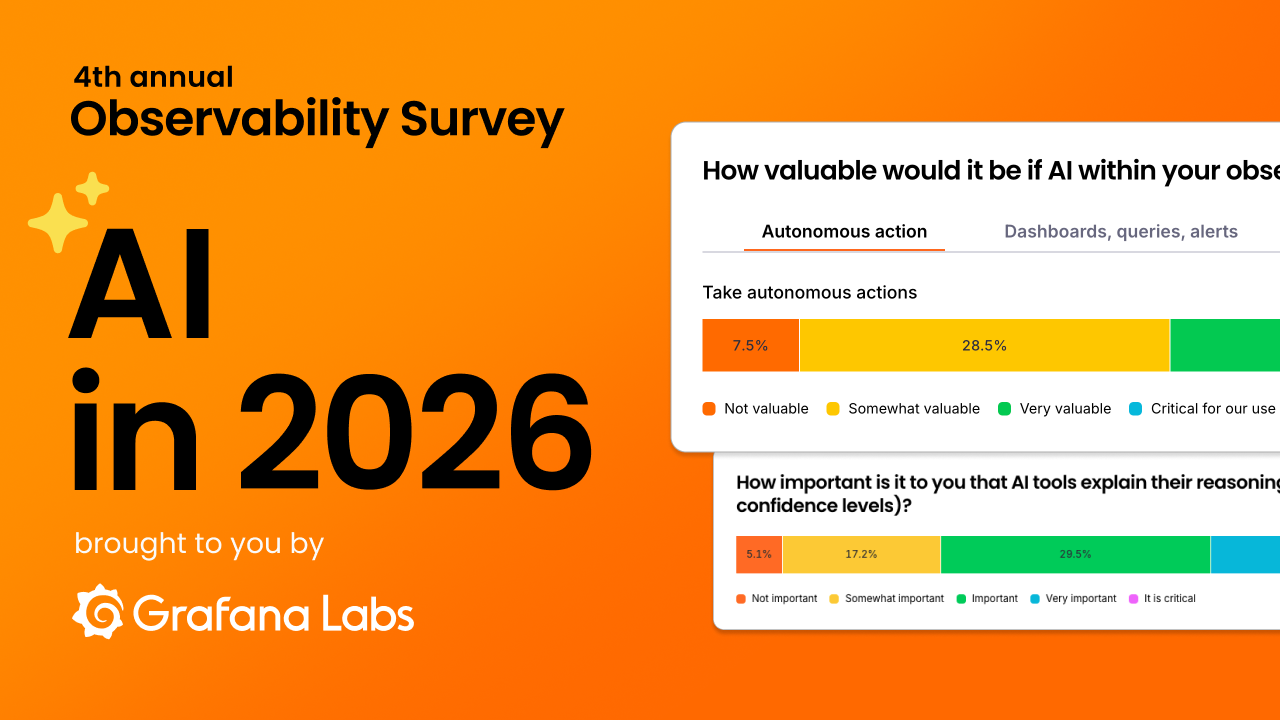
Generate dashboards, alerts, or queries: 92% Surface anomalies and other issues before they cause downtime: 92% Forecast and spot trends: 91% Assist with root cause and correlation analysis: 91% Help new users quickly understand the relevant parts of the system: 89% Take autonomous actions (i.e., automatic remediations or triggering workflows): 77%
Pulled straight from the survey. Solid buy-in for the safe stuff. But autonomous? Drops to 77%, with only 49% calling it critical. Makes sense—your revenue’s riding on this, not some LLM’s hunch.
Small companies? They’re twitchier. Thirty-five percent from shops under 100 heads say nay to autonomous AI, versus 16% at big corps. The ‘great equalizer’? More like big boys’ toy— they’ve got the engineers to sandbox it.
Will AI in Observability Actually Deliver Without Breaking Everything?
Here’s the rub — or one of ‘em. Twenty-six percent flag ‘too much manual input of required context’ as the top blocker for critical tasks. Feed the beast data, or it starves.
Advocates for autonomous worry about that context grind. Detractors? ‘AI breaking too much or not adapting’ — 31% there. Divide city.
And trust? Skepticism’s low — 4-5% across most uses — but jumps to 15% for hands-off fixes. Practitioners want copilots, not captains. Fair. Remember Netcool in the 90s? Buzzword bingo for monitoring, promised the moon, delivered dashboards nobody trusted. AI’s echoing that—shiny, but brittle without rails.
My take, absent from Grafana’s glow-up: this splits the field harder. Big Tech builds custom guardrails (money no object), startups chase venture-fueled moonshots, then burn when AI hallucinates a rollback. Prediction? By 2028, 70% adoption for analysis tools, but autonomous stays niche — under 30% outside FAANG. Who’s paying? Enterprises with deep pockets, not your friendly SaaS grinder.
Grafana nods to evolution since survey close — agentic workflows going live. Sure. But data’s from Oct-Jan; models leaped, sure, but human wariness? Eternal.
Company size skews it too. Large orgs comfy with AI delegation ‘cause they’ve got compliance armies. SMBs? Nope. Equalizer myth busted.
Blockers evolve per use case. Autonomous fans fear input hassle (32%). Haters fear unreliability. Classic.
Who’s Really Profiting from AI Observability Hype?
Grafana Labs, obviously — survey sponsor, dashboard pusher. Open source love? They tout it. But check their dashboard: filter by size, role, see peers. Smart upsell.
Practitioners want it — anomalies, trends, RCA assist. Onboarding speedup? Gold for scaling teams.
But autonomous? Wary. Business-critical means zero tolerance for oopsies.
Vendors win short-term: bolt-on AI features, premium tiers. Long-term? If it flakes, backlash like early AIOps (remember that flop?).
Unique angle: parallels PagerDuty’s 2010s alert fatigue wars. AI could end that — or amplify if it false-positives nightmares. Devs onboard now, but one outage cascade? Back to manual.
Survey’s broad: AI regardless of model. Timeless questions — value, trust, blocks.
Why Does AI Observability Matter for Your Stack?
Observability’s exploding — AI workloads need watching too. Irony: tools monitoring AI, powered by it.
Devs see it fixing toil: queries, dashboards auto-magicked.
Concerns? Oversight. No one’s handing keys blindly.
Small teams hardest hit — resources thin, risks high.
Grafana’s full report? Dive in. Stats galore.
Bottom line: potential’s real. Concerns realer. Bet on copilots first.
🧬 Related Insights
- Read more: 30,000 Users No Sweat: Cloudflare One’s Phased Escape from VPN Hell
- Read more: tldraw’s SDK Gamble: Thriving in a World of Proliferating Claudes
Frequently Asked Questions
What does AI in observability mean?
AI in observability uses machine learning to analyze logs, metrics, traces—spotting issues, predicting failures, aiding root cause faster than humans alone.
Is AI ready for autonomous actions in observability?
Not yet for most—survey shows 77% value it, but 15% skeptical, especially smaller firms fearing unreliability without heavy oversight.
AI observability adoption trends 2026?
High for analysis (90%+ see value), low for autonomy; big companies lead, per Grafana’s 1,300+ respondent survey.
