Pixels danced on Luke Farritor’s screen that humid August night in 2023. Invisible to the naked eye, faint crackles bloomed into Greek letters: ΠΟΡΦΥΡΑϹ. Purple.
A 21-year-old SpaceX intern — juggling rockets by day — had just unlocked the first word from a Herculaneum scroll scorched by Vesuvius in AD 79. Imagine it: an entire library’s ghosts, pressed flat under volcanic fury, now whispering through AI’s gaze.
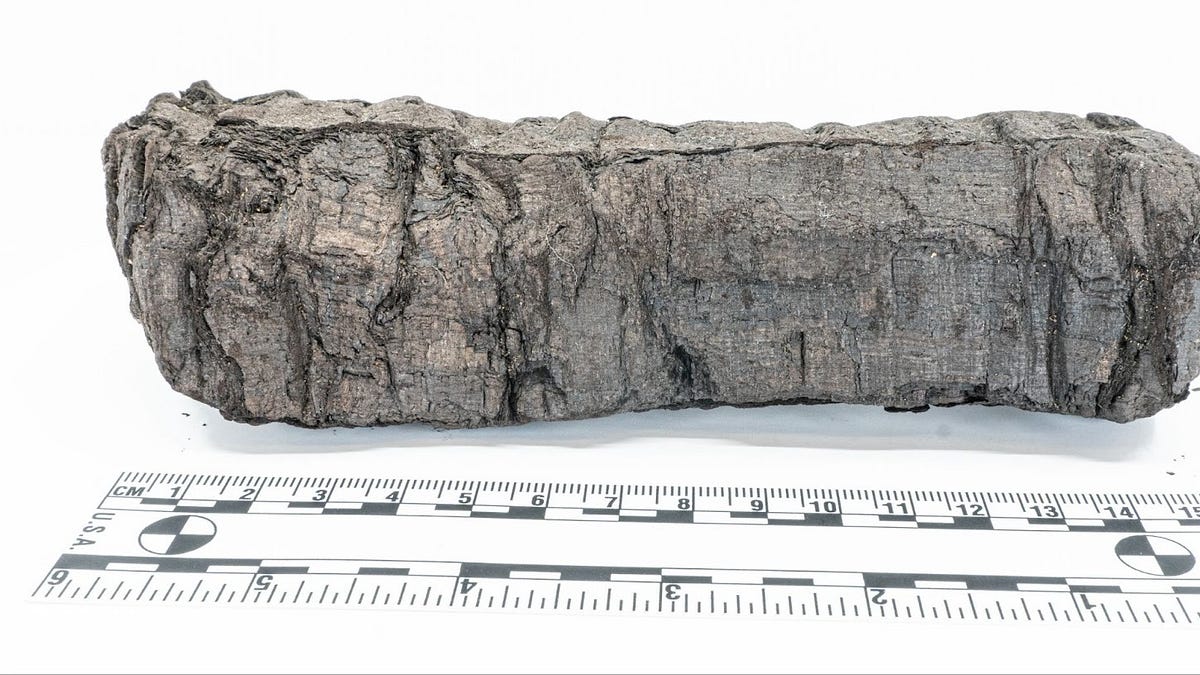
These aren’t dusty replicas. Herculaneum’s 800 scrolls, carbonized black, defied unrolling for centuries. Ink and papyrus? Same shade of char. X-rays bounced off uselessly. Until now.
How AI Peers Into Volcanic Tombs
The Vesuvius Challenge exploded in March 2023. Tech moguls Nat Friedman and Daniel Gross ponied up $1 million. Brent Seales brought the scans — terabytes from Oxford’s Diamond Light Source, slicing scrolls layer by layer via X-ray CT.
But here’s the magic trick. Casey Handmer spotted ‘crackle patterns’ — ink’s tiny fingerprints on warped papyrus. Farritor fed that to machine learning. Train. Predict. Refine. Boom: more crackles, sharper text.
“With each new crackle found, the model improved, revealing more crackle in the scroll — a cycle of discovery and refinement.”
That official announcement captures it — pure iterative wonder, like teaching a digital bloodhound to sniff ancient prose.
Youssef Nader, Farritor, and Julian Schilliger clinched the $700,000 Grand Prize in 2024. Fifteen columns. 2,000 characters. Readable Epicurean philosophy, the stuff Christianity sidelined.
What Does AI Recover from Herculaneum Scrolls?
Think Jurassic Park, but for ideas. These scrolls hoard lost Greek texts — Epicurean rants against divine meddling, vanished because medieval monks skipped the copies.
Jürgen Hammerstaedt, Cologne classicist, nailed it:
“We only have very few remaining authors of Greek prose who have been preserved in the Middle Ages.”
Maria Konstantinidou buzzes too. Untapped works, begging for processing power.
Analogy time: it’s like handing Sherlock a crime scene blurred by fire — AI Holmes sharpens the clues, but humans still dust for prints.
Segmentation first. Schilliger’s software — ML plus geometry — virtually unrolls mushy layers. A scroll? Up to 12 meters crushed tight. Warps. Tears. Self-intersections. Humans tweak the glitches.
Ink detection next. Crackle models flag suspects. Text segmentation lines up letters. Experts verify.
Not fully automated. Costs $10k per scroll, even optimized. 300 intact ones wait. Years away at this pace.
But.
Can AI Decode All Vesuvius Scrolls in Time?
Scale’s the beast. Today’s pipeline? Heroic, handmade. Farritor’s win was a sprint; libraries demand marathons.
My bold call — and here’s the fresh angle the originals miss: this mirrors Gutenberg’s press, 1450s. Back then, one man’s tech floodgated knowledge, birthing the Renaissance. AI’s our new press, but for the dead. Predict this: by 2030, full Herculaneum readout sparks an Epicurean revival, nuking dogma with atomist fire. Lost libraries worldwide — Dead Sea, Petra — next.
Skeptics? Sure, hype lurks. Challenge boosters tout ‘non-invasive’ miracles, but ignore the human grind. It’s no magic wand — yet.
Energy surges here. Picture it: Philodemus’ scrolls debating gods, fueling tomorrow’s debates. AI isn’t just reading history. It’s resurrecting voices that shaped us — silenced, now screaming.
Workflow tweaks accelerate. Better segmentation eats errors. Cheaper accelerators crunch terabytes overnight. Papyrologists dream of pipelines churning scrolls like factory widgets.
Roadblocks? Data deluge. One scroll: gigabytes. 800? Petabytes party. Compute costs bite.
Still, momentum. Farritor’s evenings birthed purple. What’s next — Plato’s lost dialogues?
And the wonder: we’re not decoding ink. We’re time-traveling, papyrus portal in hand.
Why This Ignites an AI Renaissance
Broader lens. Computer vision conquers the unconquerable — charred, crushed, cryptic. Analogies abound: like MRI for mummies, but literate.
Epicureans preached pleasure sans superstition. Vesuvius torched that library; AI revives it. Cultural earthquake.
Experts whisper: years to full decode. But pace quickens. 2023 intern to 2024 prize — warp speed.
Look, it’s messy. Humans intervene. Costs sting. But the payoff? Reclaimed heritage, AI as ultimate archaeologist.
Thrill of the chase. Purple was step one. The floodgates creak.
🧬 Related Insights
- Read more: Cambodia’s Getting Serious About Crypto Scams—But Don’t Mistake PR for Progress
- Read more: Bifrost: The No-Nonsense Gateway Taming Claude Code’s Wild Spending
Frequently Asked Questions
What is the Vesuvius Challenge?
A $1M contest to use AI on X-ray scans of Herculaneum scrolls, decoding text non-invasively. Launched 2023, grand prize won 2024.
Can AI read all Herculaneum scrolls?
Not yet — 300 intact, but partial automation means years and $10k+ per scroll. Scaling pipelines underway.
What texts hide in these scrolls?
Mostly Epicurean philosophy, lost Greek prose clashing with Christian views — potential game-changer for classics.