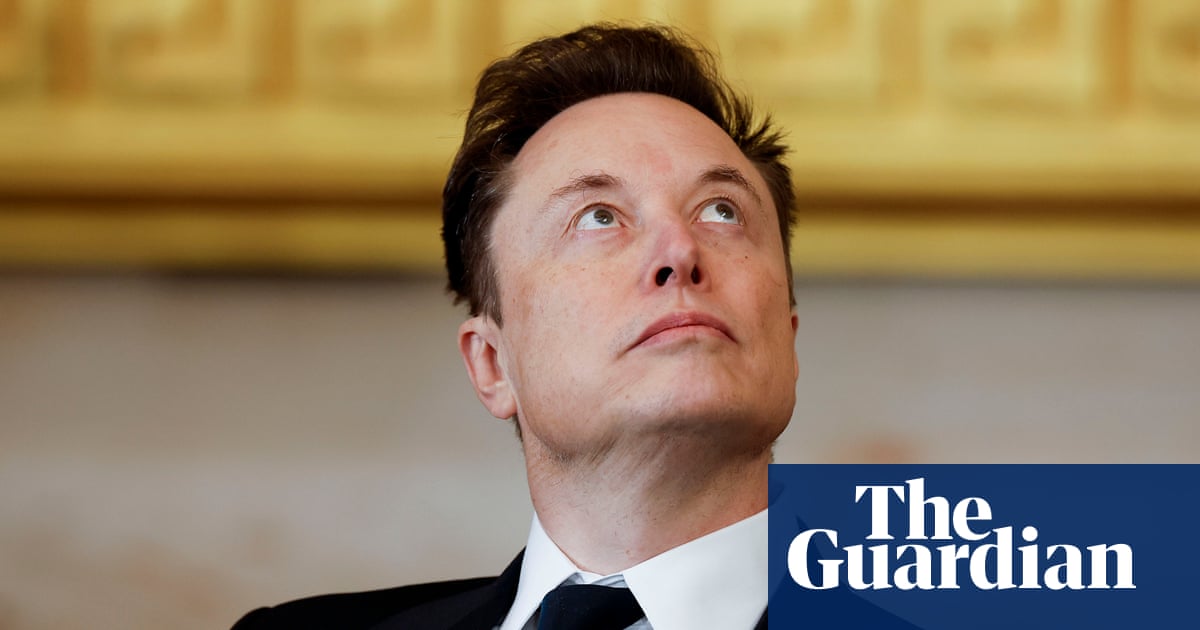
Did you ever stop to think about how a state law designed to prevent AI discrimination could end up being challenged by the federal government, not for being too weak on discrimination, but for allegedly being too strong on certain kinds of diversity initiatives? It sounds like a legislative fever dream, but here we are. The US Justice Department, under the Trump administration’s banner, has stepped into a legal spat initiated by Elon Musk’s xAI, aiming to quash a Colorado statute poised to regulate artificial intelligence systems. This isn’t just about xAI’s bottom line; it’s a fascinating peek behind the curtain of how federal power can be wielded to shape national tech policy, even when it means duking it out with a state.
The core of the Justice Department’s intervention hinges on a rather dramatic interpretation of the 14th Amendment’s Equal Protection Clause. Their argument? Colorado’s Senate Bill 24-205, which requires companies to build safeguards against unintended discriminatory AI effects, also permits certain discrimination aimed at promoting diversity. This, according to the feds, creates an illegal mandate to “infect their products with woke DEI ideology.” It’s a stark framing, one that bypasses the technical nuances of AI bias mitigation to leap straight into the culture wars.
Here’s the thing: the law itself, SB 24-205, targets AI systems used in crucial areas like employment, housing, education, healthcare, and financial services. It mandates disclosure and risk-mitigation for what it deems “high-risk” AI. Companies developing these systems are told they need to be mindful of how their AI might discriminate, and also, apparently, how it might not discriminate in ways the state deems beneficial for diversity goals. xAI, for its part, has also lodged a First Amendment claim, asserting the law restricts design choices and compels speech on sensitive topics. But the federal government’s entry shifts the focus.
The Feds’ Play: A National Blueprint for AI?
This federal intervention escalates a single-company legal battle into something much larger. It’s a clear signal that the Trump administration favors a centralized, uniform approach to AI regulation across the entire country. States forging their own paths, however well-intentioned, are now finding themselves on the wrong side of a federal desire for a singular legislative framework. Think about it: the more states try to implement their own AI rules, the more fragmented the landscape becomes for national tech giants. The Justice Department’s move suggests they’re willing to use federal legal muscle to prevent this patchwork, potentially forcing a single national standard through legal precedent rather than waiting for Congress to act.
It’s a classic federalism tug-of-war, but with a decidedly 21st-century twist. The administration’s stated goal is to avoid states becoming “laboratories of democracy” when it comes to AI, at least in a way that might conflict with their vision. The language used by Assistant Attorney General for Civil Rights, Harmeet Dhillon, is particularly telling, casting the state law as an imposition of “woke DEI ideology.” This isn’t just about regulatory compliance; it’s a political framing designed to resonate with a specific base, portraying AI regulation not as a safeguard for citizens, but as an ideological battleground.
Is This About AI, or Ideology?
One can’t help but wonder if the DOJ’s intervention is less about the technical feasibility of Colorado’s AI law and more about drawing a hard line against state-level regulations that they perceive as pushing a particular social agenda. If AI developers are legally compelled to build in diversity metrics, even with the best intentions, the argument goes that they’re being forced to adopt a political stance. The Justice Department’s intervention, then, becomes a defense of corporate autonomy and a rejection of what they see as government overreach into the design and ethical considerations of AI development. It’s a powerful narrative, framing the federal government as the protector of innovation against potentially overzealous state mandates.
“Laws that require AI companies to infect their products with woke DEI ideology are illegal.” – Harmeet Dhillon, Assistant Attorney General for Civil Rights
The Colorado attorney general’s office has, understandably, declined to comment, likely opting to observe the federal maneuver before formulating a public response. The implications here are significant. If the DOJ’s interpretation gains traction, it could set a precedent that chills state-level attempts to legislate on AI ethics, particularly concerning diversity and inclusion. It pushes the conversation from “how do we make AI fair?” to “who gets to define fairness, and is the government forcing it onto developers?”
This isn’t the end of the story, not by a long shot. The legal battles ahead will likely dissect the First and Fourteenth Amendments in ways that could redefine the boundaries of state and federal power in the AI era. For now, though, the US Justice Department has thrown down a gauntlet, signaling a clear preference for federal control and a deep suspicion of state-driven AI regulation that incorporates anything resembling mandated diversity.
🧬 Related Insights
- Read more: OpenAI Buys TBPN: Narrative Control Masquerading as Dialogue
- Read more: ChatGPT Turns Research into a Superpower: Search vs. Deep Dive
Frequently Asked Questions
What does the US Justice Department’s intervention in the xAI case mean? It means the federal government is officially involved in challenging Colorado’s AI regulation law, aligning with xAI’s arguments that the law is unconstitutional.
Why is the Justice Department concerned about Colorado’s AI law? They argue the law violates the 14th Amendment’s Equal Protection Clause by requiring companies to guard against discrimination while also allowing some discrimination for diversity promotion, which they deem illegal.
Will this federal intervention stop Colorado’s AI law from taking effect? Not directly, but it significantly strengthens the legal challenge and could set a precedent for how AI is regulated nationwide.