AI arms race is boardroom bait.
I’ve chased Silicon Valley promises for two decades, from dot-com firewalls to cloud security unicorns, and here’s the truth: every time threats speed up, vendors peddle the next “unified” savior. Unified exposure management sounds slick — PlexTrac’s pitching it hard — but let’s cut the spin. Who’s really banking on this AI panic?
Look, threat actors aren’t twiddling thumbs anymore. They’re automating phishing farms with gen AI, chaining vulns in hours via machine learning. Original pitch nails it: “Gone are the days of manually researching and discovering vulnerabilities… Today, that cycle can be compressed into hours or days through AI-driven automation.”
Gone are the days of manually researching and discovering vulnerabilities, determining whether one or more can be chained together, and deciding whether they can be used to reach a target. Today, that cycle can be compressed into hours or days through AI-driven automation.
Spot on. But defenders? Still drowning in CVE noise, point scans, manual triage. It’s 2024, folks — human-speed ops won’t hack it against bot swarms.
Who’s Cashing In on the Fear?
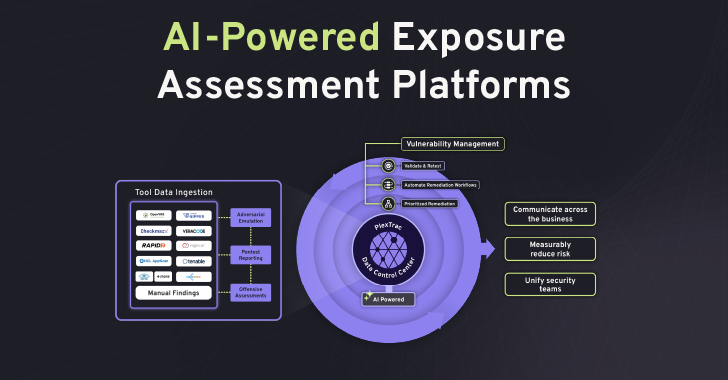
PlexTrac wants a boardroom seat. Their pitch: ingest everything — clouds, identities, pentests — into one dynamic risk view. Cut noise with context scoring, visualize attack paths, predict risks. Sounds great, right? Except I’ve seen this movie. Remember 2010s SIEM madness? Vendors unified logs, promised the world, charged fortunes — and breaches kept coming because integration’s a nightmare, not a feature.
PlexTrac’s no different. They’re selling “sustainable autonomous exposure assessment,” but that’s code for AI scanning your mess 24/7. Fine, if it works. My unique angle? This mirrors the antivirus wars of the ’90s — endless signatures became endless noise, till behavioral AI stepped in. Prediction: PlexTrac thrives short-term on FOMO, but without true agentic execution, it’ll fade like those SIEM behemoths under licensing bloat.
And agentic AI? Hype central. Not just copilots suggesting fixes — these bad boys plan, reason, execute. Autonomous pentesting: synthetic red teams that adapt paths, emulate TTPs, stress-test your EDR stack without coffee breaks.
But here’s the cynicism: boardrooms love it because it justifies budgets. CISOs nod, VCs pour in, PlexTrac demos dazzle. Who loses? The ops teams stuck tuning yet another tool.
Traditional vuln mgmt’s toast. Too noisy, flat data, reactive as hell. PlexTrac claims to fix it — unified view, prioritization that matters. They list wins: cut noise, path viz, proactive predictions.
I’ll buy some. In a sprawl of AWS buckets, Okta misconfigs, and forgotten APIs, anything centralizing exposure beats Excel hell. Yet, adoption’s the killer. How many orgs have clean data feeds? (Spoiler: not yours.)
Is PlexTrac’s Agentic AI Actually Autonomous?
Agentic sounds sexy — self-planning attackers in a box. But let’s poke. “Autonomous Pentesting”: plans paths, adapts to blocks, mimics humans. Trained on threat intel, simulates AI attacks.
Cool demo. Real world? Networks shift hourly; agentic AI fatigues on edge cases without human overrides. I’ve covered tools like this — early Verodin, attack sims — they exposed gaps but didn’t close ‘em. PlexTrac’s betting on convergence: exposure assessment + continuous validation.
Skeptical take: it’s evolutionary, not revolutionary. PR spin screams “AI arms race,” but adversaries already chain tools like Metasploit + LLMs off-the-shelf. Defenders need this? Yes. Game-changer? Nah — incremental at best.
Boardrooms prioritize it because speed’s the game. Exploitation windows? Hours now. PlexTrac shrinks discovery-to-action. But money question: PlexTrac’s revenue jumps on enterprise deals, while open-source alternatives (hello, custom LangChain agents) nibble edges for free.
Why Does Unified Exposure Management Matter Now?
Modern envs mutate — Kubernetes pods spin up, vanish; IAM roles bloat silently. Static scans miss it. Unified pulls it all: CVEs, misconfigs, app flaws.
PlexTrac visualizes chains — that “minor” SQLi plus weak MFA equals RCE. Prioritizes real risk, not red herrings. Proactive? Predictive models flag emerging threats.
I’ve seen breaches from ignored chains (Equifax vibes). This could prevent ‘em. But critique: vendor lock-in looms. Export your data? Hope so.
Agentic twist elevates it. Continuous threat assessment — not periodic pokes, but relentless probing. Validates if your SIEM catches polymorphic malware (it won’t, always).
Bold call: by 2026, 50% of Fortune 500 CISOs mandate this, or equivalents. Not because flawless, but because boards demand “AI parity.” PlexTrac rides the wave — smart biz.
Yet, pitfalls. False positives still bury teams. Autonomy risks? Agentic gone rogue, probing prod by mistake. (Heard that war story thrice.)
So, worth it? For scaled orgs, yeah — if you vet integrations. SMBs? Stick to basics, save cash.
Bottom line: AI arms race real, defenses lagging. Unified exposure management’s no silver bullet, but ignoring it invites pain. PlexTrac’s solid contender — watch their churn rates.
🧬 Related Insights
- Read more: TeamPCP’s Stolen Secrets Pipeline: Fueling Ransomware Rampage
- Read more: Casbaneiro Gang’s Sneaky Dynamic PDFs Hit Enterprises in LatAm and Europe
Frequently Asked Questions
What is unified exposure management?
It’s centralizing all your risk data — vulns, configs, pentests — into one prioritized view, often with AI to cut noise and spot attack paths.
Does PlexTrac replace my security team?
No, it augments — automates assessments, but humans still triage and fix.
Is agentic AI safe for pentesting?
Mostly, if contained — simulates attacks without real exploits, but test in sandboxes first.