The coffee machine sputtered, a familiar, mournful sound that punctuated another Tuesday morning.
For years, the gospel of AI interaction has been excruciatingly simple: token, predict, repeat. Humans type. AI regurgitates. The whole thing is built on text, a medium so patient it’s practically a digital doormat. Text waits. It buffers. It gets edited into submission. It’s a one-way street, really. You feed it, it spits it back out, slightly rephrased.
But collaboration? That’s not text. Collaboration is messy. It’s temporal. It’s now.
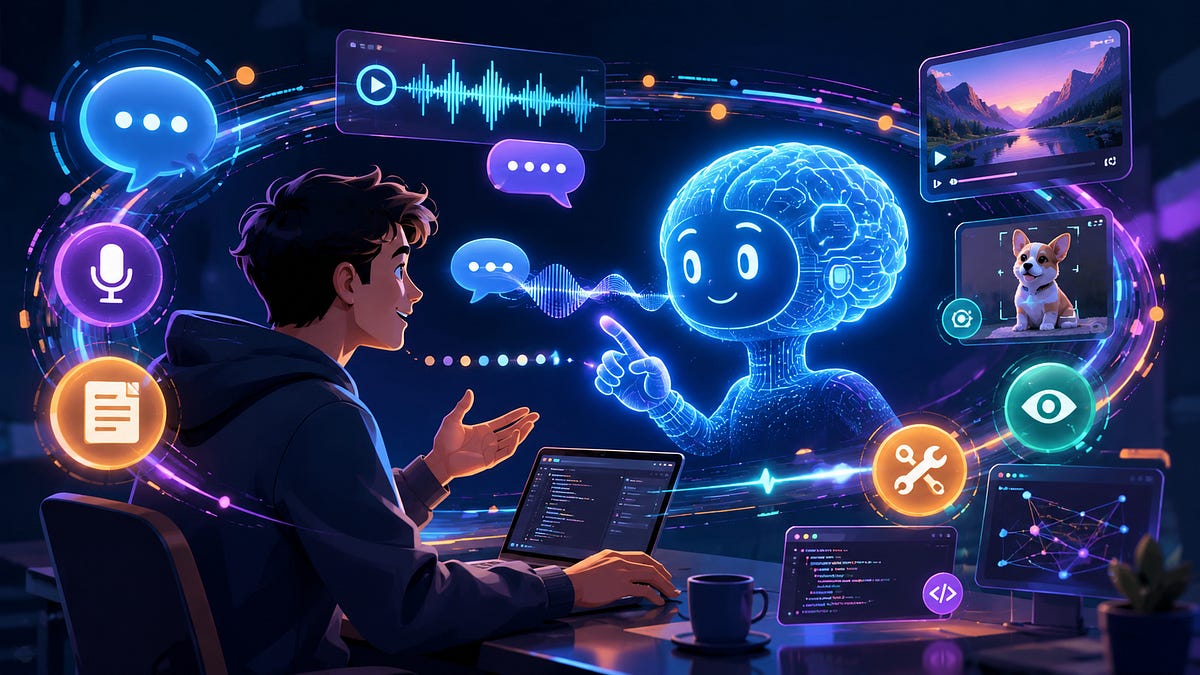
Thinking Machines is pushing past this dated paradigm. Their interactive models aren’t just predicting the next word. They’re building systems that can genuinely engage. Think real-time conversation, yes, but layered with visual input, audio processing, and the ability to actually use tools. It’s a continuous, learned system. Not a series of disconnected chatbot turns.
This is a critical distinction. The old way treats AI like a highly skilled typist. The new way? It’s aiming for a genuine partner. A partner that doesn’t just process your latest instruction but understands the context of what’s happening around it, right now.
Is This Truly ‘Interactive’ AI?
It’s easy for companies to slap buzzwords on their tech. ‘Interactive’ is a popular one. But what does it actually mean? For most, it’s still about feeding a model a string of text and getting a string of text back. Thinking Machines is taking it a step further. They’re proposing a model where the interface isn’t just a text box; it’s the model itself, dynamically responding to multiple streams of information. It’s about the AI understanding the world as it unfolds, not just as it’s written down.
Consider the implications. An AI that can watch a video feed, listen to a conversation, and respond with relevant actions or information. Imagine a customer service bot that can not only understand your text but also see the product you’re holding up or hear the frustration in your voice. That’s the promise here. It’s moving from abstract understanding to embodied, real-world interaction.
The ‘Next Token’ Fallacy
The core of this shift lies in dismantling the simplistic ‘next token prediction’ framework that has dominated LLM development. This approach, while effective for many text-based tasks, inherently limits the AI’s ability to grasp continuous, multi-modal context. Text can be processed sequentially, but real-world events are concurrent and intertwined.
Thinking Machines’ work suggests a future where the AI’s internal state is constantly updated by a richer, more dynamic understanding of its environment. This isn’t just about predicting the next word; it’s about predicting the next meaningful action within a complex, evolving situation. It’s a subtle but profound difference.
For the last few years, the default mental model for large language models has been embarrassingly simple: concatenate tokens, predict the next token, repeat. The human writes a message, the model replies, the human writes again.
This quote from their material sums up the current limitation perfectly. It’s like building a skyscraper with only a hammer. You can get pretty far, but you’re missing a lot of the sophisticated tools needed for true complexity.
This is where the real excitement — and the real skepticism — kicks in. Can they actually pull this off? Making a model that integrates vision, audio, and tool use in real-time, and makes it learn from that continuous stream? That’s a leap. A big one.
This isn’t just about building a smarter chatbot. It’s about building a more capable agent. An agent that can perceive, reason, and act in ways that mimic, and eventually surpass, human collaboration. It’s the difference between a calculator and a research assistant.
And let’s be clear: this is early work. Thinking Machines themselves admit it. But the trajectory is undeniable. The next wave of AI won’t just talk. It will see. It will hear. It will act. And the interface won’t be a keyboard. It will be the world itself, fed directly into a model that’s ready to engage.
FAQ
What are interactive models in AI? Interactive AI models are systems designed to engage with users and their environment in real-time, often integrating multiple forms of input like text, vision, and audio, and capable of taking actions or using tools to complete tasks.
How is Thinking Machines’ approach different from standard LLMs? Standard LLMs typically operate on a ‘predict the next token’ basis using text. Thinking Machines is developing models that learn from a continuous stream of multi-modal data (text, vision, audio) and can integrate tool use, aiming for a more dynamic and collaborative interaction.
Will this kind of AI replace human jobs? While advanced AI can automate tasks, the development of truly collaborative AI like that proposed by Thinking Machines suggests a future where AI augments human capabilities rather than solely replacing them. The focus on real-time interaction and tool use could lead to new forms of human-AI partnerships.