What everyone expected was a sleek, smoothly future powered by intelligent machines. We envisioned productivity soaring, drudgery vanishing, and human potential unleashed. But this week, something fundamental shifted. The whisper of AI’s promise is being drowned out by a growing roar of economic anxiety and public distrust. The pressure of AI on real people and their communities is no longer theoretical; it’s tangible, and frankly, it’s alarming.
Is This the Week AI’s Hype Train Derails?
We’re standing on the precipice of what might be the most vital week in AI history—or at least in 2026. Google’s I/O Conference is kicking off, Nvidia’s earnings are due, and the SpaceX IPO filing is on the horizon. This isn’t just about stock prices and innovation; it’s a complex geopolitical, inflationary, bond-market-driven, Silicon Valley drama playing out in real-time. And at the heart of it all is the increasingly uncomfortable question: who really benefits from this AI explosion?
Just last week, Anthropic dropped Claude for Small Business, a move targeting an underserved market. Yet, you still hear countless stories of SMBs drowning in the complexity of generative AI, struggling to implement tools that feel more like a burden than a boon. This is happening in an era of palpable backlash against AI ‘slop,’ the insatiable demand for data centers, and the billionaire class cheerfully praising an AI era as if it’s going to solve all our problems. It’s a stark contrast to the ground truth for many.
Speaking of tools, Cursor just released Composer 2.5. I’ve been keeping a close eye on Anysphere, and honestly, after Anthropic, they’re arguably the top B2B and Enterprise AI player. From a product standpoint, this new Cursor release looks like a serious upgrade to their in-house model intelligence, supercharging long-running agentic behaviors and enhancing the entire team development ecosystem within its IDE. They’re building a reputation for handling intense parallel processing with async subagents like no one else.
But beyond the tech, the human element is where things get truly hairy. Mid-2026 is shaping up to be a remarkably cringe period in AI history. Entry-level jobs are already feeling the pinch, and people are, to put it mildly, fed up. Axios reported that this disdain spans generations and political parties. A recent Economist/YouGov poll painted a stark picture: over 70% of Americans believe AI is advancing too quickly, with overwhelming majorities of both Republicans and Democrats agreeing. It’s not a niche concern anymore; it’s a national sentiment.
The American Billionaire AI Stampede
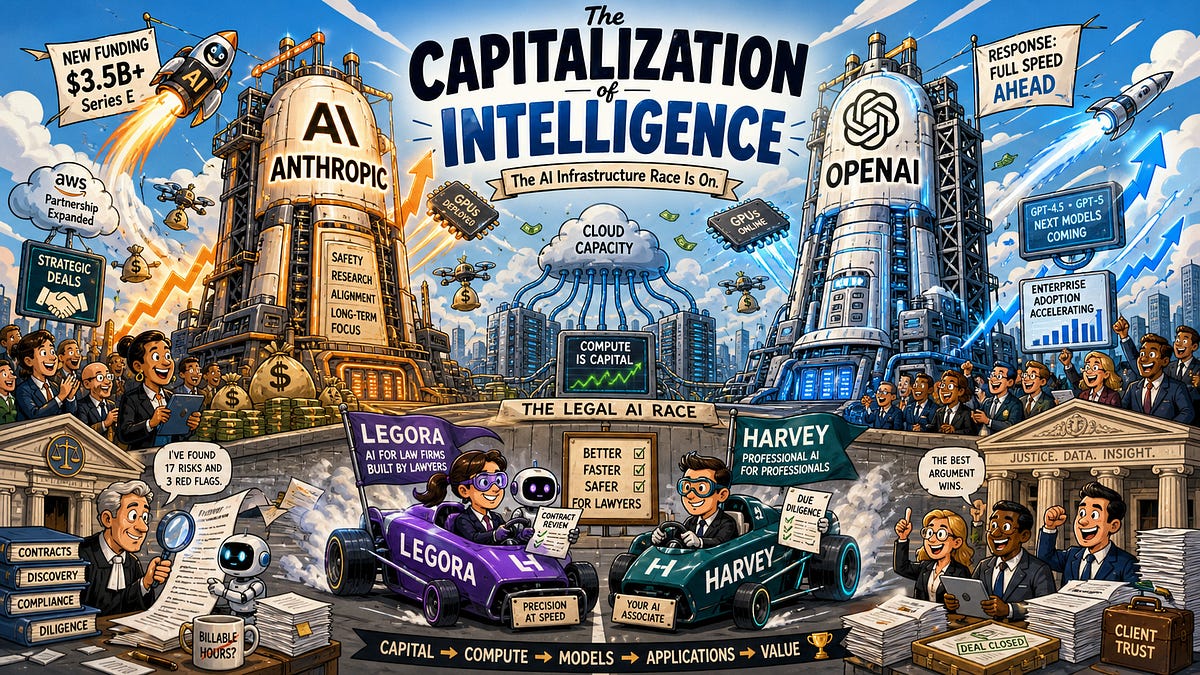
This isn’t just about innovation; it’s about capital, compute, and an elite AI boom that frankly, isn’t inspiring much hope for the average person’s future. With SpaceX, Anthropic, and OpenAI all rumored to be heading for IPOs by late 2026 or early 2027, an astronomical amount of capital is on the line for the wealthy, for venture capital funds, for BigTech, and for the narrative that America is leading the AI charge. It feels less like progress and more like a high-stakes race for the already-rich.
And here’s a particularly juicy detail from the original report: a jury in Oakland, California, actually ruled against Elon Musk in his high-profile court battle with Sam Altman and OpenAI. Altman himself has become this new archetype of AI VC—a powerful angel investor who also happens to be the CEO of one of the most influential AI startups. It raises eyebrows, doesn’t it? Is this a sign of OpenAI’s decline, or just a symptom of a new era in VC, dominated by a select few heavyweights?
Venture Capital Power is Becoming More Concentrated
Dig into the Q2 2026 rankings of US unicorns, and you’ll see a disturbing trend: venture capital is becoming incredibly concentrated. A tiny handful of VCs are gobbling up the lion’s share of returns from this AI boom, often to the detriment of mid-sized firms. Generative AI, it seems, is shrinking the power base of Silicon Valley even further, a place that was already notoriously top-heavy.
Gen Z’s Rude Awakening to BigTech
As American elites rush headlong into AI implementation, the career prospects of many young people are taking a direct hit. This is reflected in plummeting AI sentiment among younger Americans. A recent Gallup survey found that only 18% of those aged 14 to 29 feel hopeful about AI. The polished talking points from billionaires? They’re increasingly falling flat. We saw this firsthand when ex-Google CEO Eric Schmidt reportedly faced loud boos for his pro-AI speeches, a moment captured and shared by 404 Media. It makes you wonder how this elite class plans to negotiate with a generation they’re actively disrupting for profit. It’s a bold strategy, Cotton, let’s see if it pays off.
Claude for Small Business: A Glimmer of Hope?
Anthropic’s recent push into the SMB market with Claude for Small Business is an interesting move. Small businesses are the backbone of the US economy, accounting for a massive 44% of GDP and employing nearly half the private sector workforce. Yet, their adoption of AI has seriously lagged behind larger enterprises. While Silicon Valley elites are neck-deep in AI, most sectors are still playing catch-up. This move could be a vital step, or just another drop in the AI ocean.
The pressure of AI on real people and their communities is becoming more tangible this year.
This isn’t just about tech advancements; it’s about the very fabric of our economy and society. We’re witnessing a fundamental platform shift, alright, but one that’s generating as much fear as it is fascination. And as we barrel towards these major IPOs, the tensions aren’t just mounting—they’re boiling over.