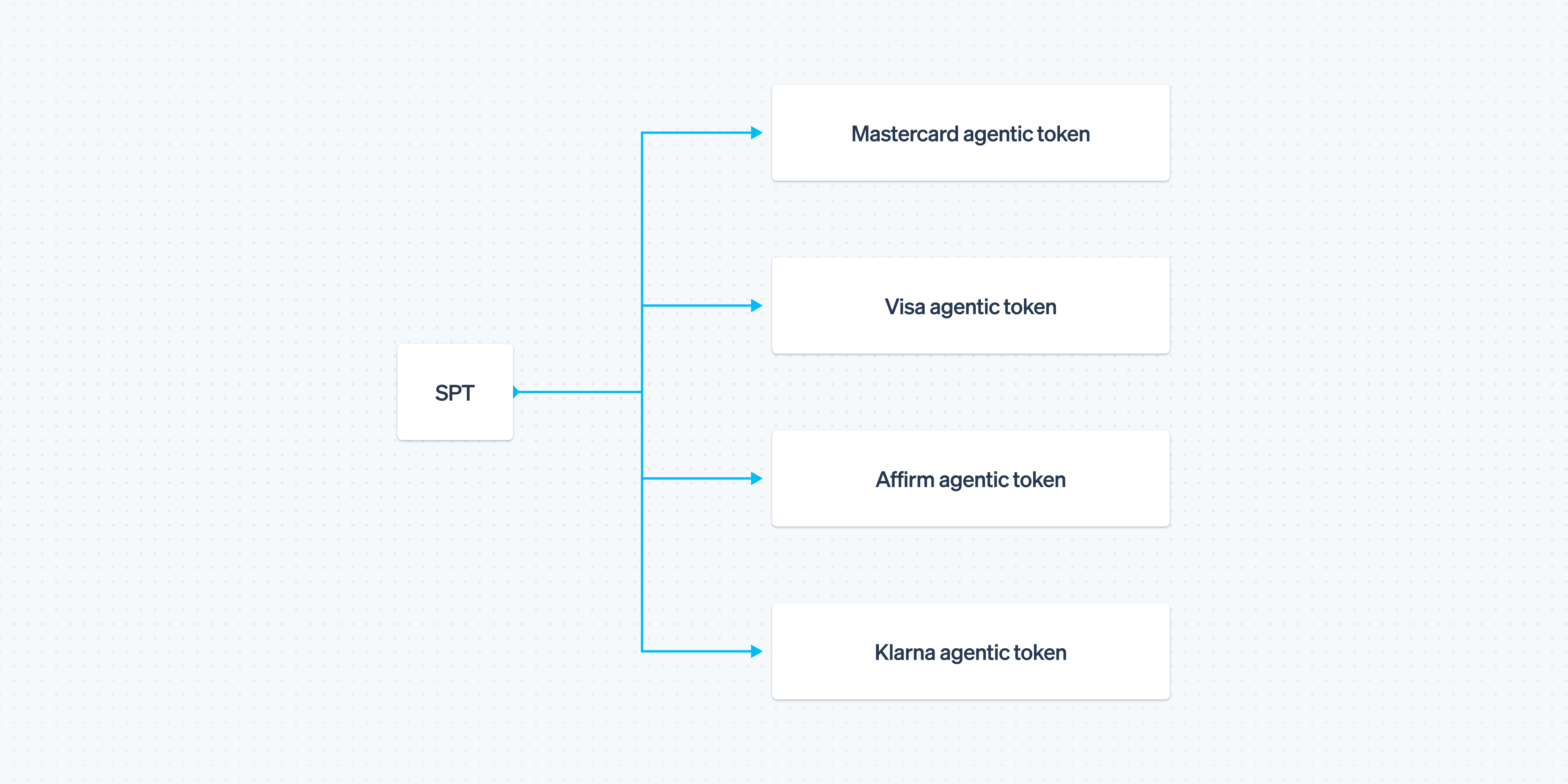
Stripe just wired up agentic commerce with heavy hitters—Mastercard Agent Pay, Visa Intelligent Commerce, and BNPL options from Affirm and Klarna—all funneled through its Shared Payment Tokens (SPTs). No fanfare press release dump; instead, they’re rolling it out now, letting AI agents handle payments without spilling card details.
Boom. Sellers on Stripe wake up to broader payment rails overnight.
Zoom out: agentic commerce isn’t some sci-fi pitch anymore. Last year, SPTs launched to let agents pay with customer permission, no credentials exposed. Etsy, URBN—they’re already in. Now, this expansion hits the most demanded methods, positioning Stripe as the sole provider bridging network tokens and BNPL in one primitive. Market fact: BNPL alone racked up $300 billion globally last year, juicing conversions by 14% for eligible sessions.
Skeptical? Here’s the data angle. Agentic payments solve the nightmare of AI shopping bots fumbling checkouts. Networks like Mastercard and Visa issue secure tokens scoped to customer intent—vault once, spend everywhere. Stripe provisions them backend, agents use ‘em frontend. Friction? Zero for sellers already on the platform.
Agentic network tokens. They’re like card-on-file but for bots: networks map to fresh FPANs, flag extras for issuers on fraud and disputes. Mastercard’s Pablo Fourez calls it a “fundamental shift,” extending tokenization trust to AI.
“Mastercard Agent Pay represents a fundamental shift in how agent-initiated commerce comes to life, extending the scale and trust of network tokenization into AI-driven payments,” said Pablo Fourez, chief digital officer at Mastercard.
Visa echoes: same security, scale for agent-driven buys.
But does this actually move the needle? Look at adoption curves. SPTs spread fast because they’re primitive-simple—one API call, permission-based. Adding these? It’s Stripe preempting a fragmented future where every agent needs bespoke payment hacks. My take: this mirrors PayPal’s 1998 pivot, standardizing eBay micropayments when everyone else chased custom gateways. Stripe’s doing it for agents—before the chaos.
Why Agentic Network Tokens Matter for Fraud Fighters
Short answer: they don’t kill fraud, but they choke it. Issuers get richer auth messages—intent signals, agent provenance—beyond basic token mapping. Remember 2022’s $41 billion CNP fraud spike? Agentic flows could slash that by vaulting scoped credentials, not raw cards.
Networks handle translation, verification. Agents vault with Stripe, reuse across merchants. Sellers? They see SPTs only; Stripe sweats the token dance. Rolling out now across supported AI agents—real transactions, not vaporware.
And BNPL? That’s the conversion rocket fuel. Up 14% revenue lift, higher AOVs. Agents now pitch Affirm or Klarna options smoothly—Stripe pops the confirmation in the agent’s UI, passes creds backend. Customer flow unchanged; complexity hidden.
Here’s the sharp bit: Stripe’s PR spins this as seller-easy, which it is. But the real win? Data moat. Every agentic transaction feeds Stripe’s graph—intent, prefs, conversions. In five years, when agentic commerce hits $500 billion (my call, extrapolating BNPL growth and AI adoption), Stripe owns the rails.
Critique time. Networks hype “trust and scale,” fine. But agentic economy? Still nascent—Etsy bots notwithstanding. Risk: overprovisioning tokens leads to sprawl, like early tokenized cards before cryptograms tightened up. Stripe’s single-primitive fix? Smart hedge.
Can Stripe’s SPTs Dominate Agentic Commerce?
Yes—if agents standardize on SPTs. Competition lurks: Adyen toys with agent flows, but no network+BNPL combo. Stripe’s edge: incumbency. 90% of online sellers? Probably Stripe-enabled already. Auto-support for agentic? Lock-in gold.
Market dynamics scream opportunity. Global digital payments: $8 trillion. Agentic slice? Tiny now, but McKinsey pegs AI commerce at 10% of retail by 2030—trillions. BNPL’s $300B proves demand for flexible terms; agents amplify by personalizing pitches (“Split this into four?”).
Sellers report higher conversions—data-backed. URBN’s using SPTs; imagine Free People outfits bought by your style-agent. Stripe handles BNPL handoffs flawlessly—no UI breakage.
Unique insight: this isn’t just plumbing. It’s the TCP/IP of agentic payments. Early internet fragmented on protocols; winners (Visa/MC then) unified. Stripe + networks = that unity now. Bold prediction: by 2026, 40% of agentic volume flows here, starving siloed rivals.
Looking forward, Stripe teases more methods. Sessions conference incoming for deeper dives. But here’s the thing—don’t sleep. Agentic commerce accelerates; payments lag means lost revenue.
Sellers, test it. Agents, integrate SPTs. Networks win trust export. Stripe? They just became indispensable.
🧬 Related Insights
- Read more: Revolut’s €11.5M Italian Wake-Up Call
- Read more: France’s Lise Exchange Bets Big on ST Group’s Onchain IPO — But Is Blockchain Ready for Prime Time?
Frequently Asked Questions
What are Shared Payment Tokens (SPTs) in agentic commerce? SPTs let AI agents initiate payments with customer permission using preferred methods, without exposing card details. Stripe handles token provisioning backend.
Does Stripe support BNPL like Affirm for AI agents? Yes—Affirm and Klarna now work via SPTs in agentic flows, boosting conversions by up to 14% with no seller changes needed.
How do Mastercard Agent Pay and Visa tokens work with Stripe? Stripe provisions scoped network tokens for agents; networks manage secure translation and auth, usable across merchants.