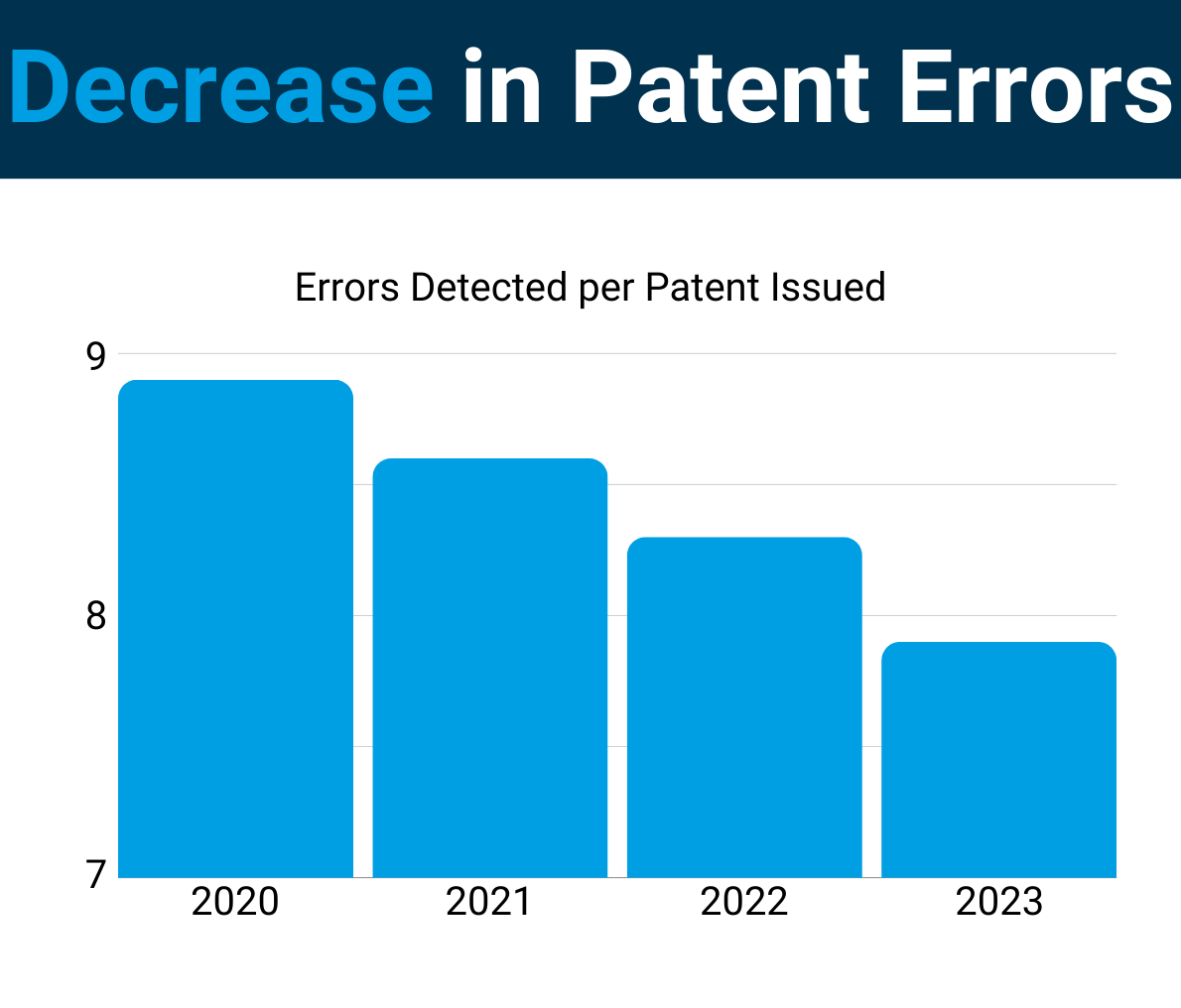
1.4 million patents reviewed. That’s every single one issued by the USPTO since 2020. And the result? An 11.24% decrease in errors per patent.
Look, I’ve been kicking tires in Silicon Valley for two decades — seen enough “revolutionary” claims to fill a landfill. Patent errors decreasing? Sounds promising. But who’s cashing in here?
Patent Errors Actually Dropping — Or Just Better Detection?
The study — from Patent Bots, run by its founder, naturally — zeroed in on three error types: numbering slips, antecedent basis messes, and word support fails. Numbering errors down 10.3%. Antecedents? 13.9% drop. Word support, 9.8%.
Steady decline, year after year. Not some COVID blip. But hold on. These are “red” errors only, the surefire ones software flags. Yellow warnings? Ignored, too squishy.
“We can’t be 100% certain of the trend’s cause, but it seems clear that patent error rate is on the decline.”
That’s the money quote from the original piece. Fair enough. But certainty? In patents? Ha.
Here’s my take, one you won’t find in the press release: this smells like the dot-com bust echo. Back in 2000, USPTO was drowning in junk patents — sloppy claims fueling troll armies. Errors everywhere, leading to invalidated patents left and right. Fast-forward 24 years, and boom, quality uptick. Coincidence? Or did the Alice decision (that 2014 Supreme Court gut-punch to software patents) force lawyers to sharpen up? Nah, probably not. More like AI proofreading tools — Patent Bots included — catching the low-hanging fruit.
Why Have Patent Errors Decreased Since 2020?
Blame the lawyers? They’re grinding harder, maybe. Post-pandemic, firms hired more proofreaders, or juniors aren’t as green. Possible.
But let’s be real. Automation’s the star here. Machine learning now sniffs out dependency errors (like a method claim hanging off a system one) that humans skim over in 3 a.m. marathons. And word support? Claims using “storing” when the spec says nothing of the sort — that’s a red flag for invalidity fights. Tools flag it reliably now.
The catch. Software isn’t flawless. Misses sneaky errors, false positives too. Aggregate over 1.4 million patents? Trends emerge. Single patent? Shaky.
Still, 11.24% in four years ain’t peanuts. If it holds, fewer post-grant reviews, less PTAB drama. Big Tech — your Googles, Apples — love that. Cleaner patents mean harder to shake down.
One short para: Trolls hate this.
Is Cleaner Patent Drafting Good for Startups?
Startups. The scrappy underdogs I root for (cynically). They file patents on a shoestring — interns drafting half the time. Errors kill them in infringement suits; one antecedent slip, and poof, claim’s toast.
Fewer errors industry-wide? Helps level the field. But tools cost money. Patent Bots ain’t free. Who’s making bank? The software peddlers. Lawyers too — charge premium for “AI-proofed” filings. Meanwhile, solo inventors? Still fumbling in the dark.
And the PR spin. Study stops at 2020 ‘cause older USPTO data’s a mess — formats changed, tools can’t parse. Convenient. What if we saw 2010-2020? Bet errors spiked during the mobile patent wars.
My bold prediction: this trend reverses by 2026. Why? Generative AI drafting patents now — ChatGPT cranks claims faster than you can say “hallucination.” Errors will creep back, sloppy and novel. Mark my words.
Attorneys aren’t perfect. Never were. But neither’s the tech. High accuracy? Sure. But it’s the aggregate view that sells the story.
Who benefits most? Incumbents with deep pockets for premium tools. Startups? They’ll adopt eventually — or get steamrolled.
The Money Trail in Patent Quality
Follow the dollars. Patent Bots drops this data — from their own tool. Disclaimer noted. But skepticism’s my job. Is the decline real progress, or just their software getting smarter, making the problem look solved?
Either way, USPTO’s not complaining. Cleaner patents mean fewer reissues, less backlog. Taxpayers win.
But Silicon Valley? Always the same game. Hype the trend, sell the fix. I’ve seen it with blockchain patents (remember those?), NFTs, now AI drafters.
Bottom line. 11.24% drop’s legit data. Celebrate cautiously. Ask: cui bono? Who benefits.
🧬 Related Insights
- Read more: Feds Swipe Your Data, Skip the Warrant—Thanks, Data Brokers
- Read more: ChatGPT Prompts Just Killed Two Trade Secret Claims—Here’s Why It Matters
Frequently Asked Questions
What caused the 11.24% drop in USPTO patent errors since 2020?
Likely a mix: better proofreading tools like AI software, sharper lawyers post-Alice, and steady practices. Not magic — just tech catching dumb mistakes.
Are patent proofreading tools reliable?
Pretty good on aggregate, miss nuances on singles. Red errors? Solid. But don’t bet your portfolio on perfection.
Will fewer patent errors hurt patent trolls?
Yeah, probably. Cleaner claims harder to invalidate. Trolls thrive on slop — this starves ‘em a bit.
