Picture this: AI hype peaks, everyone’s bracing for robot overlords to gut white-collar jobs — spreadsheets flying, emails auto-generated, the works. But Scribe CEO Jennifer Smith? She’s not selling apocalypse. She’s pushing a quieter revolution: AI as the new teammate who shows up blind without your workflows mapped out.
That changes everything. Suddenly, it’s not about fearing replacement; it’s about exposing the black box of daily grind so AI can actually lift the load.
What Everyone Expected from AI at Work
Execs dreamed of plug-and-play bots. Zapier on steroids, maybe. Or ChatGPT drafting your reports while you sip coffee.
But Smith, after grilling 1,200 leaders, heard the real story. Pride in people, sure — but massive blind spots. Inputs? Check: salaries, tools. Outputs? Yep: revenue, tickets closed. The guts — those mouse clicks, decision forks, error-prone detours? Invisible.
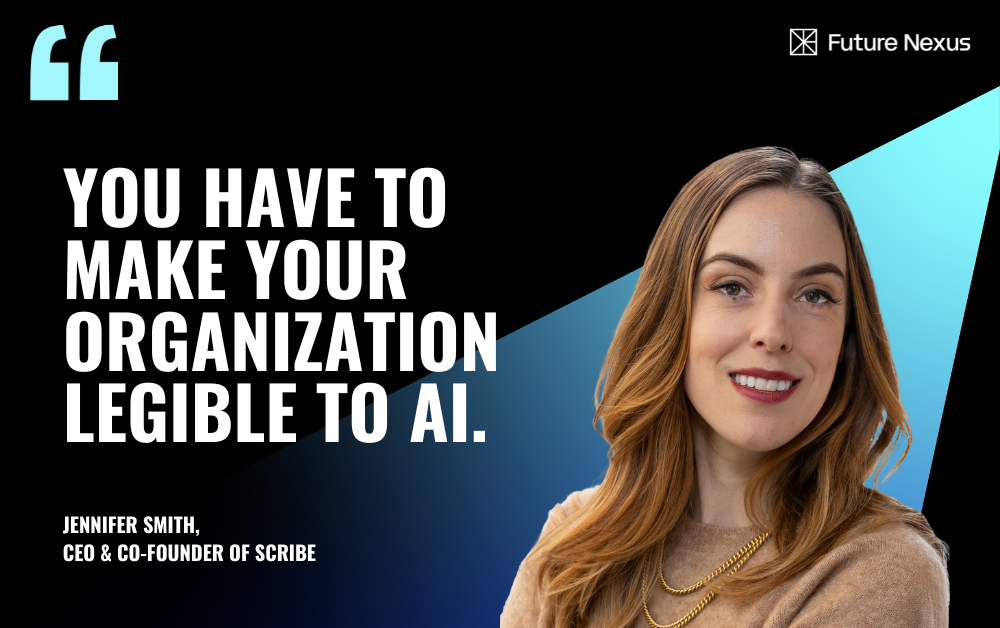
“You have to make your organization legible to AI.” – Jennifer Smith, co-founder and CEO, Scribe
She’s dead right. Without that legibility, AI agents flail. Powerful as they are, they need context. No map, no treasure.
And here’s my take, one you won’t find in Scribe’s pitch deck: this echoes the dawn of scientific management. Taylor’s stopwatches in 1911 factories made human motion legible to bosses — boosting output 200% in some spots. Now? It’s code making workflows legible to silicon. Same shift, digital edition. But with a twist: we’re not just optimizing for efficiency; we’re prepping for hybrid human-AI squads.
Short para punch: Organizations ignoring this? They’re building AI sandcastles on fog.
Smith calls it the ‘missing middle.’ Scale the Barbara problem — that 20-year vet whose magic no one documents — across thousands, and you’ve got reinvention hell. Pre-AI, costly. Post-AI? Catastrophic, she says, ‘orders of magnitude worse.’
Because those agents? They crave the how. Not ideals from surveys (wrong half the time — who recalls hiccups?), but real-time traces.
How Scribe Capture Pulls Off the Magic
Enter Scribe Capture. Simple hook: it watches your screen, spits out step-by-step guides. No typing, no meetings. Expert does the thing; AI clones the knowledge.
“Now we’ve made everybody as good as the expert the first time they do something,” Smith says. Ping ‘Barbara’ in chat? Boom, workflow pops up.
But dig deeper — the architecture here flips knowledge transfer. Traditionally, it’s tribal: shadow the pro for weeks. Now? Instant, scalable. That’s the how: pixel-level logging, OCR for apps, ML to sequence steps. Why it scales? No behavior change required. People work; it learns.
Skeptical? Fair. Most ‘auto-doc’ tools nag for input. Scribe doesn’t. It lurks passively, like a ghost in the machine.
One sentence wonder: This alone slashes onboarding from months to minutes.
Then sprawl: Customers — 94% of Fortune 500, 6 million users — feed it back: time savings stack up, inconsistencies vanish, and that quiet admin drudgery (CRM wrestling for salespeople)? AI takes it, freeing humans for relationships, the stuff no bot nails.
Why Does Scribe Optimize Feel Agentic?
Capture maps the what-and-how. Optimize hunts the where-better.
Agentic means proactive: it scans fleet-wide data — across apps, teams — flags drags like underused tools or loop-y steps. Tie to your KPIs? It quantifies ROI for tweaks, automations.
“People don’t accurately report on their workflows because it’s hard to remember everything,” Smith notes. Real data trumps memory every time.
Architectural shift: This builds a ‘context layer.’ Not just docs — live, evolving intel. AI doesn’t guess; it knows your org’s pulse.
Critique time: Scribe’s PR spins this as pure upside, but privacy hawks? They’ll squint. Screen logs at scale scream compliance nightmares (GDPR, anyone?). Smith’s betting opt-in and anonymization win, but it’s early.
Is This the End of ‘Know-How’ Black Holes?
Scale it: No more Barbaras retiring with secrets. AI teammates onboard instantly, iterate endlessly.
Smith’s vision — AI use humans, doesn’t replace. Sales reps build bonds; bots log calls.
Bold prediction: By 2030, workflow legibility becomes table stakes. Firms without it? They’ll lag as AI-native rivals — think startups with baked-in Scribe — eat their lunch. It’s the new ERP moment.
But here’s the rub — adoption hinges on trust. Execs must confront the mess: 15-step ‘9-step’ processes, edge-case kludges. Legibility hurts first, heals later.
Wrapping the why: In a world of generalist LLMs, specificity wins. Your workflows? That’s the moat.
🧬 Related Insights
- Read more: Trivy Hack: How Attackers Hijacked Docker’s Trusted Tags
- Read more: HIPAA Breach Rules: Encrypt or Explode
Frequently Asked Questions
What is Scribe and how does it work?
Scribe captures screen workflows into guides via Scribe Capture and analyzes them org-wide with Optimize for improvements and automations.
Why make your organization legible to AI?
AI agents need real workflow data to automate effectively; without it, they can’t act as true teammates or spot inefficiencies.
Will Scribe replace human workers?
No — it amplifies them by handling admin grunt work, letting people focus on high-value, creative tasks.