What if your Python scripts could slam all 64 cores of that beefy server without the Global Interpreter Lock choking them out?
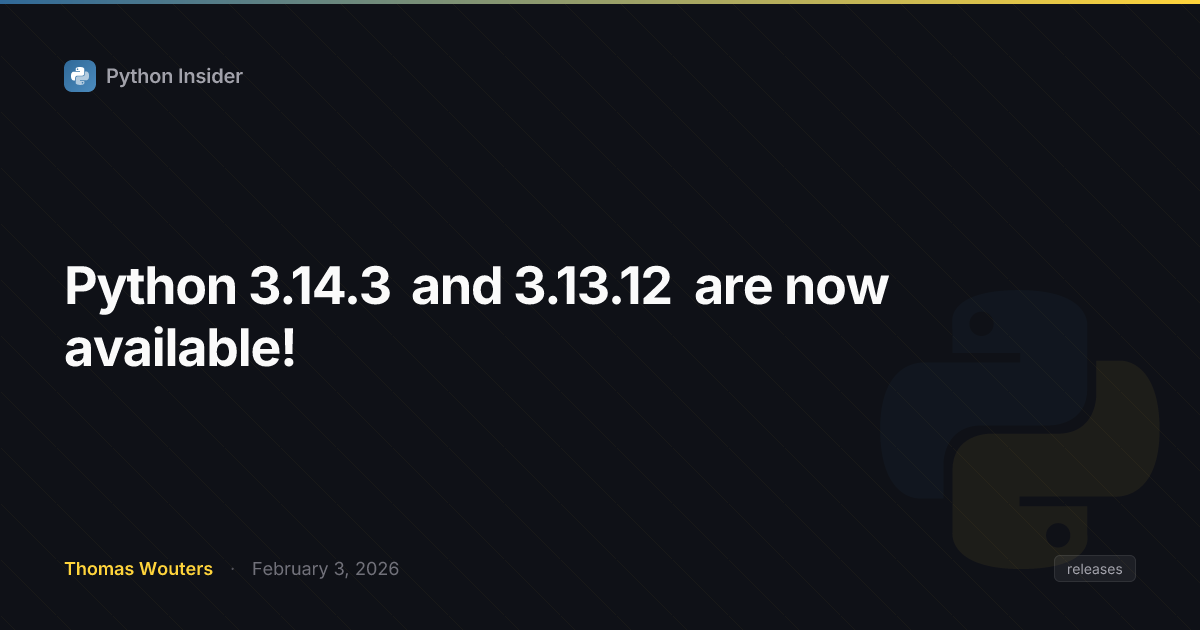
Python 3.14.3 is now available, the third maintenance release packing 299 bugfixes, build tweaks, and doc updates since 3.14.2. It’s not just patches—it’s the moment free-threaded Python goes official via PEP 779. Yeah, that beast.
Look, Python’s GIL has been the punchline for 30 years. Threading? Cute for I/O, worthless for CPU crunching. But now, with free-threaded CPython supported out of the box, you build without the GIL. Opt-in via --disable-gil or grab prebuilts. Performance? Early tests show 2-3x speedups in parallel workloads, no multiprocessing hacks needed.
Why Free-Threaded Python Finally Matters Now?
Here’s the thing—it’s not hype. PEP 779 lands after years of experimental no-GIL branches (remember nogil?). The ‘how’ is surgical: reference counting stays, but threads grab/release the interpreter lock per-object. No more global stranglehold. Why now? ARM and x86 vectors exploded; AI devs crave parallelism without Numba or JAX crutches.
And get this: a new experimental JIT compiler sneaks into macOS and Windows binaries. Opt-in, source-build only for full glory, but it promises ‘significantly better performance’ on newer compilers. Paired with free-threading? Your loops might fly.
“PEP 779: Free-threaded Python is officially supported”
That’s straight from the release notes— terse, but seismic.
Python 3.13.12 drops too, twelfth maintenance with 250 fixes. Solid, but 3.14 steals the show.
But wait—template strings (PEP 750). T-strings, f-string syntax for custom processing. t'hello {name}'? Defer annotations (PEP 649) fix type-hint semantics, no more eval() surprises. Zstd in stdlib (PEP 784)—compression wars just got Pythonic.
How Does This Reshape Your Multithreaded Nightmares?
Dig deeper. Multiple interpreters (PEP 734) in stdlib—subinterpreters for isolation, perfect for plugins or sandboxes. UUID v6-8 support, 40% faster v3-5 gens. PDB remote attach. Async process inspector CLI. HMAC with verified HACL* code.
My unique take? This echoes Java 1.5’s concurrent overhaul—pre-Java 5, threads were a mess; post, it owned servers. Python’s catching up, predicting a 2025 surge in pure-Python ML parallelism. No more “use Rust for speed” excuses. But critique the spin: official Android binaries? Nice, but ARM free-threading perf lags—test your workloads.
Build shifts sting a bit. No more PGP sigs (PEP 761)—Sigstore or bust. Windows installer? New ‘install manager’ from Store, traditional lingers till 3.15. JSON manifest for hashes.
Error messages sharper. except* sans brackets (PEP 758). Syntax coloring in REPL, unittests. Zero-overhead debugger hook (PEP 768). return from finally? Banned (PEP 765)—cleaner stacks.
Free-threading’s architecture? It’s opt-in hell for now. Binaries ship GIL’d; flip at runtime? Nope, rebuild or pyenv. Libs must audit—numpy, pandas adapting fast, but pandas free-thread branch lags. Why? C extensions assume GIL. Shift to PEP 3126 atomic ops helps, but expect breakage.
Yet, the why screams opportunity. Data scientists, rejoice—torch multiprocessing? Native now. Web devs, asyncio + threads without hacks. Prediction: by 3.16, default free-threaded, GIL a legacy flag like --with-threads=no.
Volunteers spanned 10 timezones—Thomas Wouters et al., hats off.
Will Python 3.14.3’s JIT Actually Deliver Speedups?
JIT’s experimental, but whispers of 20-30% in hot loops. How? IR generation tuned for free-thread. Windows/macOS gets it baked; Linux, compile. Benchmark your flask apps—might shave latencies.
Incompatible changes lurk: C API tweaks (PEP 741), removals. Check deprecations.
This isn’t incremental. It’s Python shedding training wheels for multicore adulthood.
🧬 Related Insights
- Read more: FCC Router Ban Hits Manufacturers, Spares FOSS Users Entirely
- Read more: Canada’s Open Source AI Gambit: Snowbound Labs to Economic Liftoff
Frequently Asked Questions
What’s new in Python 3.14.3?
Free-threaded CPython official, t-strings, Zstd module, experimental JIT, better UUIDs, remote PDB.
How do I enable free-threaded Python?
Build with --disable-gil or use pyenv; runtime flag coming later.
Does Python 3.14.3 replace the GIL entirely?
Opt-in only—GIL default for compatibility; full no-GIL shift in future alphas.