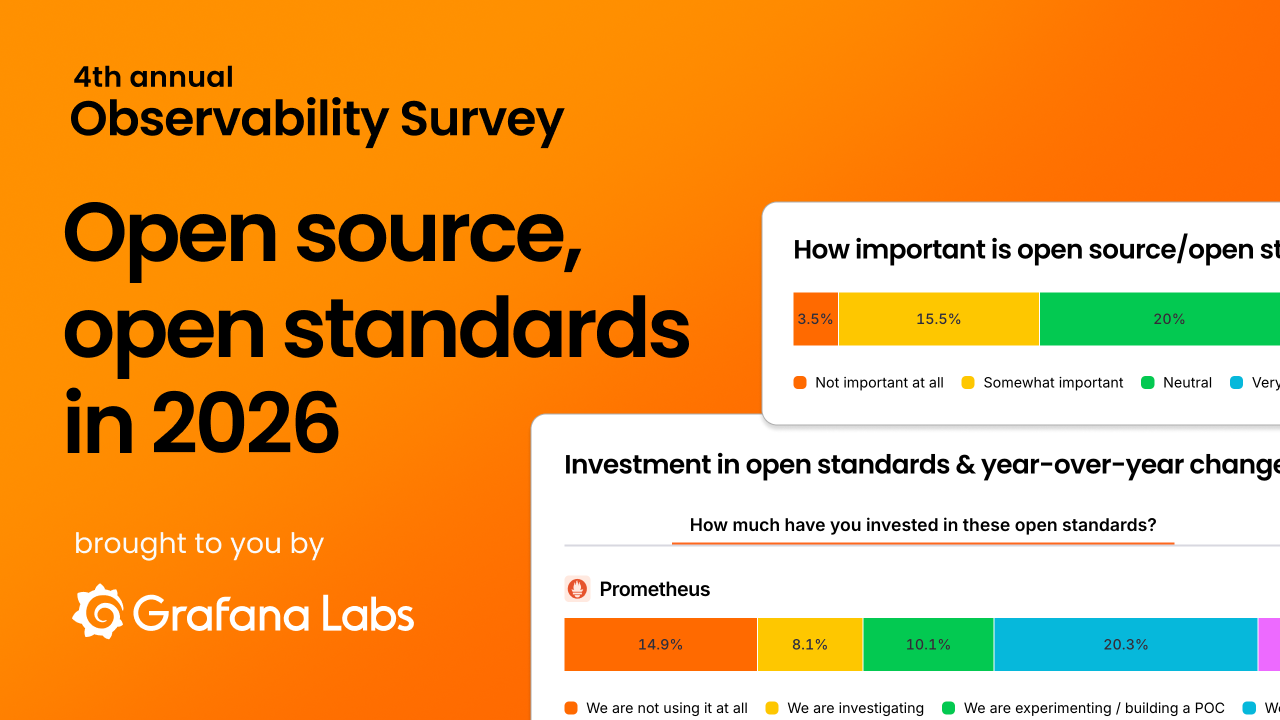
You’re knee-deep in Grafana Labs’ 2026 Observability Survey, coffee going cold, and bam—77% of respondents swear open source and open standards are vital to their strategy.
Essential. Backbone of modern observability, they say.
But hold on. Flip to the tool selection page. Open source? Fourth place. Behind cost, ease of use, interoperability.
I’ve covered this beat for 20 years—Silicon Valley’s love affair with ‘open’ always smells like a sales pitch. Grafana’s pushing hard here (they live off Loki and Mimir, after all), but let’s peel back the spin. Is this a genuine shift to vendor freedom, or just buzzword bingo to dodge lock-in fears?
Open Standards: Survey Gold, Reality Check Needed
The numbers hit hard. 61% label open source/open standards as “very important” or “essential.” Only 3% shrug them off.
61% of respondents say open source/open standards are either “very important” or “essential” to their observability strategy. Only 3% say they’re not important at all.
Teams tying observability to C-level strategy? 64% go all-in on open. Slackers at the bottom? Just 51%. Self-managed diehards love it more, sure—but even SaaS-only folks hit 61%. That’s wild, considering early SaaS kings like Datadog peddled proprietary collectors like candy.
Savings follow, too. 84% of ‘essential’ believers report time or money wins from centralized observability, beating the 77% average. Coincidence? Nah. Open glues disparate telemetry—metrics, logs, traces—from your exploding source pile into something coherent.
Here’s my twist, absent from Grafana’s glow-up: This echoes the SNMP era in networking, late ’80s. Standards promised portable monitoring across routers. Cisco et al nodded, then bolted proprietary MIBs on top—lock-in via ‘extensions.’ Fast-forward. OpenTelemetry (OTel) and Prometheus dominate now, but watch: Big vendors will hug the standard publicly while stacking paid analytics layers. History doesn’t lie.
Why Isn’t ‘Open Source’ Crushing Tool Selection?
A quarter of respondents prioritize ‘based on open source’ when picking tools. Top third, since they could pick three criteria. Not bad.
But. 77% say open matters strategically. Only 25% chase it in purchases. Gap? Folks split hairs—open source for backends/visuals (Grafana, Prometheus), open standards for collection (OTel). Prometheus nails metrics. OTel dreams bigger, all signals.
SaaS shift seals it. Early observability? Closed gardens. Now? Platforms bend to OTel ingestion. Still, cost rules. Ease rules. Who pays for purity?
And self-managed vs. SaaS? Open matters more to the former—duh—but ‘mostly SaaS’ clocks 73%. Market’s cracking.
Short para. Cynical truth: Surveys measure aspiration. Checkpoints measure cash.
Who’s Actually Cashing In on Open Observability?
Grafana Labs, obviously—they sponsor the survey, host the dashboard. Filter by industry, role, size. Smart. But who’s next? Honeycomb, Lightstep? They’re OTel evangelists, but subscriptions flow from hosted backends.
Elastic? They bolted APM onto OTel late, after Prometheus love. New Relic? Swallows traces greedily now. Shift feels real—proprietary collectors fading—but money? Still in SaaS moats.
Prediction: By 2028, 90% ingest via OTel. But 70% analyze in vendor silos. Freedom at the edge, lock-in at the core. Just like SNMP 2.0.
Business-critical angle intrigues. CTOs prioritizing observability? They crave portability—switch tools without data jail. But does it deliver? 84% say yes on savings. I’ll believe it when lock-in lawsuits drop.
One para, dense: Observability’s exploding—AI ops, full-stack traces, business KPIs—but data chaos reigns. Open standards unify. Prometheus for metrics (narrow but battle-tested). OTel for the ‘big tent’ (traces, metrics, logs). No full-stack rewrite needed for Prometheus wins, unlike OTel’s ambition. Podcast plug from Grafana? Sure, but it underscores: Standards evolve messy.
Is OpenTelemetry Living Up to the Hype in 2026?
De facto kings: Prometheus, OTel. Survey didn’t drill deep—cut off mid-sentence on standards questions—but trajectory’s clear. Adoption surges as telemetry silos crumble.
Skeptic’s lens: OTel’s CNCF darling status helps, but interop pains linger. Exporters buggy. Semantic conventions fuzzy. Vendors ‘comply’ minimally.
Yet. 77% stat isn’t fluff. It’s the tide. Ignore at peril.
Teams saving time/money? Centralized views via open pipes. No more Prometheus-for-metrics, Jaeger-for-traces hell.
Final jab. Grafana’s video recap, AI deep-dive? Plugging their stack. Fair—best survey out there, 1,300 voices. But ask: Who’s funding the open dream? Us, via enterprise licenses.
🧬 Related Insights
- Read more:
- Read more: Kubernetes v1.36 Draws the Line: externalIPs Deprecated, gitRepo Erased Forever
Frequently Asked Questions
What does Grafana’s 2026 Observability Survey say about open standards?
77% of respondents say open source and open standards are important to observability strategies, with 61% calling them very important or essential.
Are open standards like OpenTelemetry essential for observability tools?
They’re de facto standards for unifying metrics, logs, and traces, but tool selection prioritizes cost and ease over pure openness—25% list it top.
Will open standards end vendor lock-in in observability?
They reduce it at data collection, but proprietary analytics layers persist, much like historical networking standards.