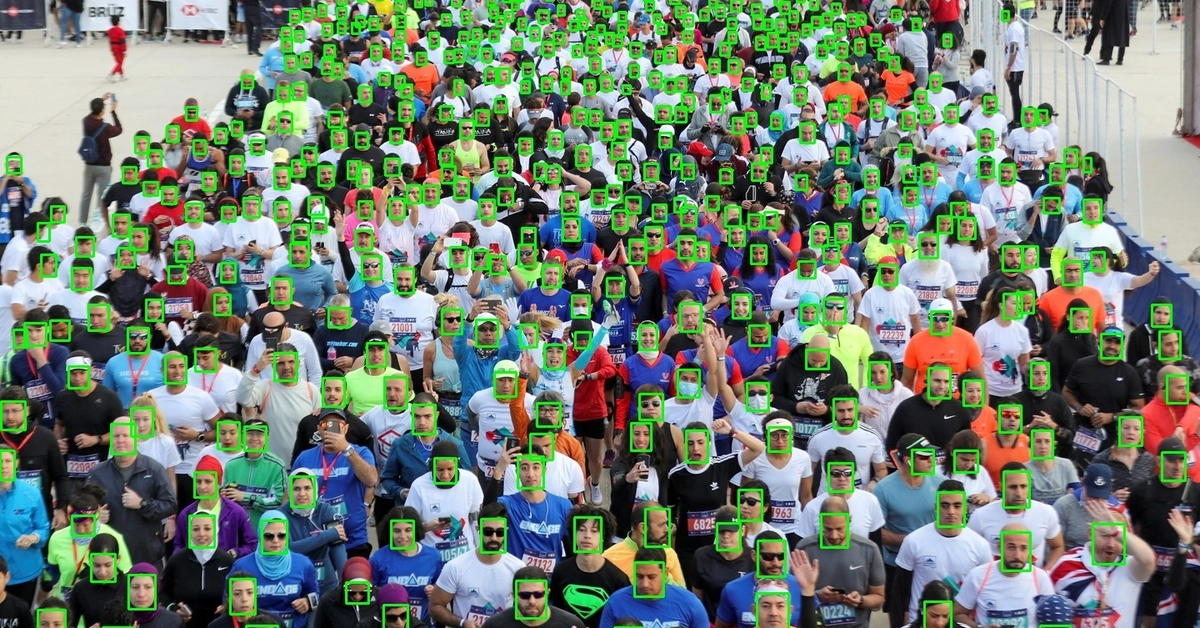
Object detection — the task of identifying and localizing multiple objects within an image — is one of the most practically important problems in computer vision. From autonomous vehicles recognizing pedestrians and traffic signs to manufacturing systems detecting product defects, object detection algorithms power applications that demand both accuracy and speed. Three architectural families have dominated the field: YOLO (You Only Look Once), SSD (Single Shot MultiBox Detector), and Faster R-CNN. Understanding their trade-offs is essential for choosing the right approach for any given application.
The Two Paradigms: One-Stage vs Two-Stage
Object detection algorithms divide into two fundamental paradigms based on how they approach the detection task. Two-stage detectors, exemplified by Faster R-CNN, first generate candidate regions likely to contain objects, then classify and refine each candidate. This two-step process tends to produce higher accuracy but at greater computational cost. One-stage detectors, including YOLO and SSD, predict object classes and bounding boxes in a single pass through the network, sacrificing some accuracy for dramatically improved speed.
This architectural distinction creates the fundamental trade-off that shapes the field: accuracy versus speed. The best choice depends entirely on the specific application's requirements.
Faster R-CNN: The Accuracy Champion
Architecture
Faster R-CNN, introduced by Shaoqing Ren and colleagues in 2015, refined the two-stage detection paradigm by introducing the Region Proposal Network (RPN). The architecture consists of three components: a backbone convolutional neural network that extracts features from the input image, an RPN that generates candidate object regions from these features, and a detection head that classifies each proposal and refines its bounding box coordinates.
The RPN shares convolutional features with the detection head, eliminating the computational bottleneck of earlier region-based methods. Anchor boxes of multiple scales and aspect ratios allow the RPN to handle objects of varying sizes.
Strengths
Faster R-CNN excels at detecting small objects and handling scenes with objects at very different scales. The two-stage approach allows more computational resources to be focused on promising regions, improving classification accuracy. It achieves strong performance on challenging benchmarks like COCO, particularly for categories where fine-grained discrimination is important.
Limitations
The two-stage architecture is inherently slower than single-shot approaches. Even with GPU acceleration, Faster R-CNN typically achieves 5 to 15 frames per second on standard hardware — sufficient for many applications but inadequate for real-time video processing at high resolution. The architecture is also more complex to implement and tune.
YOLO: Speed as a Feature
Architecture
YOLO, first introduced by Joseph Redmon in 2016, reframed object detection as a single regression problem. Rather than examining thousands of candidate regions, YOLO divides the input image into a grid and predicts bounding boxes and class probabilities directly for each grid cell in a single forward pass. This elegant reformulation enabled real-time object detection for the first time.
The architecture has evolved significantly through multiple generations. YOLOv1 established the paradigm. YOLOv3 introduced multi-scale detection using feature pyramids. YOLOv5 through YOLOv8, developed by Ultralytics and the broader community, progressively improved accuracy while maintaining speed through architectural innovations including CSPNet backbones, path aggregation networks, and advanced training techniques. YOLOv8 and its successors represent the current state of the art, offering multiple model sizes from nano to extra-large to accommodate different speed-accuracy requirements.
Strengths
YOLO's defining advantage is speed. Current YOLO variants process 30 to 160 frames per second depending on model size and hardware, enabling true real-time detection for video applications. The single-stage architecture also provides strong global context awareness — because YOLO processes the entire image simultaneously, it makes fewer background false positives than sliding-window approaches. The Ultralytics ecosystem provides excellent tooling for training, deployment, and optimization.
Limitations
YOLO has historically struggled with small objects and densely packed scenes where multiple objects occupy the same grid cell. While recent versions have substantially mitigated these issues through multi-scale detection and improved architectures, Faster R-CNN still holds an edge for applications where detecting very small objects is critical.
SSD: The Middle Ground
Architecture
SSD, introduced by Wei Liu and colleagues in 2016, takes a one-stage approach similar to YOLO but with a distinctive multi-scale detection strategy. SSD uses a base network (typically VGG-16 or a more modern backbone) followed by progressively smaller feature maps. Default anchor boxes at each scale detect objects of corresponding sizes, allowing the network to handle objects across a wide range of scales more naturally than early YOLO versions.
This multi-scale approach means large objects are detected by early, high-resolution feature maps while small objects are detected by later, lower-resolution feature maps — each operating at the appropriate spatial scale.
Strengths
SSD offers a practical balance between speed and accuracy. It runs faster than Faster R-CNN while handling multiple object scales more effectively than early YOLO versions. The architecture is relatively straightforward to implement and has been widely adopted in production systems. SSD's multi-scale detection makes it particularly suitable for applications with diverse object sizes.
Limitations
SSD's accuracy on small objects trails behind both Faster R-CNN and modern YOLO variants. The architecture has received less active development than the YOLO family in recent years, meaning it benefits less from the latest training techniques and architectural innovations. While still relevant, SSD has been somewhat superseded by newer YOLO versions that achieve both better speed and better accuracy.
Performance Comparison
On the COCO benchmark, which has become the standard evaluation dataset for object detection, the three families show characteristic performance patterns. Faster R-CNN variants with strong backbones like ResNeXt achieve the highest mean average precision (mAP), particularly on small objects. YOLOv8 Large approaches Faster R-CNN accuracy while running several times faster. SSD falls between the two on accuracy metrics and speed.
However, benchmark performance does not always predict real-world utility. The optimal choice depends on the specific application.
Choosing the Right Algorithm
For real-time video applications — surveillance, sports analysis, drone navigation, live augmented reality — YOLO's speed advantage makes it the default choice. For high-accuracy offline analysis — medical imaging, satellite imagery, detailed scene understanding — Faster R-CNN's superior accuracy justifies its slower speed. For embedded and mobile deployment, lightweight YOLO variants and SSD provide the best performance within hardware constraints.
For autonomous driving, the choice often depends on the specific sub-task: real-time pedestrian and vehicle detection may use YOLO variants for speed, while detailed scene parsing may use two-stage detectors for accuracy. Many production systems use multiple detectors in parallel, each optimized for different detection requirements.
Beyond the Big Three
The field continues to evolve rapidly. Transformer-based detectors like DETR (Detection Transformer) and its successors are challenging the dominance of convolutional approaches by eliminating hand-designed components like anchor boxes and non-maximum suppression. These models offer simpler architectures and competitive performance, though they currently require more training data and computation. The fundamental trade-off between speed and accuracy remains, but the efficiency frontier continues to advance.